

Creatine hcl vs EAS | HMB 1500 | 120 Capsules
// Ask SuppVault anything... █
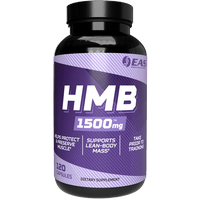
EAS | HMB 1500 | 120 Capsules Is For
[
"Physique athletes entering a calorie deficit who want to hold onto lean mass while training intensity stays high. HMB is most useful when muscle retention becomes harder, and this formula gives a clean path to the 3 g daily intake commonly used in research when taken twice per day.",
"Intermediate lifters running high-volume hypertrophy blocks who recover well enough to train hard but want extra support against accumulating muscle breakdown. This is not a flashy performance product; it is a quiet recovery tool designed to help you come back stronger for the next session.",
"Older adults doing resistance training to preserve strength and muscle quality as they age. HMB has been studied extensively in muscle preservation contexts, and this capsule format makes daily compliance simple for users who want low-friction supplementation.",
"Athletes returning from a training layoff who are rebuilding tolerance to soreness and workload. HMB is especially compelling when the body is re-exposed to resistance training stress and recovery demands spike faster than your conditioning returns.",
"Lifters who already use whey protein and creatine but want another layer of recovery support without adding stimulants, sweeteners, or a powdered intra-workout. This formula stays in its lane and stacks cleanly with foundational sports nutrition staples.",
"Combat sport athletes, wrestlers, or weight-class competitors managing aggressive training with periodic weight cuts. HMB is often most relevant when calorie intake, recovery resources, and muscle retention are all under pressure at the same time.",
"Busy professionals training early mornings or late evenings who want a recovery-focused product with no stimulant burden. Because this is capsule-based and stim-free, it can be used daily without affecting sleep or forcing you to time it around caffeine tolerance.",
"Beginners who are serious about preserving muscle during their first fat-loss phase and prefer simple formulas over kitchen-sink supplement blends. The ingredient list is short, the purpose is clear, and the dosing logic is easy to follow."
]
📱
Can't decide?
Text us your training style. We'll tell you which of these two is right for you.
Our Analysis
Creatine HCl vs HMB: Our Straight Take After Testing Thousands of Products
We've run through thousands of supplements in this store, and when people ask us about Creatine HCl versus HMB, we cut the bullshit immediately. These aren't even in the same fight. Creatine HCl is a performance and strength tool built on creatine. HMB is an anti-catabolic that helps protect muscle and support recovery under specific conditions.
Our call after seeing it all? For most lifters, Creatine HCl wins. HMB has niche uses, but if you want better training output, strength, and actual muscle gain support, Creatine HCl is the smarter buy.
Quick Comparison
| Feature | Creatine HCl | HMB |
|---|---|---|
| Full name | Creatine Hydrochloride | Beta-Hydroxy Beta-Methylbutyrate |
| Primary role | Supports strength, power, training performance, muscle fullness | Supports recovery and helps reduce muscle protein breakdown |
| Typical dose | 1.5–3 grams daily | 3 grams daily |
| Clinical benchmark | Most creatine research is on creatine monohydrate, not HCl specifically | Most HMB research uses 3 g/day, often split into 1 g doses |
| Form | Capsules or powder | Capsules, tablets, or powder |
| Loading phase | Usually not required | Not required |
| Water retention | Typically less noticeable than monohydrate | None meaningful |
| Price positioning | Usually more expensive per serving than monohydrate, moderate overall | Usually moderate to expensive for the benefit delivered |
| Best for | Lifters wanting creatine benefits with smaller doses and easier digestion | Beginners, people in calorie deficits, older adults, or high-volume recovery support |
What These Actually Are
Creatine HCl is creatine bound to hydrochloride for much better solubility. We've seen the difference firsthand — smaller serving size, mixes instantly, and way easier on the stomach than monohydrate. It still does what creatine does: supports ATP regeneration so you can push harder, lift heavier, and recover between sets. It's creatine. That’s why it works.
HMB (beta-hydroxy beta-methylbutyrate) is a leucine metabolite. We’re direct about this: it is not a creatine replacement and doesn’t work like one. It’s mainly about reducing muscle protein breakdown, supporting recovery, and helping you hold onto lean mass when you’re in a deficit, training hard, or coming back from time off. Creatine makes you perform better. HMB helps you not lose what you’ve already built.
Dosing Reality
For Creatine HCl we recommend 1.5 to 3 grams daily. That’s the beauty of it — no 5-gram scoops. We’ve had plenty of guys who hate monohydrate’s bloat switch to this and stay consistent.
For HMB the research is extremely consistent: 3 grams per day, usually split as 1g three times. Anything less is underdosed and we call it what it is — a waste of money. We’ve seen too many products trying to sneak by with 1-1.5g. Don’t buy those.
Forms and Practicality
Creatine HCl shines in capsules or small scoops in pre-workouts. The lower dose makes capsules actually viable, which is huge for people who hate choking down big powders.
HMB usually comes in capsules or powder. Hitting 3g daily often means multiple pills, which some guys hate.
Price and Value
Creatine HCl costs more than basic monohydrate, but it’s still reasonable for what it delivers. You’re paying for solubility, convenience, and easier digestion.
HMB is usually moderate to expensive for the results most people actually notice. After watching thousands of customers, we see better return on investment with creatine for the average lifter.
Key Differences That Matter
Creatine HCl directly supports strength, power, training volume, and lean mass gains. That’s what we reach for when someone wants to get stronger and train harder.
HMB is about muscle retention and recovery. It earns its keep during aggressive cuts, with beginners getting destroyed by soreness, older lifters protecting muscle, or anyone under heavy catabolic stress.
We’ve found HMB’s benefits are much more context-dependent — it shines more with beginners, older adults, or people in deficits. Creatine HCl works for almost every resistance-trained person.
Who Should Buy What
Buy Creatine HCl if you want:
- A legitimate performance supplement that supports strength and power
- Smaller daily dose (1.5–3g)
- Better mixability and easier digestion
- Something that actually moves the needle on training output
This is our default recommendation for intermediate and advanced lifters, most gym-goers, and anyone doing explosive or repeated high-intensity work.
Buy HMB if you want:
- Muscle retention during cuts
- Extra recovery during brutal training blocks
- Protection during layoffs or high stress periods
This is the move for beginners getting crushed by soreness, older adults protecting muscle, or dieting athletes trying to minimize losses.
If you’re a healthy, trained lifter eating enough protein and you can only pick one, we tell you to skip the HMB and put that money into creatine, more food, or better sleep.
Our Final Verdict
After everything we’ve tested and seen in this store, Creatine HCl wins for most people.
It delivers broader benefits, supports the actual training performance that drives results, and the 1.5–3g dose is practical as hell. HMB is more situational and usually less impressive in well-trained lifters already eating solid protein.
Choose Creatine HCl if you want the more useful, performance-oriented supplement.
Only go with HMB if you have a specific need for muscle retention and recovery in a cut, high-stress phase, or with beginners/older lifters.
For the average person? Creatine HCl is the better buy. Full stop.
We've run through thousands of supplements in this store, and when people ask us about Creatine HCl versus HMB, we cut the bullshit immediately. These aren't even in the same fight. Creatine HCl is a performance and strength tool built on creatine. HMB is an anti-catabolic that helps protect muscle and support recovery under specific conditions.
Our call after seeing it all? For most lifters, Creatine HCl wins. HMB has niche uses, but if you want better training output, strength, and actual muscle gain support, Creatine HCl is the smarter buy.
Quick Comparison
| Feature | Creatine HCl | HMB |
|---|---|---|
| Full name | Creatine Hydrochloride | Beta-Hydroxy Beta-Methylbutyrate |
| Primary role | Supports strength, power, training performance, muscle fullness | Supports recovery and helps reduce muscle protein breakdown |
| Typical dose | 1.5–3 grams daily | 3 grams daily |
| Clinical benchmark | Most creatine research is on creatine monohydrate, not HCl specifically | Most HMB research uses 3 g/day, often split into 1 g doses |
| Form | Capsules or powder | Capsules, tablets, or powder |
| Loading phase | Usually not required | Not required |
| Water retention | Typically less noticeable than monohydrate | None meaningful |
| Price positioning | Usually more expensive per serving than monohydrate, moderate overall | Usually moderate to expensive for the benefit delivered |
| Best for | Lifters wanting creatine benefits with smaller doses and easier digestion | Beginners, people in calorie deficits, older adults, or high-volume recovery support |
What These Actually Are
Creatine HCl is creatine bound to hydrochloride for much better solubility. We've seen the difference firsthand — smaller serving size, mixes instantly, and way easier on the stomach than monohydrate. It still does what creatine does: supports ATP regeneration so you can push harder, lift heavier, and recover between sets. It's creatine. That’s why it works.
HMB (beta-hydroxy beta-methylbutyrate) is a leucine metabolite. We’re direct about this: it is not a creatine replacement and doesn’t work like one. It’s mainly about reducing muscle protein breakdown, supporting recovery, and helping you hold onto lean mass when you’re in a deficit, training hard, or coming back from time off. Creatine makes you perform better. HMB helps you not lose what you’ve already built.
Dosing Reality
For Creatine HCl we recommend 1.5 to 3 grams daily. That’s the beauty of it — no 5-gram scoops. We’ve had plenty of guys who hate monohydrate’s bloat switch to this and stay consistent.
For HMB the research is extremely consistent: 3 grams per day, usually split as 1g three times. Anything less is underdosed and we call it what it is — a waste of money. We’ve seen too many products trying to sneak by with 1-1.5g. Don’t buy those.
Forms and Practicality
Creatine HCl shines in capsules or small scoops in pre-workouts. The lower dose makes capsules actually viable, which is huge for people who hate choking down big powders.
HMB usually comes in capsules or powder. Hitting 3g daily often means multiple pills, which some guys hate.
Price and Value
Creatine HCl costs more than basic monohydrate, but it’s still reasonable for what it delivers. You’re paying for solubility, convenience, and easier digestion.
HMB is usually moderate to expensive for the results most people actually notice. After watching thousands of customers, we see better return on investment with creatine for the average lifter.
Key Differences That Matter
Creatine HCl directly supports strength, power, training volume, and lean mass gains. That’s what we reach for when someone wants to get stronger and train harder.
HMB is about muscle retention and recovery. It earns its keep during aggressive cuts, with beginners getting destroyed by soreness, older lifters protecting muscle, or anyone under heavy catabolic stress.
We’ve found HMB’s benefits are much more context-dependent — it shines more with beginners, older adults, or people in deficits. Creatine HCl works for almost every resistance-trained person.
Who Should Buy What
Buy Creatine HCl if you want:
- A legitimate performance supplement that supports strength and power
- Smaller daily dose (1.5–3g)
- Better mixability and easier digestion
- Something that actually moves the needle on training output
This is our default recommendation for intermediate and advanced lifters, most gym-goers, and anyone doing explosive or repeated high-intensity work.
Buy HMB if you want:
- Muscle retention during cuts
- Extra recovery during brutal training blocks
- Protection during layoffs or high stress periods
This is the move for beginners getting crushed by soreness, older adults protecting muscle, or dieting athletes trying to minimize losses.
If you’re a healthy, trained lifter eating enough protein and you can only pick one, we tell you to skip the HMB and put that money into creatine, more food, or better sleep.
Our Final Verdict
After everything we’ve tested and seen in this store, Creatine HCl wins for most people.
It delivers broader benefits, supports the actual training performance that drives results, and the 1.5–3g dose is practical as hell. HMB is more situational and usually less impressive in well-trained lifters already eating solid protein.
Choose Creatine HCl if you want the more useful, performance-oriented supplement.
Only go with HMB if you have a specific need for muscle retention and recovery in a cut, high-stress phase, or with beginners/older lifters.
For the average person? Creatine HCl is the better buy. Full stop.
