

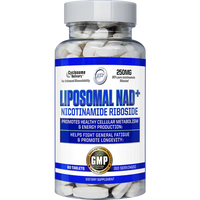
HI TECH PHARMACEUTICALS, INC. | Hi-Tech Liposomal NAD+ | 60 Tablets vs injection
// Ask SuppVault anything... █
HI TECH PHARMACEUTICALS, INC. | Hi-Tech Liposomal NAD+ | 60 Tablets Is For
Adults over 35 who feel like their baseline energy has become less reliable even when training, nutrition, and sleep are reasonably dialed in. Nicotinamide riboside targets the NAD+ pathway that underpins cellular energy production, making this a logical choice for people looking beyond caffeine toward mitochondrial support.
Lifters in high-workload phases who want better day-to-day recovery capacity without adding more stimulants. This formula does not try to jack up the nervous system; it supports the cellular energy machinery that training and recovery both depend on.
Busy professionals juggling early workouts, mentally demanding work, and long days with minimal margin for energy crashes. A daily NR formula fits well when the goal is steadier output and metabolic resilience rather than a short-lived buzz.
Frequent travelers and shift-stressed adults trying to maintain consistent performance despite schedule disruption. NAD+ metabolism is deeply tied to cellular stress response and energy turnover, which is why NR appeals to people whose routines are not always ideal.
Stim-sensitive users who want an energy-support supplement without caffeine, yohimbine, or other acute stimulants. Hi-Tech Liposomal NAD+ offers a completely different experience profile: no rush, no jitters, just a daily NAD+ precursor strategy.
Wellness-focused users building a longevity stack around mitochondrial support, recovery, and healthy aging. At a common two-tablet daily intake, the 500mg NR total lands in a range many educated users specifically seek out.
Athletes in deloads, off-seasons, or evening training routines who do not want stimulant carryover to disrupt sleep. Because this formula is stim-free, it can be used consistently without creating the timing problems common with pre-workouts.
People who prefer simple, transparent formulas over multi-ingredient blends with unclear priorities. One active ingredient at a disclosed dose makes it easy to evaluate, stack, and personalize.
📱
Can't decide?
Text us your training style. We'll tell you which of these two is right for you.
Our Analysis
Liposomal NAD vs NAD Injections
We've tested thousands of NAD products in our store, and the liposomal versus injection debate is simple: you're choosing between convenience and raw effectiveness.
Injections are the stronger option for maximum potency and predictable delivery. Liposomal NAD makes sense for non-invasive daily use. Which one wins depends on whether you value bioavailability and intensity or convenience and consistency.
Side-by-side
| Feature | Liposomal NAD | NAD Injection |
|---|---|---|
| Primary form | Oral liquid, capsule, or sachet using liposomal delivery | Subcutaneous or intramuscular injection |
| Typical active | NAD+, NMN, or NR in a liposomal carrier | NAD+ or NAD-related compounded injectable |
| Typical dose range | Often 250–500 mg/day, sometimes up to 1,000 mg/day depending on formula | Commonly 50–200 mg per injection, though protocols vary widely |
| Delivery method | Oral | Injected |
| Absorption profile | Better than standard oral in theory, but still depends on formula quality and digestion | Bypasses digestion; generally more direct systemic delivery |
| Convenience | High | Low to moderate |
| Speed of effect | Gradual, daily-use format | Faster, more noticeable for many users |
| Price positioning | Mid-range to premium | Premium to very expensive |
| Best for | Daily maintenance, travel, needle-averse users | Users wanting stronger delivery and willing to inject |
What’s actually in them
Liposomal products are messy. Some contain actual NAD+, but most use NMN or NR in a liposomal shell. Many also throw in phospholipids like sunflower lecithin, plus resveratrol, quercetin, or TMG.
The problem we see constantly: labels are inconsistent as hell. Some brands market “liposomal NAD” without clarifying if the dose is the actual compound, a precursor, or the whole liposomal mix. We’ve rejected plenty of these for that exact reason.
Injections are cleaner. Most are straight NAD+. Some clinics blend in B vitamins, MIC, or L-carnitine, but the clean comparison is pure NAD+ injection. What you see is what you get — assuming you use a reputable source.
Dosing reality
Liposomal: 250 mg/day is the entry point, 500 mg/day is the sweet spot for most, and 750–1,000 mg/day for the higher protocols. No universal clinical standard exists, so brands love throwing big numbers around. If they don’t clearly state the exact active form and whether the dose is NAD versus the whole matrix, we consider it suspect.
Injections: 50 mg, 100 mg, or 200 mg per shot, typically 1–3 times weekly. A 100 mg injection isn’t the same as 100 mg oral liposomal. Injections don’t fight digestion, so they’re far more efficient.
Form
Liposomal comes as liquids, softgels, capsules, or packets. No needles, easy for daily use and travel. Downside: liquids can taste like regret, and quality varies wildly between brands. Shelf stability matters.
Injections are subcutaneous or intramuscular. Direct, less dependent on your gut, and many people report stronger effects. The trade-off is needles, scheduling, and possible site discomfort.
Price
Decent liposomal runs $50–$120 per month. Premium stuff can hit $150+. The cheap stuff usually cuts corners on phospholipids, actual dose, or stability.
Injections run $150–$400+ per month, more if you’re doing clinic programs. You’re paying for the compounded product and direct delivery. If budget is the main factor, liposomal wins. If results per dollar matter more, injections usually justify the cost.
The real differences
1. Delivery efficiency: Injection wins. It bypasses the entire GI tract. Liposomal improves oral absorption but still has variables injections don’t.
2. Daily practicality: Liposomal destroys here. Easier to stay consistent for months. An injectable protocol is only better if you actually use it.
3. Label honesty: Liposomal products are often precursors, underdosed, or hidden in proprietary blends. Injections tend to be more transparent about what you’re actually getting.
4. Price-to-potency: Liposomal looks better on the shelf. Injection delivers better per milligram.
5. Clinical relevance: Neither has perfect standardized dosing, but injectable delivery is the more credible route for serious NAD support. We won’t even consider an oral liposomal product that doesn’t disclose at least 250–500 mg of a clearly identified compound.
Who should buy what
Get liposomal NAD if you want convenience, daily consistency, no needles, lower cost, and maintenance-level support. This fits busy people, travelers, beginners, and anyone who knows they won’t stick with injections.
We only recommend products that clearly list the exact active form and deliver at least 250–500 mg per serving with a legitimate liposomal system. Skip the proprietary blend garbage.
Get NAD injections if you want maximum delivery efficiency, aggressive support, faster results, and clearer dosing — and you’re comfortable with needles and the price.
This is for experienced users working with a clinic who want the stronger protocol. Look for 50–200 mg per injection with defined frequency from a reputable source.
Our verdict
Injection is the winner.
We’ve tested everything in this category. The entire point is delivery. Liposomal technology helps oral absorption, but it doesn’t solve the fundamental limitations of taking it through your mouth the way injection does. Injection is more direct, more potent, and gives you a clearer relationship between dose and effect.
That said, liposomal wins on adherence. If you won’t inject, the best injectable protocol in the world doesn’t matter. In that case, a properly dosed liposomal product at 250–500 mg+ daily is the right move.
On pure performance, we’d take injection every time — if budget allows and you’re ready for the real deal.
We've tested thousands of NAD products in our store, and the liposomal versus injection debate is simple: you're choosing between convenience and raw effectiveness.
Injections are the stronger option for maximum potency and predictable delivery. Liposomal NAD makes sense for non-invasive daily use. Which one wins depends on whether you value bioavailability and intensity or convenience and consistency.
Side-by-side
| Feature | Liposomal NAD | NAD Injection |
|---|---|---|
| Primary form | Oral liquid, capsule, or sachet using liposomal delivery | Subcutaneous or intramuscular injection |
| Typical active | NAD+, NMN, or NR in a liposomal carrier | NAD+ or NAD-related compounded injectable |
| Typical dose range | Often 250–500 mg/day, sometimes up to 1,000 mg/day depending on formula | Commonly 50–200 mg per injection, though protocols vary widely |
| Delivery method | Oral | Injected |
| Absorption profile | Better than standard oral in theory, but still depends on formula quality and digestion | Bypasses digestion; generally more direct systemic delivery |
| Convenience | High | Low to moderate |
| Speed of effect | Gradual, daily-use format | Faster, more noticeable for many users |
| Price positioning | Mid-range to premium | Premium to very expensive |
| Best for | Daily maintenance, travel, needle-averse users | Users wanting stronger delivery and willing to inject |
What’s actually in them
Liposomal products are messy. Some contain actual NAD+, but most use NMN or NR in a liposomal shell. Many also throw in phospholipids like sunflower lecithin, plus resveratrol, quercetin, or TMG.
The problem we see constantly: labels are inconsistent as hell. Some brands market “liposomal NAD” without clarifying if the dose is the actual compound, a precursor, or the whole liposomal mix. We’ve rejected plenty of these for that exact reason.
Injections are cleaner. Most are straight NAD+. Some clinics blend in B vitamins, MIC, or L-carnitine, but the clean comparison is pure NAD+ injection. What you see is what you get — assuming you use a reputable source.
Dosing reality
Liposomal: 250 mg/day is the entry point, 500 mg/day is the sweet spot for most, and 750–1,000 mg/day for the higher protocols. No universal clinical standard exists, so brands love throwing big numbers around. If they don’t clearly state the exact active form and whether the dose is NAD versus the whole matrix, we consider it suspect.
Injections: 50 mg, 100 mg, or 200 mg per shot, typically 1–3 times weekly. A 100 mg injection isn’t the same as 100 mg oral liposomal. Injections don’t fight digestion, so they’re far more efficient.
Form
Liposomal comes as liquids, softgels, capsules, or packets. No needles, easy for daily use and travel. Downside: liquids can taste like regret, and quality varies wildly between brands. Shelf stability matters.
Injections are subcutaneous or intramuscular. Direct, less dependent on your gut, and many people report stronger effects. The trade-off is needles, scheduling, and possible site discomfort.
Price
Decent liposomal runs $50–$120 per month. Premium stuff can hit $150+. The cheap stuff usually cuts corners on phospholipids, actual dose, or stability.
Injections run $150–$400+ per month, more if you’re doing clinic programs. You’re paying for the compounded product and direct delivery. If budget is the main factor, liposomal wins. If results per dollar matter more, injections usually justify the cost.
The real differences
1. Delivery efficiency: Injection wins. It bypasses the entire GI tract. Liposomal improves oral absorption but still has variables injections don’t.
2. Daily practicality: Liposomal destroys here. Easier to stay consistent for months. An injectable protocol is only better if you actually use it.
3. Label honesty: Liposomal products are often precursors, underdosed, or hidden in proprietary blends. Injections tend to be more transparent about what you’re actually getting.
4. Price-to-potency: Liposomal looks better on the shelf. Injection delivers better per milligram.
5. Clinical relevance: Neither has perfect standardized dosing, but injectable delivery is the more credible route for serious NAD support. We won’t even consider an oral liposomal product that doesn’t disclose at least 250–500 mg of a clearly identified compound.
Who should buy what
Get liposomal NAD if you want convenience, daily consistency, no needles, lower cost, and maintenance-level support. This fits busy people, travelers, beginners, and anyone who knows they won’t stick with injections.
We only recommend products that clearly list the exact active form and deliver at least 250–500 mg per serving with a legitimate liposomal system. Skip the proprietary blend garbage.
Get NAD injections if you want maximum delivery efficiency, aggressive support, faster results, and clearer dosing — and you’re comfortable with needles and the price.
This is for experienced users working with a clinic who want the stronger protocol. Look for 50–200 mg per injection with defined frequency from a reputable source.
Our verdict
Injection is the winner.
We’ve tested everything in this category. The entire point is delivery. Liposomal technology helps oral absorption, but it doesn’t solve the fundamental limitations of taking it through your mouth the way injection does. Injection is more direct, more potent, and gives you a clearer relationship between dose and effect.
That said, liposomal wins on adherence. If you won’t inject, the best injectable protocol in the world doesn’t matter. In that case, a properly dosed liposomal product at 250–500 mg+ daily is the right move.
On pure performance, we’d take injection every time — if budget allows and you’re ready for the real deal.
