

Nutrastop | Liquid Chalk | 90 Capsules vs regular chalk climbing
// Ask SuppVault anything... █
Nutrastop | Liquid Chalk | 90 Capsules Is For
Experienced cutters who train in a calorie deficit and need help maintaining urgency when food is low and motivation drops. The caffeine, 2-aminoisoheptane, and likely rauwolscine combination is built less for comfort and more for making hard dieting days feel more manageable and productive.
Physique athletes entering a leaning-out phase who want appetite suppression and gym energy from one formula instead of using a separate pre-workout and fat burner. Garcinia provides the appetite-management angle, while the stimulant core is designed to keep sessions aggressive even when calories are reduced.
Intermediate lifters who already know they tolerate stimulants well and want something stronger in feel than coffee alone. The 100mg caffeine looks modest on paper, but the added 2-aminoisoheptane and hidden rauwolscine shift the real-world experience well beyond a basic caffeine capsule.
Morning trainers who need to flip the switch quickly before fasted cardio or an early lift. This type of formula is designed to create a rapid sense of activation, sharpen focus, and reduce hunger noise when training comes before a full meal.
Busy professionals dieting for aesthetic goals who struggle most with appetite and low-energy afternoons. The formula's likely strongest practical value is not magical fat loss but making it easier to stay on plan and remain mentally engaged during demanding days.
Users who have outgrown entry-level thermogenics and are looking for a more advanced adrenergic profile. Rauwolscine and 2-aminoisoheptane are not beginner ingredients, and that is exactly why this formula appeals to a more stimulant-literate buyer.
Lifters doing short cutting blocks who value how a product feels in the moment as much as what it says on paper. This formula is experience-driven: more drive, less appetite, and a more aggressive mindset during restrictive phases.
Gym-goers who prefer capsule convenience over powders and do not want to mix a drink before every training session. One-capsule serving simplicity makes this easy to travel with, easy to standardize, and easy to use consistently during a fat-loss phase.
📱
Can't decide?
Text us your training style. We'll tell you which of these two is right for you.
Our Analysis
Here's the real talk on liquid chalk vs regular chalk.
We've tested thousands of these products in actual climbing sessions, and after running through it all, our take is blunt: regular chalk is still the default winner for most climbers. Both keep your hands dry and crank up friction, but they do it in completely different ways, and those differences actually matter depending on where and how you climb.
Regular chalk wins on adaptability, value, and that classic dry grip most people want. Liquid chalk has specific advantages when cleanliness, gym rules, or a solid base layer matter more than constant re-chalking.
The Breakdown
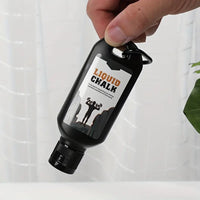
Liquid chalk is mostly magnesium carbonate suspended in alcohol (usually 40–80% ethanol or isopropyl), plus thickeners, rosin, silica, or moisturizers in some formulas. It goes on as a liquid, cream, or gel and dries in 10–30 seconds, leaving a thin, even coating. A standard application is 1 to 3 mL per use — about pea to dime sized per hand if you're not wasting it.
Regular chalk is simpler: straight magnesium carbonate, sometimes with drying agents or different particle sizes. You use roughly 0.5 to 2 grams per re-chalk. No drying time, no alcohol sting on cracked skin, just immediate powdery friction.
We see the same patterns every time. Liquid chalk gives a more uniform base layer, especially good for sweaty hands at the start of a session. But pile on more than you need (3+ mL) and it clumps, flakes, feels slick, and kills your feel on small holds. The sweet spot is a thin coat rubbed in thoroughly.
Regular chalk lets you fine-tune on the fly — light dust before a route, heavy re-chalk at rests, fingertips only, whatever the conditions demand. That's huge on long sport routes or projects where your hands change and you need to adjust instantly.
Form and Real-World Use
Liquid chalk is cleaner, low mess, and doesn't cloud up the air. Perfect for gyms that hate dust, competition settings, or keeping your car and gear from looking like a chalk factory. We like it as a base layer, especially for indoor boulderers and board climbers. Downside? You have to wait for it to dry, and mid-route top-ups suck.
Regular chalk comes in loose, blocks, balls, or chunky form. It's fast, familiar, and gives that responsive, tactile grip most climbers prefer on edges and slopers. Yeah it's messy and some gyms limit it, but it performs better in variable conditions outdoors, on sport, trad, or long boulders.
Price Reality
Liquid chalk is premium priced — $10–20 for 100–250 mL. It costs more per session. Regular chalk is the value play: $5–15 for 200–300+ grams. If you climb a lot, especially outdoors, regular chalk is cheaper by a mile.
Who Should Buy What
Buy liquid chalk if:
- You climb mostly indoors
- Your gym restricts loose chalk
- You want low mess and less airborne dust
- You have sweaty hands at the start of sessions
- You want a durable base layer
Buy regular chalk if:
- You climb outdoors regularly
- You need to re-chalk mid-route
- You want maximum tactile feedback
- You're on sport, trad, or long boulders where conditions change
- You want the best bang for your buck
The Move Most People Sleep On
The best setup isn't choosing one exclusively. We see the strongest climbers use liquid chalk as a base layer, then regular chalk for touch-ups. You get the long-lasting dry start plus the ability to adjust instantly. If you sweat heavily, this combo beats either product alone.
Our Final Call
Regular chalk is the better overall choice. It adapts better, feels more natural, reapplies instantly, costs less, and matches how most people actually climb.
Liquid chalk isn't a gimmick — it's excellent for indoor sessions, sweaty starters, dust-sensitive gyms, and as a base. But for the broadest range of climbing, regular chalk wins.
Pick regular chalk if you want the best all-around performer.
Pick liquid chalk if cleanliness and gym rules are your top priority.
Pick both if you climb enough to optimize every session.
That's it. Regular chalk is still king.
We've tested thousands of these products in actual climbing sessions, and after running through it all, our take is blunt: regular chalk is still the default winner for most climbers. Both keep your hands dry and crank up friction, but they do it in completely different ways, and those differences actually matter depending on where and how you climb.
Regular chalk wins on adaptability, value, and that classic dry grip most people want. Liquid chalk has specific advantages when cleanliness, gym rules, or a solid base layer matter more than constant re-chalking.
The Breakdown
Liquid chalk is mostly magnesium carbonate suspended in alcohol (usually 40–80% ethanol or isopropyl), plus thickeners, rosin, silica, or moisturizers in some formulas. It goes on as a liquid, cream, or gel and dries in 10–30 seconds, leaving a thin, even coating. A standard application is 1 to 3 mL per use — about pea to dime sized per hand if you're not wasting it.
Regular chalk is simpler: straight magnesium carbonate, sometimes with drying agents or different particle sizes. You use roughly 0.5 to 2 grams per re-chalk. No drying time, no alcohol sting on cracked skin, just immediate powdery friction.
We see the same patterns every time. Liquid chalk gives a more uniform base layer, especially good for sweaty hands at the start of a session. But pile on more than you need (3+ mL) and it clumps, flakes, feels slick, and kills your feel on small holds. The sweet spot is a thin coat rubbed in thoroughly.
Regular chalk lets you fine-tune on the fly — light dust before a route, heavy re-chalk at rests, fingertips only, whatever the conditions demand. That's huge on long sport routes or projects where your hands change and you need to adjust instantly.
Form and Real-World Use
Liquid chalk is cleaner, low mess, and doesn't cloud up the air. Perfect for gyms that hate dust, competition settings, or keeping your car and gear from looking like a chalk factory. We like it as a base layer, especially for indoor boulderers and board climbers. Downside? You have to wait for it to dry, and mid-route top-ups suck.
Regular chalk comes in loose, blocks, balls, or chunky form. It's fast, familiar, and gives that responsive, tactile grip most climbers prefer on edges and slopers. Yeah it's messy and some gyms limit it, but it performs better in variable conditions outdoors, on sport, trad, or long boulders.
Price Reality
Liquid chalk is premium priced — $10–20 for 100–250 mL. It costs more per session. Regular chalk is the value play: $5–15 for 200–300+ grams. If you climb a lot, especially outdoors, regular chalk is cheaper by a mile.
Who Should Buy What
Buy liquid chalk if:
- You climb mostly indoors
- Your gym restricts loose chalk
- You want low mess and less airborne dust
- You have sweaty hands at the start of sessions
- You want a durable base layer
Buy regular chalk if:
- You climb outdoors regularly
- You need to re-chalk mid-route
- You want maximum tactile feedback
- You're on sport, trad, or long boulders where conditions change
- You want the best bang for your buck
The Move Most People Sleep On
The best setup isn't choosing one exclusively. We see the strongest climbers use liquid chalk as a base layer, then regular chalk for touch-ups. You get the long-lasting dry start plus the ability to adjust instantly. If you sweat heavily, this combo beats either product alone.
Our Final Call
Regular chalk is the better overall choice. It adapts better, feels more natural, reapplies instantly, costs less, and matches how most people actually climb.
Liquid chalk isn't a gimmick — it's excellent for indoor sessions, sweaty starters, dust-sensitive gyms, and as a base. But for the broadest range of climbing, regular chalk wins.
Pick regular chalk if you want the best all-around performer.
Pick liquid chalk if cleanliness and gym rules are your top priority.
Pick both if you climb enough to optimize every session.
That's it. Regular chalk is still king.
