

Nutrastop | Liquid Chalk | 90 Capsules vs regular chalk powerlifting
// Ask SuppVault anything... █
Nutrastop | Liquid Chalk | 90 Capsules Is For
Experienced cutters who train in a calorie deficit and need help maintaining urgency when food is low and motivation drops. The caffeine, 2-aminoisoheptane, and likely rauwolscine combination is built less for comfort and more for making hard dieting days feel more manageable and productive.
Physique athletes entering a leaning-out phase who want appetite suppression and gym energy from one formula instead of using a separate pre-workout and fat burner. Garcinia provides the appetite-management angle, while the stimulant core is designed to keep sessions aggressive even when calories are reduced.
Intermediate lifters who already know they tolerate stimulants well and want something stronger in feel than coffee alone. The 100mg caffeine looks modest on paper, but the added 2-aminoisoheptane and hidden rauwolscine shift the real-world experience well beyond a basic caffeine capsule.
Morning trainers who need to flip the switch quickly before fasted cardio or an early lift. This type of formula is designed to create a rapid sense of activation, sharpen focus, and reduce hunger noise when training comes before a full meal.
Busy professionals dieting for aesthetic goals who struggle most with appetite and low-energy afternoons. The formula's likely strongest practical value is not magical fat loss but making it easier to stay on plan and remain mentally engaged during demanding days.
Users who have outgrown entry-level thermogenics and are looking for a more advanced adrenergic profile. Rauwolscine and 2-aminoisoheptane are not beginner ingredients, and that is exactly why this formula appeals to a more stimulant-literate buyer.
Lifters doing short cutting blocks who value how a product feels in the moment as much as what it says on paper. This formula is experience-driven: more drive, less appetite, and a more aggressive mindset during restrictive phases.
Gym-goers who prefer capsule convenience over powders and do not want to mix a drink before every training session. One-capsule serving simplicity makes this easy to travel with, easy to standardize, and easy to use consistently during a fat-loss phase.
📱
Can't decide?
Text us your training style. We'll tell you which of these two is right for you.
Our Analysis
Liquid Chalk vs Regular Chalk for Powerlifting
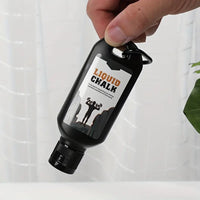
We've tested thousands of these products in our store and in our own training, and the truth is simple: both work, but they serve different masters. For actual powerlifting, regular chalk still delivers the strongest raw grip. Liquid chalk wins on convenience, zero mess, and not getting banned from commercial gyms.
Here's the no-bullshit breakdown on ingredients, performance, mess, and price.
Quick Comparison
| Feature | Liquid Chalk | Regular Chalk |
|---|---|---|
| Main ingredient | Magnesium carbonate suspended in alcohol, water, and binders | Magnesium carbonate |
| Typical formula | ~40–80% alcohol + magnesium carbonate + resin/thickener | 100% magnesium carbonate or near-pure block/powder |
| Form | Squeeze bottle, cream/gel that dries on hands | Block, loose powder, ball chalk |
| Drying mechanism | Alcohol evaporates, leaving chalk film | Direct dry powder coating on skin |
| Grip feel | Thin, even coating; less dusty | Thick, high-friction coating; strongest “chalky” feel |
| Mess level | Low | High |
| Gym approval | Often allowed where loose chalk is banned | Often restricted in commercial gyms |
| Reapplication | Usually less frequent for general sessions, but can wear off under heavy sweating | Easy to reapply between sets |
| Price positioning | Premium | Budget-friendly |
| Best for | Commercial gyms, travel, cleaner setups | Powerlifting gyms, max-effort work, heavy deadlifts |
Ingredients
Liquid Chalk
Most formulas are magnesium carbonate floating in alcohol (usually 40-80% ethanol or isopropyl), water, and some resins or thickeners to make it stick. You squeeze out a dime-sized to quarter-sized amount per hand — about 1–3 mL total.
The problem? They almost never disclose the actual magnesium carbonate percentage. We've seen too many brands hype the performance while skimping on the active ingredient. You're mostly paying for the fancy delivery system.
Regular Chalk
Just magnesium carbonate. Sometimes a tiny anti-caking agent. That's it.
You rub a light layer across your palms, fingers, and thumbs. Heavy pullers usually go through 2–5 grams per session with regular reapplication. No mystery, no fillers.
Performance Reality
This isn't some pre-workout where dosing is everything, but the amount of actual chalk on your hands matters.
Regular chalk gives you a full-strength, thick layer of magnesium carbonate every single time. Liquid chalk leaves a thinner film once the alcohol evaporates.
If you're chasing maximum grip on heavy deadlifts, axle bars, or max-effort singles, regular chalk is noticeably better. We've pulled with both on the same day — the difference is obvious when the weight gets serious.
Form and Real-World Use
Liquid Chalk
Dries in 10–30 seconds. Minimal dust. Easy to throw in a bag. Perfect when your gym has a stick up its ass about chalk clouds.
Downsides: some formulas stay tacky too long, others crack and flake. Cheap ones apply like shit. Harder to build up layers mid-session.
Regular Chalk
Instant grip. Slap it on heavy between sets. The classic feel every serious lifter knows.
The trade-off is the mess — it gets everywhere. Not portable. And good luck using it at Planet Fitness.
Price
Liquid chalk runs $10–$20 for a 50–250 mL bottle. Sounds okay until you train five days a week and realize you're going through it faster than expected.
Regular chalk? $2–$5 for a block. $8–$15 for bigger bags. It's stupidly cheap and lasts forever. Regular chalk wins on value every single time.
Key Differences
Raw Grip Performance: Regular chalk wins. Thicker layer, easier to reload exactly where you need it, handles sweat and heavy sets better. This is what we use for our own heavy deadlifts.
Cleanliness and Gym Survival: Liquid chalk wins. No dust, no residue, no angry staff members. If your gym bans loose chalk, liquid is the only move.
Consistency: Regular chalk wins. It's one ingredient. Liquid formulas are all over the place — some are excellent, many are mediocre.
Portability: Liquid chalk wins. Bag it, car it, travel with it, use it anywhere.
Who Should Buy What
Buy Liquid Chalk if:
- Your commercial gym bans regular chalk
- You want grip without painting the floor white
- You travel or train in multiple locations
- You're doing mixed training, pull-ups, or moderate deadlifts
Buy Regular Chalk if:
- You train in a powerlifting gym, garage, or home setup
- Maximum grip is your priority
- You pull heavy and often
- You want the cheapest, most effective option
Our Verdict
For powerlifting, regular chalk wins.
It gives stronger grip, lets you load up between heavy sets, stays consistent, and costs a fraction of the price. It's still the standard in every serious strength environment for a reason.
Liquid chalk isn't bad — it's actually smart when your gym is strict or you hate mess. But if the question is "what's best for powerlifting performance," especially heavy deadlifts, we're grabbing regular chalk every time.
Only time we'd choose liquid instead? When the gym bans loose chalk, when we need to stay clean, or when convenience beats absolute performance. Otherwise, regular chalk is the correct answer.
We've tested thousands of these products in our store and in our own training, and the truth is simple: both work, but they serve different masters. For actual powerlifting, regular chalk still delivers the strongest raw grip. Liquid chalk wins on convenience, zero mess, and not getting banned from commercial gyms.
Here's the no-bullshit breakdown on ingredients, performance, mess, and price.
Quick Comparison
| Feature | Liquid Chalk | Regular Chalk |
|---|---|---|
| Main ingredient | Magnesium carbonate suspended in alcohol, water, and binders | Magnesium carbonate |
| Typical formula | ~40–80% alcohol + magnesium carbonate + resin/thickener | 100% magnesium carbonate or near-pure block/powder |
| Form | Squeeze bottle, cream/gel that dries on hands | Block, loose powder, ball chalk |
| Drying mechanism | Alcohol evaporates, leaving chalk film | Direct dry powder coating on skin |
| Grip feel | Thin, even coating; less dusty | Thick, high-friction coating; strongest “chalky” feel |
| Mess level | Low | High |
| Gym approval | Often allowed where loose chalk is banned | Often restricted in commercial gyms |
| Reapplication | Usually less frequent for general sessions, but can wear off under heavy sweating | Easy to reapply between sets |
| Price positioning | Premium | Budget-friendly |
| Best for | Commercial gyms, travel, cleaner setups | Powerlifting gyms, max-effort work, heavy deadlifts |
Ingredients
Liquid Chalk
Most formulas are magnesium carbonate floating in alcohol (usually 40-80% ethanol or isopropyl), water, and some resins or thickeners to make it stick. You squeeze out a dime-sized to quarter-sized amount per hand — about 1–3 mL total.
The problem? They almost never disclose the actual magnesium carbonate percentage. We've seen too many brands hype the performance while skimping on the active ingredient. You're mostly paying for the fancy delivery system.
Regular Chalk
Just magnesium carbonate. Sometimes a tiny anti-caking agent. That's it.
You rub a light layer across your palms, fingers, and thumbs. Heavy pullers usually go through 2–5 grams per session with regular reapplication. No mystery, no fillers.
Performance Reality
This isn't some pre-workout where dosing is everything, but the amount of actual chalk on your hands matters.
Regular chalk gives you a full-strength, thick layer of magnesium carbonate every single time. Liquid chalk leaves a thinner film once the alcohol evaporates.
If you're chasing maximum grip on heavy deadlifts, axle bars, or max-effort singles, regular chalk is noticeably better. We've pulled with both on the same day — the difference is obvious when the weight gets serious.
Form and Real-World Use
Liquid Chalk
Dries in 10–30 seconds. Minimal dust. Easy to throw in a bag. Perfect when your gym has a stick up its ass about chalk clouds.
Downsides: some formulas stay tacky too long, others crack and flake. Cheap ones apply like shit. Harder to build up layers mid-session.
Regular Chalk
Instant grip. Slap it on heavy between sets. The classic feel every serious lifter knows.
The trade-off is the mess — it gets everywhere. Not portable. And good luck using it at Planet Fitness.
Price
Liquid chalk runs $10–$20 for a 50–250 mL bottle. Sounds okay until you train five days a week and realize you're going through it faster than expected.
Regular chalk? $2–$5 for a block. $8–$15 for bigger bags. It's stupidly cheap and lasts forever. Regular chalk wins on value every single time.
Key Differences
Raw Grip Performance: Regular chalk wins. Thicker layer, easier to reload exactly where you need it, handles sweat and heavy sets better. This is what we use for our own heavy deadlifts.
Cleanliness and Gym Survival: Liquid chalk wins. No dust, no residue, no angry staff members. If your gym bans loose chalk, liquid is the only move.
Consistency: Regular chalk wins. It's one ingredient. Liquid formulas are all over the place — some are excellent, many are mediocre.
Portability: Liquid chalk wins. Bag it, car it, travel with it, use it anywhere.
Who Should Buy What
Buy Liquid Chalk if:
- Your commercial gym bans regular chalk
- You want grip without painting the floor white
- You travel or train in multiple locations
- You're doing mixed training, pull-ups, or moderate deadlifts
Buy Regular Chalk if:
- You train in a powerlifting gym, garage, or home setup
- Maximum grip is your priority
- You pull heavy and often
- You want the cheapest, most effective option
Our Verdict
For powerlifting, regular chalk wins.
It gives stronger grip, lets you load up between heavy sets, stays consistent, and costs a fraction of the price. It's still the standard in every serious strength environment for a reason.
Liquid chalk isn't bad — it's actually smart when your gym is strict or you hate mess. But if the question is "what's best for powerlifting performance," especially heavy deadlifts, we're grabbing regular chalk every time.
Only time we'd choose liquid instead? When the gym bans loose chalk, when we need to stay clean, or when convenience beats absolute performance. Otherwise, regular chalk is the correct answer.
