

This product
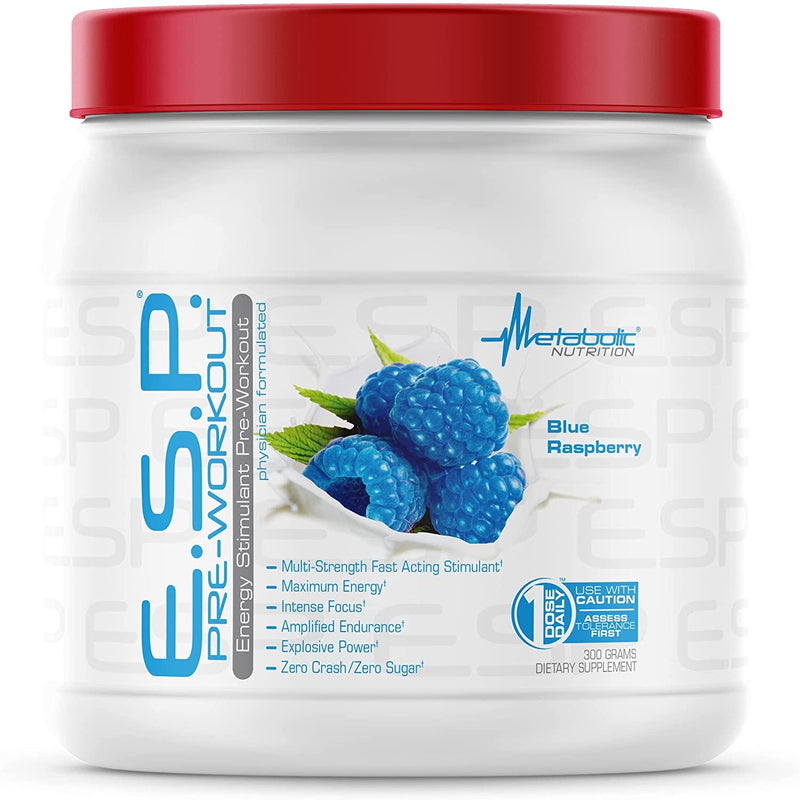
 Metabolic Nutrition | MN ESP PreWorkout | 30 ServingsMetabolic Nutrition
- SuppVault Score
- 87/100
- Per serving
- $1.17
Key actives
Metabolic Nutrition
Classic high-stim energy with beta-alanine and focus support
$34.95 $49.99$1.16/serving SuppVault Summary
ESP is a classic high-stim pre-workout built for fast energy, sharper focus, and harder training intensity. It prioritizes stimulant-driven gym feel over pump-heavy disclosure. The label features a proprietary active blend plus beta-alanine, tyrosine, choline, and light electrolytes.
Metabolic Nutrition publishes test results from independent third-party labs. Svpplements links to the manufacturer’s data — we don’t test products ourselves.
Discount applied automatically in cart.


E.S.P. does not include disclosed creatine, so adding a standalone creatine monohydrate fills one of the most evidence-backed performance gaps in the formula. Creatine supports phosphocreatine replenishment for repeated high-output efforts, complementing beta-alanine’s longer-term acid-buffering role.
Take daily; can be taken with E.S.P. pre-workout or any time of day consistently
This product is not built around disclosed nitric oxide ingredients like citrulline or nitrates. Pairing it with a stim-free pump formula adds blood flow and cell-swelling support without pushing stimulant load even higher.
Mix alongside E.S.P. 20-30 minutes pre-workout if the pump formula is stimulant-free
Although E.S.P. includes calcium, magnesium, potassium, and sodium, the sodium content is especially modest for hard training or heavy sweating. A dedicated electrolyte product can improve hydration support, especially for long sessions, hot environments, or fasted training.
Use pre-workout or sip intra-workout depending on sweat rate and session length
E.S.P. improves readiness to train, but it does not address post-training amino acid delivery. A high-quality protein product complements the session by supporting muscle protein synthesis and recovery after the work is done.
Use after training or later in the day to support total daily protein intake
ESP Extreme likely appeals more to users wanting an even more aggressive high-stim experience.
P.S.P. should have the edge for users who want more pump emphasis and a more modern pre-workout profile.
ESP is the better pick if you want clear stimulant energy and acute mental drive before training.
ESP brings energy and focus, while standalone citrulline is better for adding pump support.
Side-by-side against the closest competitors. Score reflects clinical dosing, transparency, and testing.
Metabolic Nutrition | MN ESP PreWorkout | 30 ServingsMetabolic Nutrition
 Metabolic Nutrition | MN ESP Extreme | 50 ServingsMetabolic Nutrition
ESP Extreme likely appeals more to users wanting an even more aggressive high-stim experience.
Compare side-by-side → Metabolic Nutrition | P.S.P | 42 ServingsMetabolic Nutrition
P.S.P. should have the edge for users who want more pump emphasis and a more modern pre-workout profile.
Compare side-by-side → Metabolic Nutrition | MN Stim-Free Pump | 30 ServingsMetabolic Nutrition
ESP is the better pick if you want clear stimulant energy and acute mental drive before training.
Compare side-by-side →Comparison data combines live storefront pricing with our SuppVault analysis. Competitor scores reflect public-label data; manufacturer-side changes may not be reflected in real time.
Metabolic Nutrition E.S.P. is a stimulant-forward pre-workout built around acute workout energy, heightened training focus, and sustained session intensity rather than today’s common “max pump at all costs” formulation style. The philosophy here is straightforward: combine central stimulants, catecholamine support, cholinergic support, beta-alanine, and a light electrolyte backbone to create a pre-workout that feels immediate in the gym. This is a classic high-stim design. It is not trying to be an all-in-one clinical pump formula, and the label confirms that by emphasizing a proprietary active blend while separately listing minerals and B vitamins.
The disclosed support nutrients are useful but not the main story. Calcium gluconate, magnesium gluconate, and potassium gluconate are each listed at 200 mg, alongside 30 mg sodium. These are not aggressive hydration doses compared with dedicated electrolyte products, but they do add mineral coverage around muscle contraction, nerve signaling, and fluid balance. Sodium matters acutely in training because sodium status influences fluid distribution and neuromuscular function, but 30 mg sodium is a small amount in sports nutrition terms. The B-vitamin panel includes niacin at 20 mg, vitamin B6 at 4.23 mg, and vitamin B12 at 500 mcg. These do not create stimulant effects by themselves, but they support energy metabolism and neurotransmitter pathways, with B6 especially relevant as a cofactor in amino acid metabolism.
The active performance core is where E.S.P. earns its identity. Beta-alanine citrate is included, but the exact amount is not disclosed. That matters because beta-alanine’s best-supported use is chronic, not acute: consistent intake in the neighborhood of 3.2 g daily raises muscle carnosine, which helps buffer exercise-induced hydrogen ions and delay the burn during high-intensity work. Without the dose, we cannot confirm whether E.S.P. reaches the clinically studied range. Users may still feel the familiar tingling sensation, but paresthesia is not proof of full efficacy.
The stimulant system includes 1,3,7-trimethylpurine-2,6-dione, which is caffeine, and 3,7-dimethyl-1H-purine-2,6-dione, which is theobromine. Caffeine works primarily through adenosine receptor antagonism, increasing alertness, perceived energy, and training drive. Theobromine is a related methylxanthine with a milder, longer-feeling stimulation profile that often broadens the energy curve rather than spiking it. The issue again is transparency: this is categorized as a high-stim product, but the exact caffeine amount is not disclosed on the verified panel provided here, so stimulant-sensitive users should approach conservatively.
For focus support, E.S.P. uses N-acetyl-L-tyrosine and choline bitartrate. Tyrosine is a precursor to catecholamines such as dopamine and norepinephrine, which becomes particularly relevant under stress, fatigue, or cognitively demanding training. The evidence base is much stronger for plain L-tyrosine than for N-acetyl-L-tyrosine specifically, so this ingredient is best viewed as supportive rather than a guaranteed high-impact nootropic. Choline bitartrate contributes substrate for acetylcholine, a neurotransmitter involved in attention and neuromuscular signaling. Together with caffeine and theobromine, these ingredients create the intended “locked-in” training feel.
As a system, the formula stacks stimulants for immediate CNS activation, tyrosine/choline for focus architecture, and beta-alanine for cumulative high-intensity support. The transparency tradeoff is real: this is a proprietary-blend formula, which means you cannot verify whether beta-alanine, caffeine, tyrosine, or choline are dosed in line with published performance research. Compared with fully disclosed modern pre-workouts, that is a clear limitation. Day 1, expect energy, mental lift, and potentially beta-alanine tingles. Over 2-4 weeks, the ingredient most likely to provide cumulative performance value is beta-alanine—if the hidden dose is high enough to materially support carnosine loading.
Beta-alanine functions as the rate-limiting precursor to carnosine synthesis inside skeletal muscle. Elevated carnosine helps buffer hydrogen ion accumulation during repeated high-intensity work, delaying the drop in contractile efficiency associated with acidosis. The benefit is not primarily acute, even if tingling is felt immediately after ingestion. Meaningful performance support depends on repeated intake over time to raise intramuscular stores.
Caffeine and theobromine are methylxanthines that influence adenosine signaling, alertness, and perceived effort. Caffeine tends to produce the sharper central nervous system activation, while theobromine often contributes a broader and sometimes smoother stimulatory feel. Together they can alter vigilance, motivation, and willingness to sustain training intensity. Exact impact here is harder to predict because the blend dose is undisclosed.
Tyrosine is a precursor for catecholamine neurotransmitters, including dopamine and norepinephrine, which are highly relevant under psychologically and physically stressful conditions. Supplemental tyrosine is often positioned to support cognitive performance when fatigue or stress is elevated. N-acetyl-L-tyrosine is commonly used in formulas, but direct clinical validation for NALT-specific dosing is limited compared with L-tyrosine literature. That makes mechanistic rationale stronger than dose-specific certainty in this product.
Choline provides substrate for acetylcholine synthesis, a neurotransmitter involved in attention and neuromuscular signaling. In pre-workout formulas, choline bitartrate is generally used to support focus and mind-muscle connection rather than dramatic stimulant-like energy. Its effects are often most noticeable when paired with stimulants and catecholamine-support ingredients. The practical outcome is usually a more directed, task-oriented training feel.
Verified athletes can view NCAA, WADA, and high-school compliance status for this product.
* These statements have not been evaluated by the Food and Drug Administration. This product is not intended to diagnose, treat, cure, or prevent any disease. Consult your physician before use if you have a medical condition or take medications.
Drop your number and our team will instantly text you.
Our team is on it. Check your texts — real advice, real fast.
Brain-curated complementary picks for synergy and full-spectrum coverage.
 70
70
 64
64
 97
97
 69
69
 64
64
 87
87
Secure sign in
Svpplements uses Shopify Customer Accounts for protected login, order history, and account data.

