

Metabolic Nutrition | VITAGEN vs Yakult
// Ask SuppVault anything... █
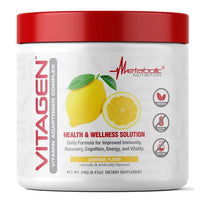
Metabolic Nutrition | VITAGEN Is For
Busy adults with inconsistent meal quality who want a broad-spectrum daily nutrition insurance policy in a single scoop. VITAGEN covers core vitamins and minerals including D3, K2, zinc, selenium, iodine, calcium, and iron, making it a practical daily anchor when real-world eating is not perfect.
Lifters in calorie deficits or contest-prep style dieting phases whose food variety has narrowed. When intake becomes repetitive, a formula with a full B-complex, fat-soluble vitamins, trace minerals, and iron helps protect against the micronutrient drift that often happens during aggressive dieting.
Women looking for a powdered multivitamin that actually includes iron at 18 mg. Many multis leave iron out entirely, but this formula keeps it in alongside folic acid, B12, copper, and vitamin C to better support red blood cell and oxygen-transport nutrition.
Strength athletes and high-output trainees who understand that performance is built on fundamentals, not just pre-workouts. The B-vitamin complex supports energy metabolism, while vitamin D3, K2, calcium, magnesium, boron, and zinc support the structural and enzymatic side of long-term training.
People focused on thyroid-supportive nutrition who want iodine and selenium in the same formula. Iodine supplies raw material for thyroid hormone production, while selenium is required for selenoproteins involved in thyroid hormone conversion and antioxidant defense.
Anyone who hates swallowing multiple tablets every morning and will be more compliant with a flavored powder. Adherence is an underrated part of supplement success, and this format makes foundational supplementation easier to keep consistent.
General wellness users who want transparent labeling instead of a proprietary wellness blend. Every vitamin and mineral dose is printed, so you can assess exactly what you are using instead of guessing behind a trademark-heavy pixie-dusted panel.
Adults over 40 who want day-to-day support for bone, immune, and metabolic systems. D3, K2, calcium, magnesium, zinc, selenium, and boron create a practical nutrient stack for long-term maintenance rather than short-lived stimulation.
📱
Can't decide?
Text us your training style. We'll tell you which of these two is right for you.
Our Analysis
Vitagen vs Yakult: Our Straight Take
We’ve tested thousands of probiotic products in this store, and when customers ask us about Vitagen versus Yakult, we cut through the noise immediately: Yakult is the actual probiotic product. Vitagen is a flavored cultured milk drink that uses probiotic marketing. Not the same thing.
Here’s the no-bullshit breakdown.
How They Compare
| Feature | Vitagen | Yakult |
|---|---|---|
| Product type | Cultured milk drink | Probiotic fermented milk drink |
| Main probiotic | Varies by market; usually just *Lactobacillus acidophilus* and/or *Bifidobacterium* species | Lacticaseibacillus casei Shirota |
| Probiotic dose | Rarely clearly standardized on pack | 6.5 billion live L. casei Shirota per bottle |
| Serving size | Typically 125 mL | 65 mL |
| Sugar profile | Larger bottle usually means more total sugar | Smaller serving keeps sugar lower |
| Flavor range | More flavors | One signature taste |
| Price positioning | Cheaper, more budget-friendly | Premium for the strain and science |
| Best for | People who want cheap sweet dairy and variety | People who actually want a specific strain with a real dose |
The Ingredients Reality
Vitagen’s formula jumps around by country but it’s basically water, sugar, skimmed milk powder, live cultures, and flavorings. The cultures are often listed at species level — *Lactobacillus acidophilus*, *Bifidobacterium* species. That sounds fine until you’ve been in this game as long as we have. Species-level is vague. It doesn’t tell you if the exact strain has any meaningful data.
Yakult doesn’t play those games. Water, sugar, skim milk powder, and Lacticaseibacillus casei Shirota. That’s it. One named strain they’ve built their entire brand around. In our experience, a clearly identified strain beats a mystery blend every single time.
The Dose Difference
Yakult puts 6.5 billion live L. casei Shirota in every 65 mL bottle. Clear, consistent, and tied to a specific strain.
Vitagen? The count is usually buried, varies by region, and they don’t own the probiotic conversation. When the dose isn’t clearly stated and tied to a specific strain, we consider that a weakness. 6.5 billion of a named strain versus “some cultures in a bigger bottle” is not a hard choice.
Format and Daily Use
Vitagen comes in a bigger bottle and feels more like a snack drink. More flavors, more volume, easier to treat like juice.
Yakult is that small 65 mL shot. It feels like a functional habit instead of a beverage. We see way better compliance with the small, exact daily format. People actually remember to take it every day.
Price and Value
Vitagen wins on pure cost per bottle and works fine if you’re just after cheap cultured milk for the kids with flavor options.
Yakult costs more per milliliter but you’re paying for a clearly defined strain at a clearly defined dose. If probiotic specificity matters to you, the premium is worth it. If it doesn’t, then yeah, Yakult looks expensive.
Our Final Call
Yakult wins.
It delivers a named strain (Lacticaseibacillus casei Shirota) at 6.5 billion live bacteria per bottle in a format built for daily use. That’s what we respect.
Vitagen isn’t terrible, but it’s a sweet dairy drink that happens to contain bacteria, not a precision probiotic product. Bigger bottle doesn’t equal better results. More sugar doesn’t equal better results. Vague species naming doesn’t equal better results.
Buy Yakult if you actually care about probiotic support.
Buy Vitagen only if price, flavor variety, and larger servings matter more to you than strain specificity and proper dosing.
We’ve seen what works for customers over years of selling this stuff. When someone wants real probiotic benefits from a drink, we steer them to Yakult. Every time.
We’ve tested thousands of probiotic products in this store, and when customers ask us about Vitagen versus Yakult, we cut through the noise immediately: Yakult is the actual probiotic product. Vitagen is a flavored cultured milk drink that uses probiotic marketing. Not the same thing.
Here’s the no-bullshit breakdown.
How They Compare
| Feature | Vitagen | Yakult |
|---|---|---|
| Product type | Cultured milk drink | Probiotic fermented milk drink |
| Main probiotic | Varies by market; usually just *Lactobacillus acidophilus* and/or *Bifidobacterium* species | Lacticaseibacillus casei Shirota |
| Probiotic dose | Rarely clearly standardized on pack | 6.5 billion live L. casei Shirota per bottle |
| Serving size | Typically 125 mL | 65 mL |
| Sugar profile | Larger bottle usually means more total sugar | Smaller serving keeps sugar lower |
| Flavor range | More flavors | One signature taste |
| Price positioning | Cheaper, more budget-friendly | Premium for the strain and science |
| Best for | People who want cheap sweet dairy and variety | People who actually want a specific strain with a real dose |
The Ingredients Reality
Vitagen’s formula jumps around by country but it’s basically water, sugar, skimmed milk powder, live cultures, and flavorings. The cultures are often listed at species level — *Lactobacillus acidophilus*, *Bifidobacterium* species. That sounds fine until you’ve been in this game as long as we have. Species-level is vague. It doesn’t tell you if the exact strain has any meaningful data.
Yakult doesn’t play those games. Water, sugar, skim milk powder, and Lacticaseibacillus casei Shirota. That’s it. One named strain they’ve built their entire brand around. In our experience, a clearly identified strain beats a mystery blend every single time.
The Dose Difference
Yakult puts 6.5 billion live L. casei Shirota in every 65 mL bottle. Clear, consistent, and tied to a specific strain.
Vitagen? The count is usually buried, varies by region, and they don’t own the probiotic conversation. When the dose isn’t clearly stated and tied to a specific strain, we consider that a weakness. 6.5 billion of a named strain versus “some cultures in a bigger bottle” is not a hard choice.
Format and Daily Use
Vitagen comes in a bigger bottle and feels more like a snack drink. More flavors, more volume, easier to treat like juice.
Yakult is that small 65 mL shot. It feels like a functional habit instead of a beverage. We see way better compliance with the small, exact daily format. People actually remember to take it every day.
Price and Value
Vitagen wins on pure cost per bottle and works fine if you’re just after cheap cultured milk for the kids with flavor options.
Yakult costs more per milliliter but you’re paying for a clearly defined strain at a clearly defined dose. If probiotic specificity matters to you, the premium is worth it. If it doesn’t, then yeah, Yakult looks expensive.
Our Final Call
Yakult wins.
It delivers a named strain (Lacticaseibacillus casei Shirota) at 6.5 billion live bacteria per bottle in a format built for daily use. That’s what we respect.
Vitagen isn’t terrible, but it’s a sweet dairy drink that happens to contain bacteria, not a precision probiotic product. Bigger bottle doesn’t equal better results. More sugar doesn’t equal better results. Vague species naming doesn’t equal better results.
Buy Yakult if you actually care about probiotic support.
Buy Vitagen only if price, flavor variety, and larger servings matter more to you than strain specificity and proper dosing.
We’ve seen what works for customers over years of selling this stuff. When someone wants real probiotic benefits from a drink, we steer them to Yakult. Every time.
