This product
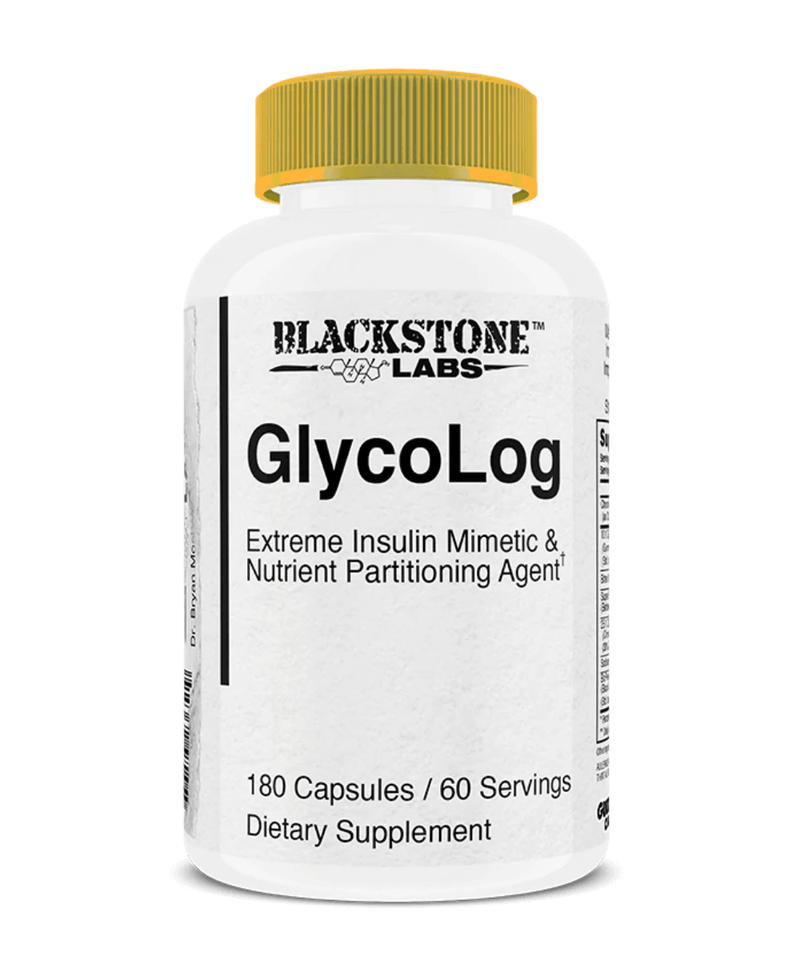
 Blackstone Labs | Glycolog | 180 CapsulesBlackstone Labs
- SuppVault Score
- 71/100
- Per serving
- $0.83
Key actives
Tested
Blackstone Labs
Full-label GDA with 1g gymnema and clinical chromium
$49.99 $79.99$0.83/serving
Get Notified When Back in Stock
We'll email you once when this product is restocked. No spam.
Shop Similar Products
 83Axe & Sledge
Axe & Sledge | A&S GDA+ | 60 Capsules
$44.99
83Axe & Sledge
Axe & Sledge | A&S GDA+ | 60 Capsules
$44.99
 73Apollon Nutrition
Apollon Nutrition | Glucovantage | 90 Capsules
$39.99
73Apollon Nutrition
Apollon Nutrition | Glucovantage | 90 Capsules
$39.99
 70Hi-Tech Pharmaceuti...
Hi-Tech Pharmaceuticals | Winstrol 90ct | 90 ...
$59.95
70Hi-Tech Pharmaceuti...
Hi-Tech Pharmaceuticals | Winstrol 90ct | 90 ...
$59.95
 97Enhanced
Enhanced | Blue Ox | 150 Capsules
$29.90
SuppVault Summary
97Enhanced
Enhanced | Blue Ox | 150 Capsules
$29.90
SuppVault Summary
Blackstone Labs Glycolog is a stim-free glucose disposal agent for better carbohydrate handling and nutrient partitioning. It supports insulin signaling, glucose uptake, and meal tolerance through multiple pathways, led by 300mcg chromium polynicotinate and a full 1000mg gymnema dose.
Blackstone Labs publishes test results from independent third-party labs. Svpplements links to the manufacturer’s data — we don’t test products ourselves.
Discount applied automatically in cart.

Glycolog is about handling carbohydrates and nutrient partitioning, while creatine supports phosphocreatine replenishment and high-intensity performance. Pairing the two makes sense around post-workout carb meals because better carbohydrate handling complements a muscle-focused recovery and performance stack.
Take creatine daily; use Glycolog 10-20 minutes before your higher-carb meal or post-workout meal.
A carb-support formula works best when the meal itself is built for recovery. Pairing Glycolog with a protein source around a carb-heavy meal creates a more complete nutrient-partitioning setup, helping direct both glucose and amino acids toward recovery processes.
Use protein with the meal; take Glycolog shortly before the same meal.
For athletes using carbohydrates during training, Glycolog pairs conceptually well with a structured carb-plus-amino strategy. The workout drives nutrient demand, the meal provides the substrate, and Glycolog supports efficient handling of those incoming carbohydrates afterward.
Use EAAs or intra-workout carbs during training; take Glycolog before the post-workout meal.
A stim-free pump product supports blood flow and training performance, while Glycolog supports what happens when you refeed afterward. This is a smart pairing for evening lifters who want a complete pre-to-post strategy without relying on caffeine.
Take the pump product before training; take Glycolog before your post-workout carb meal.
Glycolog has a robust multi-pathway profile with strong gymnema and chromium positioning.
Both compete well as serious stim-free carb-partitioning formulas with disclosed labels.
Apollon may edge out on premium GDA specialization and category prestige.
Glycolog looks stronger on straightforward label execution and anchor-dose emphasis.
Side-by-side against the closest competitors. Score reflects clinical dosing, transparency, and testing.
Blackstone Labs | Glycolog | 180 CapsulesBlackstone Labs
 Axe & Sledge | A&S GDA+ | 60 CapsulesAxe & Sledge
Glycolog has a robust multi-pathway profile with strong gymnema and chromium positioning.
Compare side-by-side → Chemix | GDA | 60 CapsulesChemix
Both compete well as serious stim-free carb-partitioning formulas with disclosed labels.
Compare side-by-side → Apollon Nutrition | Glucovantage | 90 CapsulesApollon Nutrition
Apollon may edge out on premium GDA specialization and category prestige.
Compare side-by-side →Comparison data combines live storefront pricing with our SuppVault analysis. Competitor scores reflect public-label data; manufacturer-side changes may not be reflected in real time.
Blackstone Labs Glycolog is a stim-free glucose disposal agent designed for one job: helping your body handle carbohydrates more efficiently. The formulation strategy is straightforward and intelligent. Instead of leaning on a single trendy ingredient, it combines multiple pathways involved in glucose metabolism, insulin signaling, carbohydrate absorption, and nutrient partitioning. That matters, because carb handling is not one switch. It is a network involving insulin receptor activity, GLUT-mediated glucose uptake, digestive enzyme interaction, cellular energy sensing, and oxidative stress control.
Chromium is dosed at 300mcg as chromium polynicotinate, which lands squarely in the clinical range of 200-400mcg. This is one of the stronger evidence-backed inclusions in the formula. Chromium helps amplify insulin receptor signaling through chromodulin-dependent activity inside the cell, which improves the efficiency of insulin’s message. The polynicotinate form is used for bioavailability, and the niacin-bound structure is a respected form in the literature. In practice, this is the part of the formula aimed at making insulin work better rather than forcing a stimulant-like feeling.
Gymnema extract is dosed at a hefty 1000mg standardized for gymnemic acids, making it one of the signature ingredients here. Gymnema is classically used for glucose support and is especially relevant in GDA formulas because it influences carbohydrate handling at both the digestive and metabolic levels. Users often notice that high-carb meals feel “cleaner” with less of the heavy, sluggish aftermath. At this dose, it is clearly not decorative.
Bitter melon at 500mg standardized for bitters adds another traditional-but-relevant glucose metabolism ingredient. It is commonly included in GDAs for its insulin-mimetic and glucose-utilization support. Cinnamon extract at 250mg standardized for polyphenols complements this by targeting insulin sensitivity and working especially well alongside chromium. Cinnamon’s polyphenols are the part worth caring about here; that is where the metabolic value comes from, not just the ingredient name on the label.
The formula’s biggest limitation is also one worth discussing honestly. Super Berberine is included at 300mg as a cyclodextrin complex, which suggests a delivery system designed to improve absorption. Standard berberine research often uses materially higher doses, so by conventional label math this looks underdosed. That said, enhanced-delivery berberine forms are designed to get more useful berberine into circulation per milligram than standard material. The inclusion makes mechanistic sense, but it is still fair to say this is not a full clinical berberine dose by traditional research standards.
Sodium R-lipoate is included at 150mg. This is the sodium salt form of R-alpha-lipoic acid, the biologically preferred isomer, and it is generally considered more stable and active than generic ALA blends. Its role here is to support insulin sensitivity and intracellular glucose handling while helping manage oxidative stress associated with high-calorie, high-carbohydrate feeding. Again, the form is better than generic, but the dose is more moderate than aggressive.
BioPerine® is included at 5mg, which is exactly where a bioavailability enhancer should sit. Sabinsa’s BioPerine® is the most established black pepper extract in the category, with substantial clinical backing for improving absorption by influencing CYP enzymes, UGT activity, and P-glycoprotein transport. In a capsule formula built around plant actives and lipophilic compounds, this is a meaningful inclusion rather than filler.
As a system, Glycolog is strongest when used around large carbohydrate meals or post-workout refeeds. Chromium and cinnamon support insulin signaling, gymnema and bitter melon broaden glucose-control coverage, berberine and R-lipoate deepen the nutrient-partitioning angle, and BioPerine® helps the whole stack land better. The label is fully transparent with no proprietary blend, which is a major credibility advantage in the GDA category where too many formulas hide weak dosing behind flashy naming. Day 1, most users notice less post-meal lethargy and a smoother response to carb-heavy meals. After 2-4 weeks of consistent use around repeated high-carb feedings, the formula makes more sense as a routine tool for improved meal tolerance, more stable energy after carbs, and better overall nutrient partitioning during growth or recomp phases.
Chromium polynicotinate is used to support insulin signaling efficiency rather than acting like a stimulant or direct glucose sink. Intracellular chromium is associated with chromodulin-dependent amplification of insulin receptor kinase activity, which can improve downstream signaling intensity in relevant tissues. This matters most when carbohydrate intake is high and receptor responsiveness becomes a limiting step. The 300mcg dose sits inside the commonly studied supplemental range for glycemic support.
Gymnema sylvestre contains gymnemic acids that are discussed in the literature for their interaction with intestinal glucose transport and broader glucose homeostasis pathways. In practical formulation terms, gymnema is often used to support meal-time carbohydrate management and smoother postprandial response. A full gram signals that it is intended as a lead active rather than a decorative inclusion. Its value is magnified in a formula that also addresses insulin signaling and oxidative stress.
Berberine is typically discussed for effects on AMPK-related metabolic signaling, hepatic glucose output regulation, and insulin sensitivity support. Here it is delivered as a cyclodextrin complex, which is a formulation choice aimed at improving usability and delivery characteristics versus standard raw material. In a GDA context, berberine complements ingredients that act at the receptor, digestive, and cellular redox levels. The result is a broader nutrient-partitioning strategy rather than dependence on one mechanism.
Sodium R-lipoate and cinnamon polyphenols are relevant because carbohydrate-heavy meals are not only a glucose issue but also a redox and signaling issue. R-lipoate participates in mitochondrial energy metabolism and antioxidant recycling, while cinnamon extracts are used for insulin-sensitivity and glucose-response support. By reducing metabolic friction around high-carb feeding, these ingredients help the formula feel smoother in real-world use. This is one reason the product can improve meal tolerance without producing a noticeable sensation.
Verified athletes can view NCAA, WADA, and high-school compliance status for this product.
* These statements have not been evaluated by the Food and Drug Administration. This product is not intended to diagnose, treat, cure, or prevent any disease. Consult your physician before use if you have a medical condition or take medications.
Drop your number and our team will instantly text you.
Our team is on it. Check your texts — real advice, real fast.
 70
70
 64
64
 97
97
 69
69
 64
64
 87
87
Higher-scoring formulas the brain ranks above this product.
Secure sign in
Svpplements uses Shopify Customer Accounts for protected login, order history, and account data.