This product
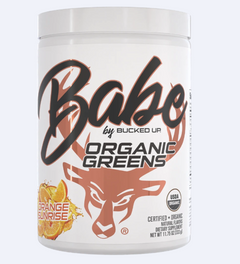 Bucked Up | Babe Greens | 30 ServingsBucked Up
- SuppVault Score
- 93/100
- Per serving
- $1.33
Key actives
Tested
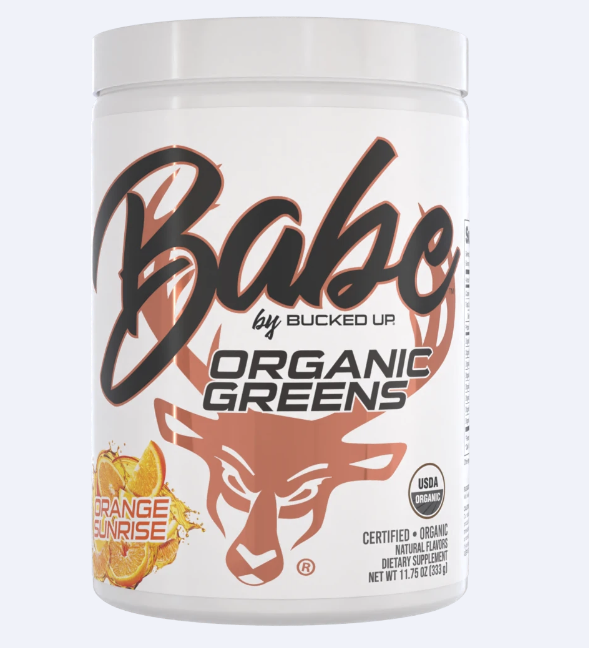
Bucked Up
11 grams of transparent, certified-organic greens—built around real doses.
$39.95 $1.33/serving SuppVault Summary
Babe Organic Greens is a transparent daily greens formula centered on meaningful whole-food dosing, not pixie-dusted label filler. Its 11g scoop delivers heavy barley grass, wheat grass, and kale support for daily micronutrient coverage and greens habit consistency.
Bucked Up publishes test results from independent third-party labs. Svpplements links to the manufacturer’s data — we don’t test products ourselves.
Discount applied automatically in cart.


Babe Organic Greens covers daily greens intake and micronutrient density, but it is not a strength or power formula. Pairing it with creatine monohydrate adds the most studied ergogenic support for ATP regeneration and training performance while keeping your wellness and performance bases separate and properly dosed.
Take creatine any time daily; greens can be taken in the morning and creatine with a meal or post-workout.
This greens formula helps cover the plant-nutrition side of the diet, while protein powder addresses the recovery and muscle-repair side. Together they create a much more complete daily nutrition framework than either product alone.
Use Babe Organic Greens in the morning or midday and protein around workouts or wherever your daily intake is lowest.
Greens intake and hydration are often built into the same morning routine, but they serve different functions. An electrolyte formula supports fluid balance, training hydration, and performance readiness, while Babe Organic Greens covers concentrated plant nutrition and phytonutrients.
Take greens once daily; use electrolytes around training, travel, heat exposure, or long workdays.
For users with inconsistent diets, a multivitamin can complement this formula by covering nutrients not reliably delivered by greens powders alone. Babe Organic Greens provides concentrated plant matter and phytonutrients, while a multivitamin fills in standardized micronutrient amounts.
Take the multivitamin with a meal; use greens at the most convenient consistent time.
If your goal is not just greens intake but also a more comprehensive gut-health routine, a dedicated probiotic or digestive formula is the cleaner solution. Babe Organic Greens provides the greens base, while a separate digestive product allows clinically relevant gut-focused dosing instead of relying on token add-ins.
Take greens daily whenever convenient; follow the digestive product’s label timing, often with meals or at a set daily time.
Both are straightforward Bucked Up greens options built around daily greens support and transparent labeling.
Babe Organic Greens stands out for its clearly disclosed, greens-forward 11g scoop anchored by large grass and kale doses.
Alani Nu may appeal more to users wanting stronger mainstream category recognition and broader women-focused greens branding.
Revive Daily Greens typically wins for category depth and broader wellness-positioning beyond a simple foundational greens profile.
Side-by-side against the closest competitors. Score reflects clinical dosing, transparency, and testing.
Bucked Up | Babe Greens | 30 ServingsBucked Up
 Bucked Up | Greens | 30 ServingsBucked Up
Both are straightforward Bucked Up greens options built around daily greens support and transparent labeling.
Compare side-by-side → Bucked Up | Mixed GreensBucked Up
Babe Organic Greens stands out for its clearly disclosed, greens-forward 11g scoop anchored by large grass and kale doses.
Compare side-by-side → Alani Nu | Super Greens | 30 ServingsAlani Nu
Alani Nu may appeal more to users wanting stronger mainstream category recognition and broader women-focused greens branding.
Compare side-by-side →Comparison data combines live storefront pricing with our SuppVault analysis. Competitor scores reflect public-label data; manufacturer-side changes may not be reflected in real time.
Bucked Up Babe Organic Greens is a straightforward greens formula built around a simple idea: concentrate meaningful amounts of foundational organic greens instead of hiding a long ingredient list behind a proprietary blend. At 11 grams per scoop, this is not a label-decoration formula. The backbone is heavy on land-based greens—Barley Grass at 2,275mg, Wheat Grass at 2,250mg, and Kale at 2,250mg—then supported by Alfalfa, Broccoli, Spinach, Spirulina, and Chlorella. The formulation strategy is broad nutritional density, chlorophyll-rich plant matter, cruciferous support, and algae-based antioxidant coverage without stimulants.
Kale is one of the strongest inclusions here because the dose matters. At 2,250mg, it sits at the top end of the researched 1,800-2,250mg range. Kale delivers a dense matrix of vitamin K, carotenoids like lutein and zeaxanthin, and electrolyte-supportive minerals such as potassium and magnesium. In practical terms, that means support for daily nutrient intake, eye health, bone metabolism, and general oxidative stress management. This is a serious amount, not a sprinkle.
Alfalfa at 625mg also lands at the top of its traditional supplemental range of 450-625mg. Its role is less flashy but useful: vitamin K-rich plant nutrition, chlorophyll, flavonoids, and naturally occurring antioxidant compounds. It strengthens the “daily greens” identity of the formula and complements the heavier grasses and brassicas.
Broccoli at 500mg is right on its commonly used whole-powder range. Broccoli matters because it is a cruciferous vegetable source of glucoraphanin, which can convert into sulforaphane, a compound known for activating the Nrf2 pathway involved in endogenous antioxidant and phase II detoxification enzyme activity. Important nuance: this formula does not list added myrosinase, the enzyme that improves conversion to sulforaphane, so the broccoli inclusion is valuable but should be viewed as whole-food cruciferous support rather than an optimized sulforaphane delivery system.
Spinach at 500mg also lands in the studied 500-900mg range. Spinach contributes nitrates, carotenoids, and general micronutrient density. In this formula, it is not a pump ingredient—it’s here as part of the whole-food matrix supporting circulation, antioxidant status, and vegetable intake.
The algae portion is useful but clearly secondary by dose. Spirulina at 300mg and Chlorella at 300mg bring recognizable superfood appeal and antioxidant density, but both sit well below the 4-10g and 6-10g ranges commonly used in the stronger clinical literature. That does not make them pointless; it means they function here as complementary additions rather than primary stand-alone therapeutic doses. Together they broaden the nutrient and phytonutrient spectrum, but the real load-bearing ingredients are the grasses and kale.
The synergy is simple and sensible: grasses for chlorophyll-rich foundational greens, kale and spinach for micronutrient density, broccoli for cruciferous pathway support, alfalfa for traditional whole-food nutrition, and spirulina/chlorella for added antioxidant diversity. Transparency is a major win. There is no proprietary blend, and every active is disclosed by dose—still not common enough in greens powders. Expect day 1 to feel more like a clean daily nutrition habit than an acute “effect.” Over 2-4 weeks, consistent users should notice better routine compliance with greens intake, easier coverage on lower-vegetable days, and a steadier sense of nutritional completeness.
Barley grass and wheat grass primarily function as concentrated green plant matrices rather than isolated ergogenic agents. Their value comes from delivering chlorophyll-rich whole-food material, native phytonutrients, and broad micronutrient density in a compressible powder format. Mechanistically, this supports dietary pattern quality more than an acute signaling pathway. That makes expected outcomes cumulative and nutrition-driven rather than immediately perceptible.
Kale, broccoli, and spinach contribute a spectrum of carotenoids, polyphenols, folate-associated cofactors, and sulfur-containing phytochemicals. Broccoli is especially relevant because cruciferous vegetables contain glucosinolate precursors that can be converted into bioactive isothiocyanates, though actual yield depends on processing and enzyme activity. Spinach also contributes nitrate-related and antioxidant compounds studied for exercise and vascular support. In this formula, these ingredients broaden the nutritional coverage of the greens base.
Spirulina and chlorella are distinct from land greens because they add algae-derived pigments, protein fractions, and cell-associated micronutrients. Clinical literature on both ingredients often focuses on antioxidant status, immune modulation, and general wellness markers, typically at gram-level intakes above this formula's doses. Here, they likely serve as complementary support rather than primary drivers of effect. Their inclusion expands ingredient diversity and gives the blend broader phytonutrient coverage.
Greens powders are best interpreted through a dietary substitution model rather than a pharmacology model. Users do not usually experience rapid stimulation or obvious acute performance effects because the mechanism is cumulative nutritional support. Compliance, consistency, and total dietary context determine real-world impact more than any single ingredient. That is why transparent dosing and meaningful scoop weight matter in this category.
Verified athletes can view NCAA, WADA, and high-school compliance status for this product.
* These statements have not been evaluated by the Food and Drug Administration. This product is not intended to diagnose, treat, cure, or prevent any disease. Consult your physician before use if you have a medical condition or take medications.
Drop your number and our team will instantly text you.
Our team is on it. Check your texts — real advice, real fast.
Secure sign in
Svpplements uses Shopify Customer Accounts for protected login, order history, and account data.