This product
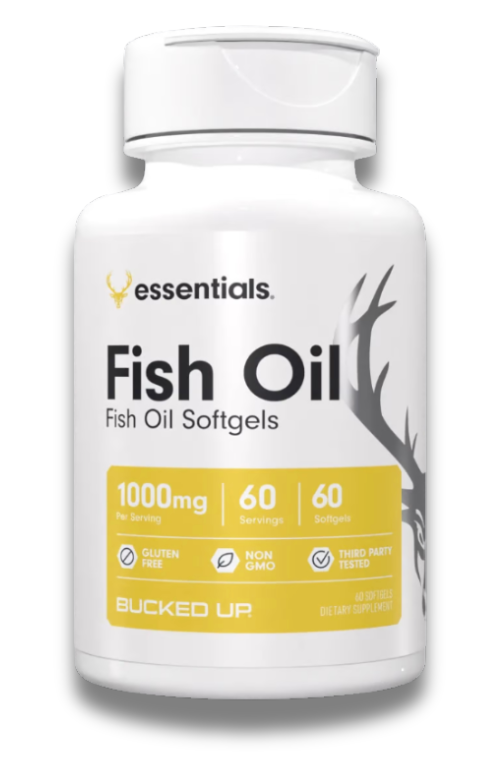
 Bucked Up | Fish Oil | 60 SoftgelsBucked Up
- SuppVault Score
- 93/100
- Per serving
- $0.33
Key actives
Tested
Bucked Up
One-softgel EPA and DHA support for daily recovery and wellness.
$19.99 $0.33/serving SuppVault Summary
Bucked Up Fish Oil is a simple daily omega-3 softgel focused on the numbers that matter: EPA and DHA. Each serving delivers 340mg EPA and 220mg DHA, giving you 560mg combined omega-3s for foundational heart, recovery, and wellness support.
Bucked Up publishes test results from independent third-party labs. Svpplements links to the manufacturer’s data — we don’t test products ourselves.
Discount applied automatically in cart.


Creatine covers the phosphocreatine and high-output performance side of the stack, while fish oil supports the recovery and inflammation-management side. They do different jobs extremely well and create a stronger foundation for training consistency when used together.
Take creatine daily at any consistent time; take this fish oil with a meal.
Protein provides the amino acids needed to repair and build tissue, while EPA and DHA help support the recovery environment that surrounds that process. This is a classic performance-plus-recovery pairing rather than redundant supplementation.
Use protein around training or to meet daily protein goals; take fish oil with a meal.
Vitamin D and omega-3s are two of the most common foundational gaps in modern diets. They pair well in a general wellness stack for cardiovascular, immune, and overall health support, especially for users building a minimalist but high-impact routine.
Take both with a meal that contains fat for best practicality and absorption support.
Fish oil helps on the inflammatory-response side, while a dedicated joint formula often targets cartilage, connective tissue, or lubrication support more directly. Together they create a more complete strategy for lifters and athletes managing high training volume.
Take fish oil with a meal; use the joint formula according to its label, typically daily.
Likely very similar positioning: straightforward daily fish oil with simple compliance-focused dosing.
A premium omega product may offer stronger omega-3 potency or source quality per serving.
NutraBio often wins on transparency and manufacturing reputation in simple wellness categories.
Bucked Up clearly emphasizes EPA and DHA totals, which helps buyers judge active omega-3 value.
Side-by-side against the closest competitors. Score reflects clinical dosing, transparency, and testing.
Bucked Up | Fish Oil | 60 SoftgelsBucked Up
Likely very similar positioning: straightforward daily fish oil with simple compliance-focused dosing.
Compare side-by-side → Core Nutritionals | Omega | 120 SoftgelsCore Nutritionals
A premium omega product may offer stronger omega-3 potency or source quality per serving.
Compare side-by-side → NutraBio | Omega-3 | 150 SoftgelsNutraBio
NutraBio often wins on transparency and manufacturing reputation in simple wellness categories.
Compare side-by-side →Comparison data combines live storefront pricing with our SuppVault analysis. Competitor scores reflect public-label data; manufacturer-side changes may not be reflected in real time.
Bucked Up Fish Oil is a straightforward omega-3 formula built around the only numbers that really matter on a fish oil label: EPA and DHA. Each softgel provides 1,000 mg fish oil yielding 340 mg EPA and 220 mg DHA, for 560 mg combined long-chain omega-3s per serving. That makes this a convenience-first daily fish oil rather than a high-dose therapeutic omega-3 product. The formulation strategy is clear: keep the serving simple, keep compliance high, and provide meaningful foundational intake of the marine fats most associated with cardiovascular, recovery, cognitive, and anti-inflammatory support.
EPA, or eicosapentaenoic acid, is the more inflammation-focused omega-3 in most sports nutrition conversations. It incorporates into cell membranes and shifts eicosanoid signaling toward a less inflammatory profile, which is one reason omega-3 intake is so often used to support recovery, cardiovascular function, and joint comfort. At 340 mg per softgel, this is a respectable foundational EPA dose for daily wellness support, but it sits below the 1,000-2,000+ mg combined EPA+DHA range commonly used in stronger clinical protocols for triglycerides, systemic inflammation, or more aggressive recovery support. What you feel from EPA is usually subtle rather than acute: over time, less “beat up” feeling after training, better baseline recovery, and support for long-term cardiovascular health.
DHA, or docosahexaenoic acid, plays a particularly important structural role in neural tissue, retinal tissue, and cell membranes throughout the body. It contributes to membrane fluidity and is heavily associated with brain and eye health, while also participating in the broader anti-inflammatory and recovery picture alongside EPA. At 220 mg per softgel, Bucked Up includes a meaningful maintenance-level DHA contribution. This is enough to support daily omega-3 intake, but again, it is not a high-dose standalone strategy for users intentionally targeting elevated omega-3 indices or condition-specific dosing.
One important formulation note: both EPA and DHA are listed in the ethyl ester (EE) form. Ethyl ester fish oils are common in the category and can still be effective, but they are generally considered less naturally food-like than triglyceride-form fish oils and may benefit from being taken with a meal containing fat to improve absorption and tolerance. That does not make this a poor formula—it just means usage matters more. Take it with food and you give the product its best chance to perform well.
As a system, the formula works by supplying both major marine omega-3s rather than overemphasizing one. EPA handles more of the inflammatory signaling side; DHA contributes more to membrane structure, neural tissue, and foundational whole-body function. Together they support recovery, cardiovascular health, and daily wellness in a way that is more balanced than generic “fish oil” marketing usually explains.
Transparency is solid on the active side because the EPA and DHA amounts are disclosed directly rather than hidden behind a vague fish oil number alone. There is no meaningful proprietary blend in the practical sense of the formula, despite the metadata flag. What you should know is that this is a moderate-potency, maintenance-style fish oil. Day 1 will feel like nothing immediate, because fish oil is not a stimulant or pump product. Over 2-4 weeks of consistent intake, users typically notice the real benefits where foundational supplements are supposed to work: recovery quality, joint comfort, and staying more consistent because the body feels less chronically run down.
EPA is incorporated into phospholipid membranes and changes the substrate pool available for eicosanoid synthesis. This can shift signaling away from more pro-inflammatory arachidonic-acid-derived mediators toward less inflammatory lipid intermediates. The practical implication is not an acute anti-inflammatory drug effect, but a gradual change in inflammatory tone with regular intake. That is why EPA is often discussed in the context of recovery, joint comfort, and cardiovascular support.
DHA is highly concentrated in neural and retinal membranes, where its long, unsaturated structure influences membrane fluidity and receptor function. This structural role is one reason DHA is closely associated with brain and visual health discussions. In supplementation, its effects are cumulative rather than immediately perceptible because tissue incorporation takes time. Consistent intake matters more than chasing a noticeable short-term sensation.
Total fish oil weight is not the same as active omega-3 delivery, because only a fraction of that oil is typically EPA and DHA. From a formulation-analysis perspective, EPA and DHA disclosure is the clinically relevant metric for judging potency. Two products with identical total fish oil can differ meaningfully in active omega-3 yield. That is why labels listing both EPA and DHA allow a much better evidence-based assessment.
In this product, EPA and DHA are provided as ethyl esters, a common fish-oil form used in many supplements. Ethyl ester omega-3s are generally better tolerated and better absorbed when taken with a meal, especially one containing fat. Meal co-ingestion stimulates bile release and improves fat handling in the gut, which can support uptake and reduce fishy repeat. This is a practical administration detail rather than a statement that the form is ineffective.
Verified athletes can view NCAA, WADA, and high-school compliance status for this product.
* These statements have not been evaluated by the Food and Drug Administration. This product is not intended to diagnose, treat, cure, or prevent any disease. Consult your physician before use if you have a medical condition or take medications.
Drop your number and our team will instantly text you.
Our team is on it. Check your texts — real advice, real fast.
Secure sign in
Svpplements uses Shopify Customer Accounts for protected login, order history, and account data.