This product
 Bucked Up | Pre-WorkoutBucked Up
- SuppVault Score
- 90/100
Tested
Bucked Up
Secure your grip so your back and hamstrings do the work
$9.95 $14.99 SuppVault Summary
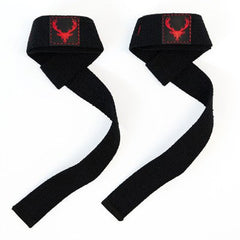
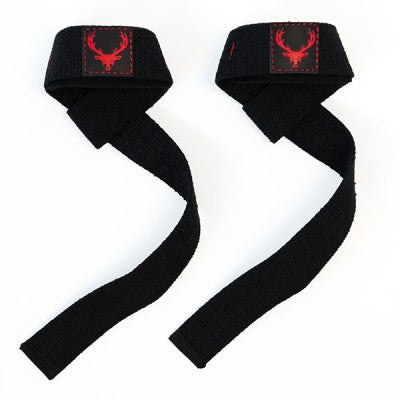
Bucked Up Lifting Straps are a non-ingestible training accessory built to improve grip security on heavy pulling work. They help reduce hand fatigue so your back, traps, and hamstrings can stay the limiting factor. Best used on deadlifts, rows, shrugs, and pulldowns.
Bucked Up publishes test results from independent third-party labs. Svpplements links to the manufacturer’s data — we don’t test products ourselves.
Discount applied automatically in cart.


Straps solve the mechanical side of pulling performance by reducing grip limitation, while creatine supports the energetic side by improving phosphocreatine availability for repeated high-intensity efforts. Together, they make sense for lifters trying to push more productive heavy sets without having grip cap posterior-chain work too early.
Take creatine daily; use straps only during the relevant exercises in training.
A pre-workout can improve energy, focus, and pump, while straps improve your physical connection to the implement. That is a practical combo for hard pull days: the supplement supports readiness, and the straps help ensure your grip does not waste that readiness on the wrong bottleneck.
Take the pre-workout 20-30 minutes before training; use straps on working sets where grip starts to limit output.
Sweaty sessions can make bars and handles feel slick, and hydration status also affects overall training quality. Pairing a hydration product with straps addresses both internal and external training friction: better fluid balance plus better grip security.
Sip hydration support before and during training; keep straps ready for heavy pull work.
These tools serve different jobs. A belt improves trunk stability and bracing, wrist wraps support pressing mechanics, and lifting straps help on pulling movements where the hands are the limiting factor. Used intelligently, they complement rather than overlap.
Use each tool only on the exercises where its specific support matters.
Lifting straps usually offer stronger grip assistance than gloves on heavy pulls and rows.
Both target wrist-supported training, so the better choice depends on whether grip or wrist stability is your main limiter.
A more category-specialized strap option may appeal to lifters prioritizing maximum heavy-duty support.
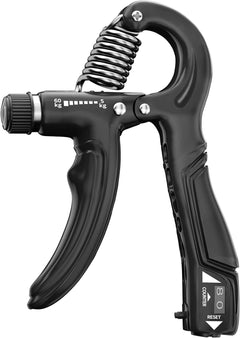
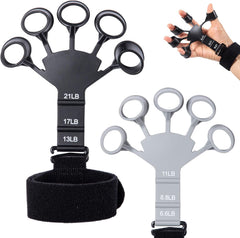
Straps help immediately during workouts, while grip trainers are better for separate grip development sessions.
Side-by-side against the closest competitors. Score reflects clinical dosing, transparency, and testing.
Bucked Up | Pre-WorkoutBucked Up
 Bucked Up | Pre WorkoutBucked Up
Lifting straps usually offer stronger grip assistance than gloves on heavy pulls and rows.
Compare side-by-side →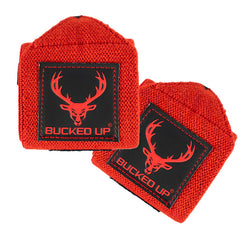 Bucked Up | PreBucked Up
Both target wrist-supported training, so the better choice depends on whether grip or wrist stability is your main limiter.
Compare side-by-side → Condemned Labz | Hardcore | 30 ServingsCondemned Labz
A more category-specialized strap option may appeal to lifters prioritizing maximum heavy-duty support.
Compare side-by-side →Comparison data combines live storefront pricing with our SuppVault analysis. Competitor scores reflect public-label data; manufacturer-side changes may not be reflected in real time.
Bucked Up Lifting Straps is not a supplement formula. It is a lifting accessory designed to improve grip security during resistance training, especially on pulling movements where hand fatigue often limits performance before the target muscles are truly challenged. That distinction matters. There is no legitimate way to clinically analyze this product as if it were a pre-workout, because there is no Supplement Facts panel, no active nutritional ingredients, and no oral dosing strategy. The real value here is mechanical, not biochemical: straps help transfer more of the workload to the muscles you are actually trying to train by reducing the likelihood that grip fails first.
From the verified product context available, these are cotton lifting straps with added wrist padding. That is a classic, functional build. Cotton matters because it balances durability, comfort, and friction against the bar. A softer but sturdy cotton weave is easier on the wrists than overly abrasive material, while still giving enough bite to help secure the hand-bar interface under load. Wrist padding matters because straps are only useful if you can cinch them down firmly without creating so much pressure or irritation that they become distracting mid-set. In practical use, this type of strap is most relevant for heavy deadlifts, RDLs, barbell rows, dumbbell rows, pull-ups, pulldowns, shrugs, and machine pull variations where repeated gripping under fatigue compromises performance.
The core performance logic is simple: when grip becomes the weak link, your set ends for the wrong reason. Straps reduce that bottleneck. That can mean more stable heavy top sets, more controlled eccentrics on hypertrophy work, and better consistency across higher-rep back sessions. For bodybuilders, the payoff is often better mind-muscle connection because less attention is spent fighting the bar in the hands. For strength athletes, the payoff is more secure exposure to heavier loads in selected training slots, while still leaving room to train raw grip separately when desired.
On transparency, the honest assessment is that this product should be evaluated like equipment, not like a supplement. The imported ingredient data attached to this listing is clearly mismatched to the actual product type. Rather than invent a pseudo-formula analysis around caffeine, citrulline, or beta-alanine that do not belong to lifting straps, the credible approach is to say plainly: this is a non-ingestible gym accessory, and its benefits come from construction and use case, not nutritional actives. That honesty is important, especially on a premium product page.
What should you expect? On day one, immediate grip assistance on heavy pulls and rows once you learn how tightly to wrap and set them. Over the next 2-4 weeks, the benefit is not “loading” or “saturation” like a supplement—it is better training execution. You will likely notice fewer sets cut short by hand fatigue, more confidence handling challenging loads, and a cleaner ability to train your back, traps, and hamstrings to their intended limit. Used correctly, lifting straps do not replace strength; they let you apply it where you want it most.
Lifting straps improve performance through biomechanics rather than biochemistry. By increasing the effective coupling between the hand and the bar, they reduce the finger flexor demand required to maintain a closed grip under load. That can shift the limiting factor away from local forearm fatigue and back toward the intended prime movers, especially during rows, deadlift variations, shrugs, and pulldowns. In hypertrophy contexts, this often supports more consistent target-muscle loading across later sets.
In pulling movements, the hands and forearms frequently fail before the lats, traps, glutes, or hamstrings reach their highest productive fatigue. Straps reduce the need for maximal continuous squeezing, which can preserve neural attention and local endurance for the tissues the athlete is actually trying to train. This is especially relevant in high-volume phases, where accumulated grip fatigue can meaningfully reduce total reps or load quality. The benefit is practical: more useful work for the target musculature before grip becomes the rate limiter.
Comfort affects compliance and stability with any external support tool. Padding at the wrist can improve pressure distribution, reducing hot spots and making it easier to tighten the strap sufficiently without excessive discomfort. A more comfortable interface generally improves setup consistency, which matters because loose or hesitant wrapping reduces the mechanical advantage straps provide. In practice, comfort features can improve confidence under heavy loads even when they do not directly increase force output.
Verified athletes can view NCAA, WADA, and high-school compliance status for this product.
* These statements have not been evaluated by the Food and Drug Administration. This product is not intended to diagnose, treat, cure, or prevent any disease. Consult your physician before use if you have a medical condition or take medications.
Drop your number and our team will instantly text you.
Our team is on it. Check your texts — real advice, real fast.
Higher-scoring formulas the brain ranks above this product.
Secure sign in
Svpplements uses Shopify Customer Accounts for protected login, order history, and account data.