This product
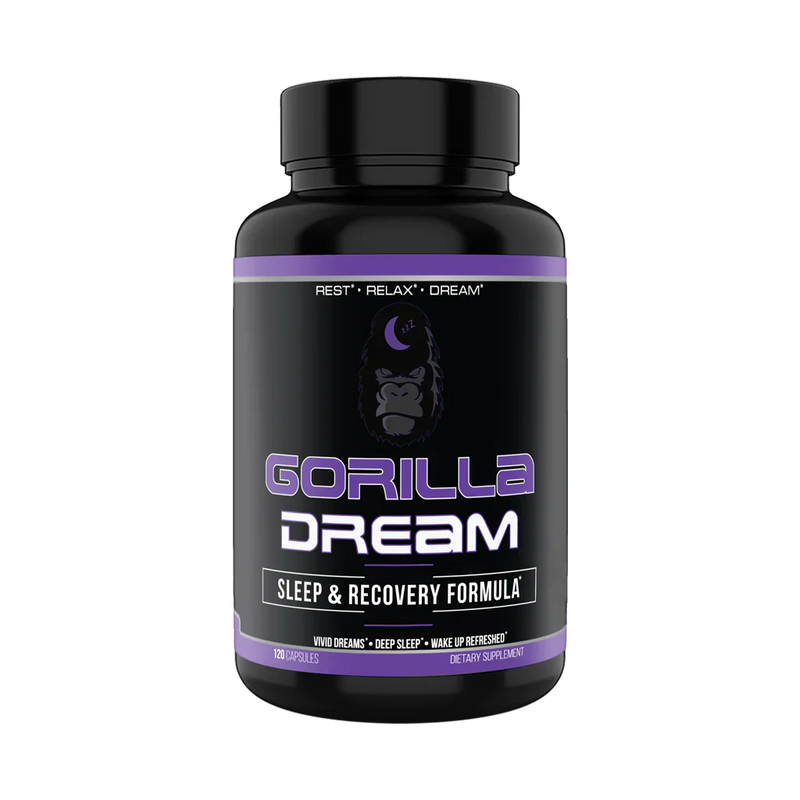
 Gorilla Mind | GM Gorilla Dream | 120 CapsulesGorilla Mind
- SuppVault Score
- 87/100
- Per serving
- $1.33
Key actives
Tested
Gorilla Mind
Layered sleep support with magnesium, theanine, GABA, and melatonin
$39.99 $1.33/serving SuppVault Summary
Gorilla Dream is a fully disclosed capsule sleep formula built to reduce pre-bed neural friction, not just knock you out. It combines 225mg magnesium, 200mg L-theanine, 500mg GABA, calming botanicals, and 2mg melatonin for easier sleep onset and recovery-focused rest.
Gorilla Mind publishes test results from independent third-party labs. Svpplements links to the manufacturer’s data — we don’t test products ourselves.
Discount applied automatically in cart.


Gorilla Dream handles the recovery environment at night; creatine handles phosphocreatine replenishment and high-intensity performance support around the clock. This is one of the smartest stacks for athletes who understand that sleep quality and cellular energy support work best together, not separately.
Take creatine daily at any convenient time; Gorilla Dream 30-60 minutes before bed.
Poor hydration can worsen fatigue, muscle tension, and overall recovery quality, all of which make sleep feel less restorative. Pairing daytime electrolyte support with Gorilla Dream helps address both sides of the recovery equation: hydration status during the day and nervous system downshifting at night.
Use electrolytes earlier in the day or around training; take Gorilla Dream pre-bed.
Sleep is where recovery happens, but it still depends on having the raw materials available for repair. A high-quality protein product during the day complements Gorilla Dream by improving total recovery support rather than expecting a sleep supplement to make up for inadequate nutrition.
Use protein post-workout or to meet daily intake; Gorilla Dream before bed.
Omega-3s support broader recovery, inflammation balance, and general wellness, making them a rational long-term partner to a nightly sleep product. Gorilla Dream improves the quality of the recovery window, while omega-3s help support the physiology being recovered.
Take omega-3s with meals; take Gorilla Dream 30-60 minutes before sleep.
Gorilla Dream wins on transparent multi-pathway dosing with a moderate, practical melatonin amount.
Gorilla Dream offers broader sleep architecture support instead of relying on melatonin alone.
Dozer has elite market reputation and category leadership in comprehensive sleep formulas.
Single-ingredient GABA is simpler, but Gorilla Dream covers more real-world sleep bottlenecks.
Side-by-side against the closest competitors. Score reflects clinical dosing, transparency, and testing.
Gorilla Mind | GM Gorilla Dream | 120 CapsulesGorilla Mind
 Chemix | Sleep | 90 CapsulesChemix
Gorilla Dream wins on transparent multi-pathway dosing with a moderate, practical melatonin amount.
Compare side-by-side → HI TECH PHARMACEUTICALS, INC. | Hi-Tech Melatonin | 60 TabletsHI TECH PHARMACEUTICALS, INC.
Gorilla Dream offers broader sleep architecture support instead of relying on melatonin alone.
Compare side-by-side →Dozer has elite market reputation and category leadership in comprehensive sleep formulas.
Compare side-by-side →Comparison data combines live storefront pricing with our SuppVault analysis. Competitor scores reflect public-label data; manufacturer-side changes may not be reflected in real time.
Gorilla Mind Gorilla Dream is a fully disclosed capsule sleep formula designed around one core idea: better sleep is not just about sedation, it is about reducing neural friction so the body can transition into a stable recovery state. Instead of hiding behind a proprietary blend or leaning entirely on an oversized melatonin dose, this formula uses a multi-pathway strategy: minerals for nervous system support, amino acids and neurotransmitter-focused ingredients for relaxation, calming botanicals for sleep initiation, and a moderate melatonin dose to reinforce the actual sleep signal.
The backbone starts with 225mg magnesium as magnesium bisglycinate chelate, buffered. Magnesium has strong evidence for nervous system function and relaxation, and the bisglycinate form is commonly chosen for its gentler GI profile compared with cheaper oxide-heavy formulas. In sleep products, magnesium matters because it supports a calmer excitatory-inhibitory balance and complements melatonin and GABAergic ingredients. This formula pairs it with 35mg vitamin B6 and 20mg zinc, a classic mineral combination seen in ZMA-style recovery products. The B6-magnesium pairing is commonly used to support cellular utilization, while zinc contributes to broader enzymatic and recovery support.
From there, Gorilla Dream moves into acute calming agents. L-theanine is dosed at 200mg, which is directly in line with human stress research showing reductions in psychological and physiological stress responses at this dose. Subjectively, this is the ingredient most likely to create that “mental exhale” effect: less internal chatter, less tension, and a smoother transition toward sleepiness rather than a blunt sedative hit. GABA is included at 500mg, a meaningful dose in the common supplemental range for relaxation. Oral GABA remains mechanistically debated because blood-brain barrier transport is not straightforward, but human data does show relaxation-related effects, and in practice it is often valued for taking the edge off a wired state.
The botanical section is broad and intentional. Ashwagandha extract at 300mg adds an adaptogenic component aimed at stress load and nervous system downshifting. Lemon balm at 200mg is one of the more useful calming herbs in modern sleep formulas, often chosen for reducing tension and helping the user feel less “on.” Valerian root extract at 75mg, hops flower extract at 50mg, and skullcap root extract at 50mg build out the classic herbal sedative architecture. Chamomile flower extract is present as well, though the exact amount is not disclosed on the provided label extraction, so that is the one transparency limitation in an otherwise open formula. Mucuna pruriens extract at 100mg as L-Dopa is the oddest inclusion here; it is more commonly associated with dopamine support than sleep, and while some users may perceive mood or relaxation benefits, it is not a standard first-line sleep ingredient.
Melatonin is set at 2mg, which is one of the smarter choices in the formula. This is enough to reinforce circadian sleep onset for many users without pushing into the heavy-handed range that often causes vivid dreams, grogginess, or a “hangover” effect the next day. In other words, the formula does not ask melatonin to do all the work. It uses theanine, magnesium, GABA, and calming herbs to quiet the system, then uses melatonin to help initiate sleep.
As a system, the synergy is the selling point. Magnesium, B6, zinc, theanine, and GABA all support the shift toward parasympathetic tone; lemon balm, valerian, hops, skullcap, and chamomile deepen the calming effect; melatonin provides the chronobiologic nudge; ashwagandha addresses the stress-heavy lifestyle that often underlies sleep disruption. Transparency is strong overall because this is not a proprietary blend formula, but the undisclosed chamomile amount should be noted. On day 1, expect a calmer pre-bed state and easier sleep initiation. Over 2-4 weeks, the more meaningful payoff is consistency: fewer nights of lying there wired, better sleep rhythm, and better downstream recovery from training, work, and life.
L-theanine is valued in sleep formulas because it promotes a relaxed mental state without acting like a blunt hypnotic. Mechanistically, it appears to influence excitatory-inhibitory balance and dampen the subjective intensity of stress-related cognitive activity. That makes it especially useful for users who are physically tired but mentally overactive. In this context, it supports sleep initiation by reducing bedtime rumination rather than forcing sedation.
Magnesium is a foundational cofactor in neuronal signaling, muscle relaxation, and broader autonomic regulation. In sleep-oriented formulas, meaningful magnesium dosing is less about an immediate sedative punch and more about creating a calmer physiological backdrop for sleep readiness. Bisglycinate forms are commonly chosen for better gastrointestinal tolerance in nightly use. This makes magnesium particularly useful as part of a layered, recovery-focused nighttime stack.
GABA and traditional calming botanicals are often paired to support the transition from wakefulness into sleep. While oral GABA research is more limited than melatonin or magnesium, practical nighttime formulas often use it to reinforce a subjective sense of relaxation. Valerian, lemon balm, chamomile, hops, and skullcap add complementary herbal mechanisms associated with calming and sleep onset support. Together, they create a broader relaxation profile than any single ingredient alone.
Melatonin works best when understood as a timing signal rather than a universal sedative. Moderate doses can help reinforce the body's cue that it is time to sleep, especially when combined with light control and a consistent pre-bed routine. Excessive melatonin is not always better and may increase the chance of next-day carryover in sensitive users. A 2mg dose sits in a practical zone for sleep onset support without leaning on megadosing.
Verified athletes can view NCAA, WADA, and high-school compliance status for this product.
* These statements have not been evaluated by the Food and Drug Administration. This product is not intended to diagnose, treat, cure, or prevent any disease. Consult your physician before use if you have a medical condition or take medications.
Drop your number and our team will instantly text you.
Our team is on it. Check your texts — real advice, real fast.
Secure sign in
Svpplements uses Shopify Customer Accounts for protected login, order history, and account data.