

This product
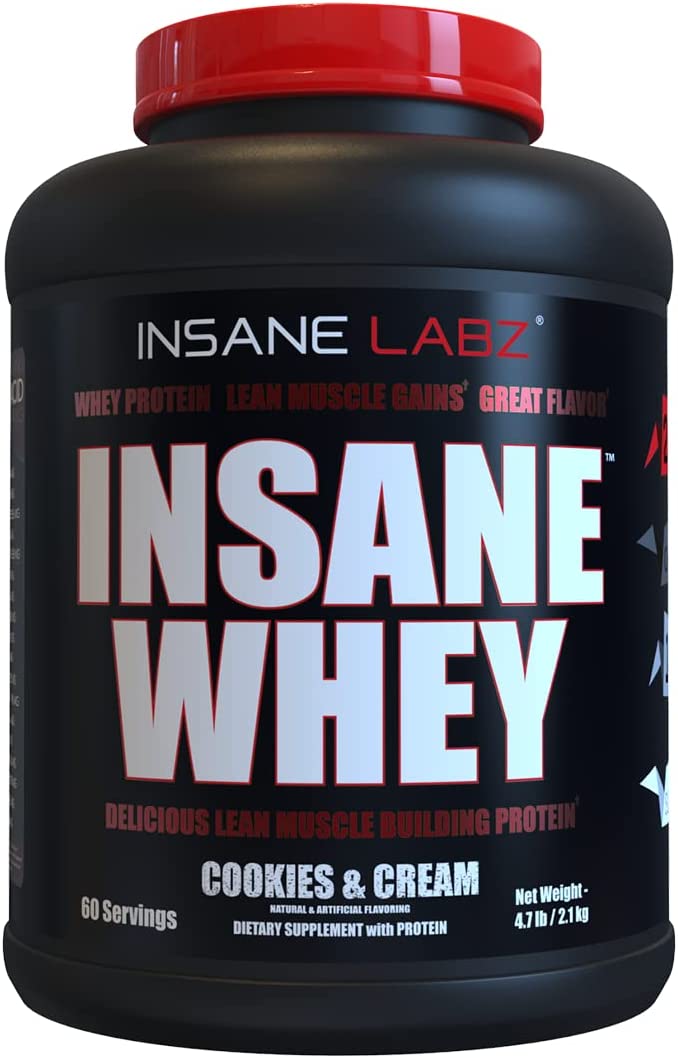
 Insane Labz | Whey 60 | 60 ServingsInsane Labz
- SuppVault Score
- 65/100
- Per serving
- $0.92
Key actives
Tested
Insane Labz
25g whey protein per scoop for daily recovery support
$54.95 $79.99$0.91/serving SuppVault Summary
Insane Whey is a practical daily-use whey protein built to help you hit protein targets consistently. Each scoop delivers 25g protein with 3g carbs, making it a straightforward post-workout or between-meal recovery option without the premium isolate price positioning.
Insane Labz publishes test results from independent third-party labs. Svpplements links to the manufacturer’s data — we don’t test products ourselves.
Discount applied automatically in cart.


This is the cleanest stack with a basic whey formula. The whey covers amino acid delivery for recovery and muscle protein synthesis, while creatine supports phosphocreatine replenishment for repeated high-intensity effort, strength output, and long-term training performance.
Take daily; can be mixed with this product post-workout or taken anytime consistently.

Insane Whey is a recovery and protein tool, not an acute performance formula. Pairing it with a well-dosed pre-workout separates functions cleanly: the pre-workout drives energy, focus, pump, or endurance before training, and the whey handles protein intake after training.
Take the pre-workout 20-30 minutes before training and use this protein after training or later in the day.
This product is not designed to meaningfully cover hydration support, and the magnesium content is too low to count as a dedicated electrolyte solution. A separate hydration formula complements high-volume training, heavy sweating, or hot-environment sessions while the whey covers protein needs.
Use the hydration product before, during, or after training; use this protein separately post-workout or between meals.
Because this formula is protein-forward and relatively low in carbs, it pairs well with oats, fruit, rice-based cereal, or a whole-food meal when your goal is glycogen replenishment after hard training. That lets you turn a simple protein shake into a more complete recovery feeding without changing the protein formula itself.
Combine post-workout when you need both protein and carbs, or use separately depending on your daily macros.
An isolate-based option should suit lower-lactose, leaner-macro shoppers better than this concentrate formula.
This is likely better for basic protein use, while the Ripped version targets a leaner-positioned audience.
Both serve the core protein category well, with the better pick depending on flavor and macros.
If value per serving matters most, this straightforward 25g protein formula can be the smarter buy.
Side-by-side against the closest competitors. Score reflects clinical dosing, transparency, and testing.
Insane Labz | Whey 60 | 60 ServingsInsane Labz
 Insane Labz | Insane ISOInsane Labz
An isolate-based option should suit lower-lactose, leaner-macro shoppers better than this concentrate formula.
Compare side-by-side → Insane Labz | Labz Whey RippedInsane Labz
This is likely better for basic protein use, while the Ripped version targets a leaner-positioned audience.
Compare side-by-side →Both serve the core protein category well, with the better pick depending on flavor and macros.
Compare side-by-side →Comparison data combines live storefront pricing with our SuppVault analysis. Competitor scores reflect public-label data; manufacturer-side changes may not be reflected in real time.
Insane Whey is a straightforward whey protein powder designed around the most important job a protein supplement has: helping you consistently hit a meaningful protein intake. Based on the available panel, each serving delivers 25g of protein with 3g carbohydrate, roughly 1.2g sugar, and a whey concentrate-based protein blend built from whey protein concentrate 80% and 90%. That places it firmly in the daily-use protein category rather than the ultra-premium isolate category. The formulation strategy here is practicality: solid protein per scoop, moderate calories, and a simple profile that can fit post-workout, between meals, or anywhere your food intake falls short.
The main performance ingredient is the protein itself. A 25g serving of high-quality whey sits right in the range commonly used to robustly stimulate muscle protein synthesis in most healthy adults. Whey is rich in essential amino acids and naturally high in leucine, the amino acid most associated with triggering the mTOR signaling pathway that turns on muscle protein synthesis after training. In real-world terms, this is the amount of protein that helps shift a workout from simply creating muscle damage to actually supporting repair and adaptation. You feel that less as an acute “effect” and more as better recovery support, easier protein adherence, and more reliable day-to-day progress when total intake is dialed in.
The vitamin and mineral panel is present, but it is not a major selling point of this formula. Thiamine is listed at 0.04mg, riboflavin at 0.27mg, niacin at 0.07mg, vitamin B6 at 0.04mg, vitamin B12 at 2mcg in the verified extraction, phosphorus at 108mg, magnesium at 18mg, and zinc at 0.08mg. These micronutrients matter physiologically: thiamine supports carbohydrate oxidation through the pyruvate dehydrogenase complex, riboflavin and niacin are involved in mitochondrial energy metabolism, B6 supports amino acid metabolism, B12 supports red blood cell and nervous system function, phosphorus contributes to ATP structure and bone mineralization, magnesium supports hundreds of enzymatic reactions including ATP handling, and zinc is involved in immune and enzymatic function. But the actual doses here are generally nutritional background levels, not performance-dosed additions. Magnesium at 18mg and zinc at 0.08mg, for example, are far below the amounts used when those minerals are intentionally formulated for standalone outcomes.
There is still useful nutritional synergy in the formula. The B vitamins function as a network in energy metabolism, and magnesium is a known cofactor in thiamine activation. Phosphorus also matters because ATP is literally a phosphate-bearing energy molecule, and dairy proteins naturally bring calcium-phosphorus support into the formula. But these are support details around the real centerpiece, which is the whey protein.
From a transparency standpoint, this product is mixed. It does not use a proprietary active blend in the usual pre-workout sense, which is good. But the whey itself is presented as a protein blend without disclosing how much of the 25g comes from WPC80 versus WPC90. That is common in the category, but it still limits precision for shoppers who want to know exact raw material weighting. There are also some source discrepancies in public retailer data around the broader panel, so the strongest confidence remains with the core macros and protein delivery.
What should you expect? On day one, expect a convenient 25g protein serving that helps you close the gap between what you ate and what your body needs to recover. Over 2-4 weeks of consistent use, the benefit is cumulative and practical: easier protein compliance, better support for muscle retention during dieting, and a more reliable foundation for muscle gain or recovery when paired with progressive training. This is not a high-tech protein formula. It is a basic whey workhorse, and judged on that standard, the 25g protein dose is the reason to buy it.
Whey protein is rapidly digested and rich in essential amino acids, especially leucine, which is a primary trigger for mTORC1 signaling in skeletal muscle. That signaling cascade increases translational initiation and supports muscle protein synthesis after training or during protein feedings. A 25g serving is commonly sufficient to meaningfully raise circulating amino acids in most adults. The practical benefit is improved recovery support and easier attainment of total daily protein needs.
Thiamine functions as thiamine pyrophosphate, a required cofactor for pyruvate dehydrogenase and alpha-ketoglutarate dehydrogenase. These enzymes regulate carbohydrate entry into the Krebs cycle and therefore influence ATP generation from glucose. In athletes, thiamine is more about enabling normal energy metabolism than producing an acute ergogenic sensation. The dose here is nutritional rather than performance-targeted.
Magnesium stabilizes ATP and is required for hundreds of enzymatic reactions tied to energy transfer, neuromuscular function, and electrolyte balance. It also contributes to normal muscle contraction-relaxation dynamics and may become more relevant when dietary intake is marginal. However, the amount here is modest relative to common supplemental magnesium doses. In this formula, it should be viewed as light nutritional support rather than a centerpiece ingredient.
Phosphorus is a core component of ATP, phospholipids, and skeletal mineral structure, making it fundamental to both energy transfer and tissue integrity. Although phosphate-loading protocols have been explored in sports performance contexts, those strategies use substantially higher total daily intakes than a standard whey product provides. The amount here contributes minor nutritional support within the broader diet. It is not positioned as a standalone ergogenic dose.
Verified athletes can view NCAA, WADA, and high-school compliance status for this product.
* These statements have not been evaluated by the Food and Drug Administration. This product is not intended to diagnose, treat, cure, or prevent any disease. Consult your physician before use if you have a medical condition or take medications.
Drop your number and our team will instantly text you.
Our team is on it. Check your texts — real advice, real fast.
Brain-curated complementary picks for synergy and full-spectrum coverage.
 70
70
 64
64
 97
97
 69
69
 64
64
 87
87
Higher-scoring formulas the brain ranks above this product.
Secure sign in
Svpplements uses Shopify Customer Accounts for protected login, order history, and account data.

