

This product
 Raw Nutrition | Whey Blend | 20 ServingsRaw Nutrition
- SuppVault Score
- 70/100
- Per serving
- $1.75
Key actives
Tested

Raw Nutrition
25g lean whey protein with digestive support per scoop
$34.95 $39.99$1.74/serving
Get Notified When Back in Stock
We'll email you once when this product is restocked. No spam.
Shop Similar Products
 75Raw Nutrition
Raw Nutrition | Vegan Protein | 25 Servings
$49.95
75Raw Nutrition
Raw Nutrition | Vegan Protein | 25 Servings
$49.95
 70Hi-Tech Pharmaceuti...
Hi-Tech Pharmaceuticals | Winstrol 90ct | 90 ...
$59.95
70Hi-Tech Pharmaceuti...
Hi-Tech Pharmaceuticals | Winstrol 90ct | 90 ...
$59.95
 97Enhanced
Enhanced | Blue Ox | 150 Capsules
$29.90
97Enhanced
Enhanced | Blue Ox | 150 Capsules
$29.90
 90Bucked Up
Bucked Up | Pre Workout | 30 Servings
$42.95
90Bucked Up
Bucked Up | Pre Workout | 30 Servings
$42.95
 90Insane Labz
Insane Labz | Psychotic | 35 Servings
$29.95
SuppVault Summary
90Insane Labz
Insane Labz | Psychotic | 35 Servings
$29.95
SuppVault Summary
Raw Nutrition Whey Protein Blend is a lean whey formula built for efficient daily protein intake and recovery. Each 32g scoop delivers 25g protein with just 0.5g fat and 1g carbohydrate. It emphasizes strong macro efficiency with added digestive support.
Raw Nutrition publishes test results from independent third-party labs. Svpplements links to the manufacturer’s data — we don’t test products ourselves.
Discount applied automatically in cart.


This is the most logical stack partner for a lean whey protein. Protein supports recovery and total daily intake, while creatine increases phosphocreatine availability for strength output, repeat sprint ability, and lean mass support over time.
Take daily; can be mixed into the same post-workout shake or used anytime
This protein includes only modest potassium and is not designed as a hydration product. Pairing it with a dedicated electrolyte formula better supports fluid balance, muscular function, and training performance in long, sweaty sessions.
Use electrolytes pre-, intra-, or post-workout; take protein after training or between meals
If you want a more complete post-workout recovery shake, adding fast-digesting carbohydrates can support glycogen replenishment while the whey provides amino acids for muscle repair. This is especially useful for athletes training hard or multiple times per day.
Add post-workout with the protein shake
This formula is protein-first, not a full-spectrum nutrition product. A greens or micronutrient formula complements it by broadening daily nutrient coverage while the whey continues to handle protein intake efficiently.
Take separately with a meal or any consistent daily routine
A pure isolate typically offers even leaner macros and stronger category prestige.
Grass-fed isolate appeals more to users prioritizing source purity over blend texture.
This whey blend should win on protein density, leucine content, and overall recovery efficiency.
This is far better for lean macro control, while the mass gainer suits calorie-surplus goals.
Side-by-side against the closest competitors. Score reflects clinical dosing, transparency, and testing.
Raw Nutrition | Whey Blend | 20 ServingsRaw Nutrition
 Raw Nutrition | CBUM Itholate | 25 ServingsRaw Nutrition
A pure isolate typically offers even leaner macros and stronger category prestige.
Compare side-by-side →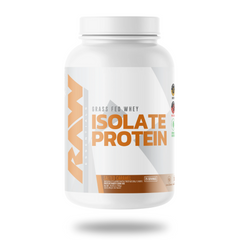 Raw Nutrition | Grass Fed Isolate | 25 ServingsRaw Nutrition
Grass-fed isolate appeals more to users prioritizing source purity over blend texture.
Compare side-by-side → Raw Nutrition | Vegan Protein | 25 ServingsRaw Nutrition
This whey blend should win on protein density, leucine content, and overall recovery efficiency.
Compare side-by-side →Comparison data combines live storefront pricing with our SuppVault analysis. Competitor scores reflect public-label data; manufacturer-side changes may not be reflected in real time.
Raw Nutrition Whey Protein Blend is a lean whey-based protein powder designed around a simple but effective formulation philosophy: deliver a high protein yield per scoop, keep fat and carbohydrate low, and improve usability with digestive support rather than overcomplicating the panel. Based on the verified data available, each 32g scoop provides 25g of protein with just 0.5g fat and 1g carbohydrate, which is an excellent protein density for a blend. That macro profile strongly suggests a whey isolate-heavy system supported by whey protein concentrate for texture, taste, and a broader naturally occurring peptide fraction.
The core of the formula is the whey protein blend itself, composed of whey protein isolate and whey protein concentrate. While the exact isolate-to-concentrate ratio is not disclosed, the macro math is favorable: 25g protein from a 32g scoop leaves little room for excess fillers, sugars, or fats. For the user, that translates to an easy way to increase daily protein intake without dragging calories up unnecessarily. In practical terms, this is the kind of profile that works post-workout, first meal of the day, or between meals when you need efficient protein rather than a meal replacement.
The formula also contributes 243mg calcium, 167mg potassium, 1mg iron, and an undisclosed amount of vitamin D. Calcium matters here beyond the nutrition panel checkbox. It is structurally important for bone mineral status, but it also plays a role in muscle contraction physiology. Calcium’s synergy with vitamin D is well established because vitamin D supports intestinal calcium absorption; without adequate vitamin D status, calcium utilization is less efficient. This is not a bone-health product, but the presence of both nutrients is still meaningful in a daily protein formula used consistently.
Potassium at 167mg adds modest electrolyte value. This is not a hydration formula, so the dose is not performance-focused in the way a dedicated electrolyte product would be, but potassium remains relevant for fluid balance, neuromuscular function, and the sodium-potassium gradient that underpins muscle and nerve activity. Iron at 1mg is nutritionally minor rather than a headline feature.
Two inclusion choices deserve special attention: lactase and papain. Their exact doses are not disclosed, so they cannot be evaluated against meaningful clinical thresholds. Still, their role is straightforward. Lactase helps break down lactose, which can improve tolerance in users who handle isolate well but sometimes struggle with whey blends. Papain is a proteolytic enzyme traditionally used to assist protein digestion. What you notice is less likely to be a dramatic acute effect and more likely to be better day-to-day comfort: less heaviness, less bloating, and smoother repeat use.
Synergy-wise, this is a practical system: whey proteins provide fast, high-quality amino acid delivery; digestive enzymes help the formula feel lighter and more repeatable; calcium and vitamin D support the broader nutritional profile of a daily-use protein. Transparency is mixed. The product is not hidden behind a proprietary blend, which is good, but the exact protein source ratio and enzyme doses are not disclosed, which limits full clinical assessment. That honesty matters. The formula looks solid, but it is not maximally transparent.
What should you expect? On day 1, the main experience is convenience: a lean protein serving that should sit lighter than a heavier concentrate-heavy shake. Over 2-4 weeks of consistent use, the real benefit is cumulative: better daily protein adherence, easier macro control, and a more reliable routine for recovery, muscle retention, and body composition support.
Whey protein is rapidly digested, producing a fast rise in circulating essential amino acids, especially leucine. That leucine pulse activates mTORC1 signaling, which is a major trigger for skeletal muscle protein synthesis after training and between meals. Because whey contains a complete amino acid spectrum, it supports both the initiation and substrate supply required for repair. This makes it one of the most efficient protein formats for recovery-focused supplementation.
A whey isolate-heavy blend usually reduces lactose, fat, and carbohydrate exposure while preserving the amino acid profile that drives anabolic signaling. Concentrate can improve mouthfeel and flavor depth because residual milk solids contribute to creaminess and body. The practical effect is a product that balances lean macros with better sensory adherence. That adherence matters because long-term protein consistency often determines real-world outcomes more than theoretical formula purity alone.
Digestive enzymes such as proteases and lactase can improve subjective tolerance by helping break down protein fractions and residual lactose more efficiently. This does not make whey dairy-free, but it may reduce bloating or heaviness in users with milder digestive sensitivity. Better digestion can also improve routine compliance, which is especially valuable for people taking multiple shakes per day. In practice, enzyme inclusion is more about usability than direct anabolic enhancement.
High protein density refers to delivering a large amount of protein with minimal accompanying fat and carbohydrate. In calorie-restricted phases, that improves diet flexibility because more calories can be allocated to whole meals while protein targets remain intact. It also helps preserve lean mass when combined with resistance training, since adequate amino acid intake supports turnover and repair under energy stress. For physique athletes, this is a major strategic advantage.
Verified athletes can view NCAA, WADA, and high-school compliance status for this product.
* These statements have not been evaluated by the Food and Drug Administration. This product is not intended to diagnose, treat, cure, or prevent any disease. Consult your physician before use if you have a medical condition or take medications.
Drop your number and our team will instantly text you.
Our team is on it. Check your texts — real advice, real fast.
 70
70

 64
64
 97
97
 69
69
 64
64
 87
87
Higher-scoring formulas the brain ranks above this product.
Secure sign in
Svpplements uses Shopify Customer Accounts for protected login, order history, and account data.
