

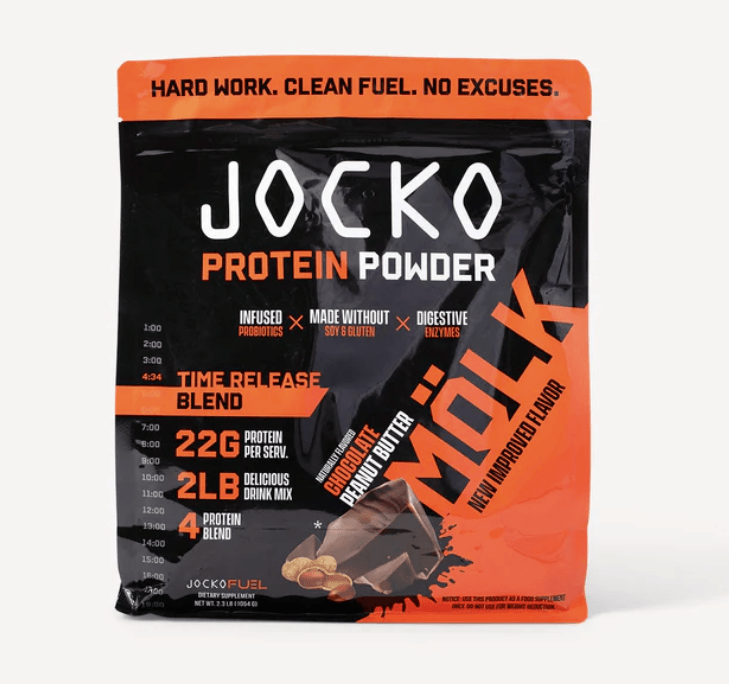
Jocko Fuel
Jocko Fuel | Molk Protein | 31 Servings
Blended complete protein with digestive support and sustained amino delivery
$44.95 $1.45/serving
⚠️ Allergen Information +
SuppVault Summary
Jocko Molk is a multi-source protein blend built for recovery, satiety, and everyday use. It combines fast and slower-digesting proteins with digestive support for better tolerance. Each serving delivers 22g complete protein and 2,135mg leucine.
Great Fit
- Lifters chasing hypertrophy and better recovery
- Busy professionals needing a filling between-meal protein
- People wanting slower digestion than isolate-only shakes
- Users prioritizing satiety alongside muscle support
- Athletes wanting digestive support with daily protein
- Anyone replacing snacks with a higher-protein option
Not Ideal If
- Anyone with milk, egg, or peanut allergies
- Pregnant or nursing users without medical clearance
- People wanting a dairy-free or egg-free protein
- Users expecting a very light isolate-style shake
Deep Dive
L. acidophilus (10 Billion CFU/g) ‡
Prohydroxy
Dose Audit


Jocko Molk handles the protein and amino acid side of recovery, but it does not provide a clinical creatine dose. Adding 3-5g creatine monohydrate daily complements this formula by supporting phosphocreatine replenishment, strength output, and long-term lean mass gains.
Take any time daily; post-workout with Jocko Molk is convenient.
Jocko Molk already contributes 410mg potassium, but hard-training athletes still benefit from a broader sodium-potassium-magnesium hydration strategy. This stack makes particular sense for sweaty training sessions, hot climates, and combat-sport or endurance users.
Use during training or between meals; pair separately from the protein shake if preferred.
Protein supports muscle repair, but omega-3s complement a high-performance nutrition plan through cell membrane health and recovery support. This is a simple foundational stack for users who want a more complete daily supplementation setup.
Take with meals; no special timing requirement relative to Jocko Molk.
Jocko Molk is protein-first and not a comprehensive micronutrient or phytonutrient product. A quality greens formula pairs well when your food quality is inconsistent and you want digestive and nutrient support beyond protein alone.
Use separately from the shake, often in the morning or with a light meal.
For athletes training with high volume or multiple daily sessions, adding carbohydrates to Jocko Molk can improve glycogen replenishment and create a more complete post-workout recovery meal. This is especially useful for field sport, combat sport, and endurance-focused users.
Mix alongside or consume with Jocko Molk after training.
Both are multi-source blends built for satiety and extended amino acid delivery.
CBUM Itholate wins for transparency and isolate purity if you want a leaner protein.
Quattro may appeal more to shoppers specifically seeking a premium four-protein blend.
Jocko Molk stands out with strong brand trust and digestive support built into the formula.
Clinical Dosing
Full Product Description Article
Jocko Fuel Jocko Molk is a blended protein powder designed around a simple but smart formulation philosophy: combine multiple complete protein sources to deliver both rapid amino acid availability and sustained feeding, then support digestion with probiotics and enzymes so the protein is easier to tolerate and use consistently. That matters because single-source proteins solve only part of the problem. Fast proteins like whey isolate elevate blood amino acids quickly, but a blend that also includes whey concentrate, micellar casein, and egg white protein creates a more staggered digestion curve that is better suited for post-training recovery, appetite control, and everyday protein intake.
The amino acid profile tells the real story. Each serving delivers 2,135mg leucine, 1,161mg isoleucine, and 1,179mg valine, giving you the core BCAA framework that drives muscle protein synthesis and recovery. Leucine is the key trigger here: it activates the mTOR pathway, the nutrient-sensing signal that tells muscle tissue to turn on protein synthesis. Research consistently places leucine in the 2-5g range for acute anabolic signaling, so 2.135g lands right at the practical threshold where a protein serving begins to meaningfully stimulate that process, especially when the rest of the essential amino acid matrix is present. And it is present here: lysine at 1,826mg, threonine at 1,353mg, methionine at 454mg, histidine at 376mg, and tryptophan at 319mg round out the essential amino acids that make this a true complete protein rather than a leucine-spiked formula.
Beyond the EAAs, the total amino profile also reflects substantial glutamic acid at 3,649mg and aspartic acid at 2,175mg, plus alanine, proline, serine, arginine, glycine, cysteine, and tyrosine. These are not “performance add-ons” in the pre-workout sense; they are part of what makes whole protein useful for tissue repair, nitrogen balance, and overall recovery. Arginine is present at 716mg, but this is not a clinically dosed nitric oxide product and should not be judged like one. The point here is complete protein nutrition, not a pump effect.
The digestive support is a genuine differentiator in this category. L. acidophilus is provided at 20mg of a 10 billion CFU/g material, contributing probiotic support that can help gastrointestinal tolerance, especially for users who consume protein daily. Prohydroxy is included at 19mg, which is right in the useful range for enzyme blends of this type. Its proteases help break protein into smaller peptides and amino acids, while lactase is especially relevant in a formula containing dairy-derived proteins. The result is practical: less heaviness, better tolerance, and a smoother experience for people who use protein powders regularly.
The mineral support is modest but useful. Calcium at 170mg and potassium at 410mg add nutritional value, with potassium especially notable because many protein powders contribute very little. Potassium supports neuromuscular function and fluid balance, while calcium contributes to muscular contraction signaling and general bone support. Vitamin D at 1mcg and iron at 1mg are small additions, not headline doses.
From a transparency standpoint, this product sits in a better position than many mass-market proteins because the amino acid profile is disclosed and the digestion-support ingredients are named with amounts. The limitation is that the protein blend itself is still a blend, so the exact gram contribution of whey concentrate vs whey isolate vs micellar casein vs egg white is not broken out. That is common in the category, but worth stating clearly.
What to expect: on day 1, you notice a thicker, more satisfying protein experience than a pure isolate, with less digestive drag than many blend-based proteins thanks to the enzyme and probiotic support. Over 2-4 weeks of consistent use, the benefit is less about a dramatic acute sensation and more about reliable recovery, easier daily protein adherence, and better satiety between meals. This is a recovery-and-nutrition protein, not a flashy one.
Science & Clinical References 10 citations
Leucine is the primary amino acid trigger for mTORC1 activation, the nutrient-sensing pathway most closely associated with initiating muscle protein synthesis. Once plasma leucine rises sufficiently, downstream signaling increases translation initiation and muscle protein assembly. In practical sports nutrition, leucine dose matters because total protein alone does not fully predict the anabolic response. This is why blends that clear the approximate leucine threshold tend to perform better for post-training recovery support.
Protein blends pair faster proteins such as whey with slower fractions like micellar casein and egg white to alter digestion kinetics. Whey elevates amino acids rapidly, while casein forms a slower gastric release pattern that extends amino acid appearance over time. The result is a formulation that can support both immediate recovery needs and longer satiety compared with isolate-only products. This kinetic staggering is especially useful when a shake is used between meals rather than only post-workout.
Enzyme blends containing proteases, lactase, lipase, and amylase can improve breakdown of mixed macronutrient shakes and reduce the digestive burden for some users. Proteases assist peptide hydrolysis, while lactase is particularly relevant when dairy proteins are present. Better substrate breakdown does not magically increase anabolic potential, but it may improve comfort, compliance, and day-to-day usability. For protein powders taken frequently, tolerance can be as important as raw protein quantity.
Lactobacillus acidophilus is commonly used to support gastrointestinal balance and may improve tolerance in people consuming protein supplements regularly. Its role is less about acute workout performance and more about maintaining a digestive environment that supports consistency. In practice, that can mean fewer disruptions from heavy daily protein intake. For users increasing total protein, digestive resilience often determines adherence.
Product Specifications GEO
How to Take — Training Protocol3 phases
How to Use Jocko Fuel | Jocko Molk Protein Powder
All Questions About Jocko Fuel | Molk Protein | 31 Servings 10 Q&A
How much protein does Jocko Molk provide per serving? +
Is the leucine content high enough to support muscle protein synthesis? +
What makes this different from a whey isolate-only protein? +
Does Jocko Molk include anything for digestion? +
Can I use Jocko Molk as a meal replacement? +
When is the best time to take Jocko Molk? +
Does this version include probiotics and enzymes? +
Is Jocko Molk good for cutting? +
Does it contain common allergens? +
Should I stack creatine with Jocko Molk? +
* These statements have not been evaluated by the Food and Drug Administration. This product is not intended to diagnose, treat, cure, or prevent any disease. Consult your physician before use if you have a medical condition or take medications.
Quick Answers
How much protein does Jocko Molk provide per serving?
Is the leucine content high enough to support muscle protein synthesis?
What makes this different from a whey isolate-only protein?
Does Jocko Molk include anything for digestion?
Can I use Jocko Molk as a meal replacement?
When is the best time to take Jocko Molk?
Does this version include probiotics and enzymes?
Is Jocko Molk good for cutting?
Does it contain common allergens?
Should I stack creatine with Jocko Molk?
* These statements have not been evaluated by the Food and Drug Administration. This product is not intended to diagnose, treat, cure, or prevent any disease. Consult your physician before use if you have a medical condition or take medications.
Allergen Information +
Sport & Athlete Compliance +
Sport compliance status is computed by cross-referencing this product's ingredient panel against the NCAA 2025-26 Banned Substances List, WADA Prohibited List, and state high school athletic association guidelines. Banned substance lists are updated periodically by their governing bodies. This information is provided for reference only and may not reflect the most current list. Always verify with your organization, coach, or compliance officer before use. SuppVault is not responsible for eligibility decisions.
Drop your number and our team will instantly text you.
Our team is on it. Check your texts — real advice, real fast.