


This product
 Obsidian Ammonia | Hype DustObsidian Ammonia
- SuppVault Score
- 99/100
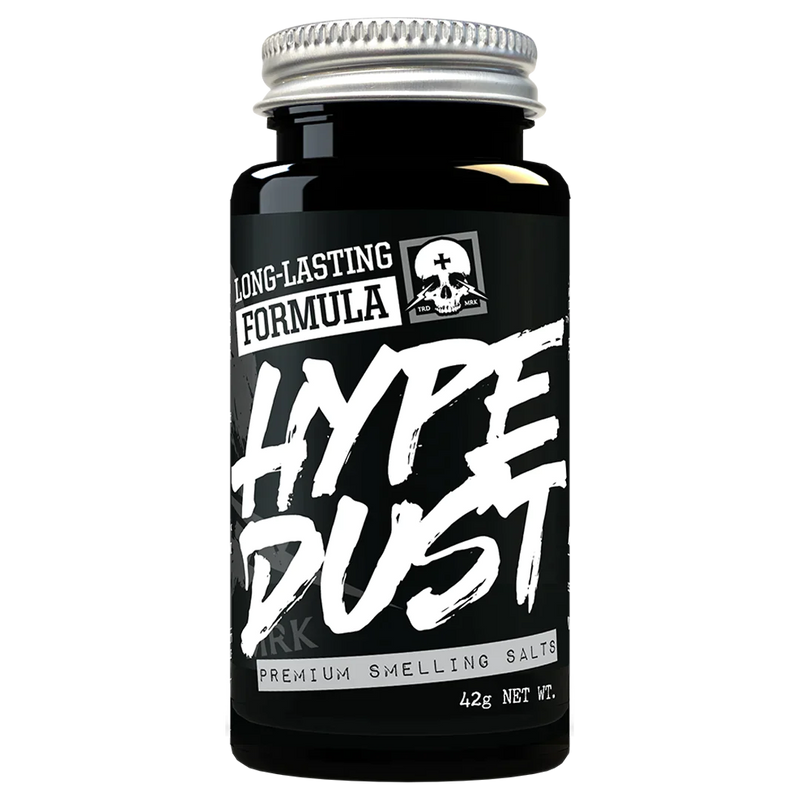
Obsidian Ammonia
Immediate ammonia inhalant intensity with a menthol-charged sensory hit
$21.95 $29.99
Score reflects incomplete data — label not yet scanned. Not a quality judgment.
Get Notified When Back in Stock
We'll email you once when this product is restocked. No spam.
SuppVault Summary
Hype Dust is a smelling salts ammonia inhalant for immediate pre-lift alertness. Ammonia plus menthol creates a fast, sharp sensory jolt, but exact doses are not disclosed.
Obsidian Ammonia publishes test results from independent third-party labs. Svpplements links to the manufacturer’s data — we don’t test products ourselves.
Discount applied automatically in cart.


Hype Dust gives acute arousal, but it does not build strength capacity over time. Daily creatine monohydrate complements it by supporting phosphocreatine availability and repeated high-output performance.
Take creatine daily; use Hype Dust only before key efforts

A true pre-workout covers energy, pumps, and training-session support that Hype Dust does not provide. The knowledge base notes ammonia's known synergy with caffeine, making this a logical advanced-user pairing.
Take ABE before training; reserve Hype Dust for top sets

Smelling salts do not address fluid balance, sodium, or intra-session hydration. A hydration formula pairs well for athletes whose sessions include both maximal efforts and significant sweat loss.
Use Replenish around training; Hype Dust only before intense moments

If you want actual blood-flow support alongside the acute sensory hit of smelling salts, a dedicated pump formula fills that gap. This creates a stack where Hype Dust handles arousal and the pump product handles training physiology.
Take the pump formula pre-workout; use Hype Dust right before key sets
Hype Dust gets the nod for its menthol inclusion and ACS grade positioning.
Both occupy the same acute inhalant category with limited dose transparency.
ABE is a more complete training formula for energy and workout support, while Hype Dust is only a brief sensory tool.
Creatine monohydrate is far stronger from an evidence-based performance standpoint than any smelling salts product.
Side-by-side against the closest competitors. Score reflects clinical dosing, transparency, and testing.
Obsidian Ammonia | Hype DustObsidian Ammonia
 Insane Labz | Wake DeadInsane Labz
Hype Dust gets the nod for its menthol inclusion and ACS grade positioning.
Compare side-by-side → Zone | Smelling Salts MintZone
Both occupy the same acute inhalant category with limited dose transparency.
Compare side-by-side →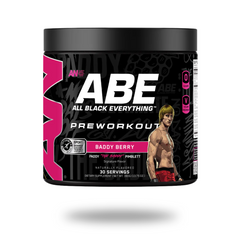 Applied Nutrition | AN ABE Pre-WorkoutApplied Nutrition
ABE is a more complete training formula for energy and workout support, while Hype Dust is only a brief sensory tool.
Compare side-by-side →Comparison data combines live storefront pricing with our SuppVault analysis. Competitor scores reflect public-label data; manufacturer-side changes may not be reflected in real time.
Obsidian Ammonia Hype Dust is not a conventional dietary supplement formula. It is a smelling salts-style ammonia inhalant designed for one job: creating an immediate, aggressive sensory stimulus right before an intense effort. The formulation strategy is simple and category-correct. Instead of trying to support blood flow, muscular endurance, hydration, or long-session cognitive output, Hype Dust is built around inhaled ammonia exposure and the acute sympathetic activation that follows. In practical terms, this is the type of product used before a max deadlift, a heavy squat set, a big hit, or any moment where you want a sharp, short-lived wake-up effect.
The primary active is ammonia (NH3) gas, with amount not disclosed. Mechanistically, ammonia acts as a potent sensory irritant. When inhaled at close range, the fumes irritate the mucous membranes of the nose and respiratory tract and stimulate the trigeminal nerve. That irritation triggers a rapid inhalation reflex and a brief fight-or-flight response, which is why users typically report an instant rush, widened alertness, and a feeling of being snapped into the moment. The knowledge base is clear that the traditional dosing guidance is not measured in milligrams but by inhalation distance: generally 4-6 inches from the nose. Evidence for syncope use is long-standing historically, but evidence for improved strength or power performance in trained athletes is limited. That distinction matters. Hype Dust is best understood as an acute arousal tool, not a clinically established ergogenic like creatine or citrulline.
ACS grade ammonium hydroxide is also listed, again without a disclosed amount. Its role is functional: it serves as a source material contributing to ammonia vapor generation. The ACS grade notation signals laboratory-grade quality standards rather than a trademarked sports nutrition raw material. That does not tell us exact potency, but it does indicate that the brand is positioning the input material as high grade.
Menthol is the third listed active, also undisclosed. Menthol does not provide the core stimulant effect here, but it can change the sensory profile significantly. Inhaled menthol creates a cooling sensation and can make the airway feel more open, which often makes the inhale feel sharper and more dramatic. In a formula like this, menthol works as a sensory amplifier rather than a primary performance ingredient.
The synergy is straightforward: ammonia provides the aggressive irritant stimulus, ammonium hydroxide helps generate that ammonia environment, and menthol modifies the breathing sensation for a colder, clearer nasal hit. This is not a complex system with multiple metabolic pathways; it is a direct sensory-activation stack.
Transparency is the biggest limitation. This is not a proprietary blend, but it is also not fully dose-transparent. No exact concentration or quantitative breakdown is published, which is common in the smelling salts category but still a meaningful drawback for buyers who want true formula comparability. Compared with category norms, that lack of dosing detail is typical, not exceptional.
What to expect: day 1 is essentially the full story. The effect is acute, fast, and brief. There is no 2-4 week loading effect because these ingredients do not build up like creatine or beta-alanine. With repeated use, what changes is your familiarity with the intensity, not a cumulative physiological saturation benefit.
Inhaled ammonia acts primarily as a sensory irritant rather than a nutrient or metabolic substrate. Contact with nasal and respiratory mucosa stimulates trigeminal sensory pathways and provokes a rapid inhalation reflex, which is accompanied by a brief sympathetic nervous system response. That response explains the immediate alertness and wake-up sensation associated with smelling salts. Mechanistic plausibility is strong, but direct ergogenic data in resistance-trained athletes remains limited.
Traditional pre-workouts require gastrointestinal absorption and systemic distribution before effects are noticed. Smelling salts bypass that route entirely by acting through local sensory irritation in the airways. This is why onset is measured in seconds rather than 20-40 minutes. The tradeoff is duration: the effect is sharp and short-lived rather than broad and sustained.
Menthol activates cold-sensitive TRP channels and produces a cooling perception in the nasal passages and upper airway. That does not mean it increases oxygen delivery directly, but it can change the subjective breathing experience in a way users perceive as cleaner or more open. In a smelling salts product, this likely amplifies the sensory signature rather than providing a standalone ergogenic effect.
An important distinction in sports nutrition is the difference between feeling activated and actually improving performance capacity. Smelling salts excel at creating an immediate arousal response, but they do not replace evidence-backed compounds like creatine for phosphagen support or citrulline for blood flow. This category is best viewed as a situational nervous-system primer rather than a foundational performance supplement.
Verified athletes can view NCAA, WADA, and high-school compliance status for this product.
* These statements have not been evaluated by the Food and Drug Administration. This product is not intended to diagnose, treat, cure, or prevent any disease. Consult your physician before use if you have a medical condition or take medications.
Drop your number and our team will instantly text you.
Our team is on it. Check your texts — real advice, real fast.
Brain-curated complementary picks for synergy and full-spectrum coverage.
 70
70
 64
64
 97
97
 69
69
 64
64
 87
87
Secure sign in
Svpplements uses Shopify Customer Accounts for protected login, order history, and account data.

