This product
 Bucked Up | Buck Feed | 30 ServingsBucked Up
- SuppVault Score
- 58/100
- Per serving
- $1.5
Key actives
Tested
Bucked Up
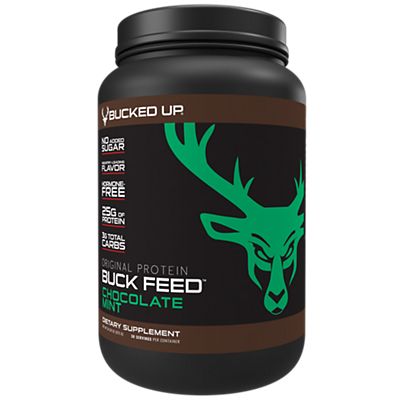
25g whey protein with Bucked Up’s deer antler signature
$44.95 $59.99$1.49/serving SuppVault Summary
Buck Feed is a straightforward whey protein built for efficient daily protein intake and recovery support. Its core strength is 25g protein per scoop from a whey isolate plus concentrate blend, with a small 100mg Deer Antler Velvet addition for brand distinction.
Bucked Up publishes test results from independent third-party labs. Svpplements links to the manufacturer’s data — we don’t test products ourselves.
Discount applied automatically in cart.


This is the cleanest performance stack with Buck Feed. Whey protein supports muscle repair and daily protein sufficiency, while creatine increases phosphocreatine availability to support repeated high-intensity efforts, strength output, and long-term lean mass gains.
Take creatine daily anytime; pairing it with your Buck Feed shake post-workout is convenient and easy to remember.
Buck Feed includes only modest potassium and likely small sodium contribution, so a true hydration formula fills a different role. This stack makes sense for hard-training athletes who need both post-workout protein and purposeful fluid-electrolyte replacement.
Use electrolytes pre-, intra-, or post-workout; take Buck Feed after training or between meals.
For athletes training fasted or doing long sessions, an intra-workout amino product can bridge the session while Buck Feed handles the full post-workout protein feeding. The logic is session support first, complete protein recovery second.
Sip EAAs/BCAAs during training; use Buck Feed immediately after or at the next available meal window.
If your training volume is high, Buck Feed covers the protein side but not substantial glycogen replenishment. Adding a carb source creates a more complete post-workout recovery stack by pairing amino acid delivery with faster restoration of muscle glycogen.
Combine or take alongside Buck Feed after intense lifting, conditioning, or two-a-day sessions.
Users who tolerate isolate well but sometimes bloat from whey concentrate may benefit from a digestive support stack. It does not change the protein dose, but it can improve comfort and make daily use easier for sensitive users.
Take with your Buck Feed serving, especially if using it as a larger shake with milk or added foods.
They likely offer a purer isolate-first protein experience with stronger category leadership.
Both are practical whey blends aimed at convenient daily protein support.
A dedicated isolate product may win on purity and macro efficiency.
Buck Feed delivers more efficient protein per serving with better workout nutrition flexibility.
Side-by-side against the closest competitors. Score reflects clinical dosing, transparency, and testing.
Bucked Up | Buck Feed | 30 ServingsBucked Up
 Raw Nutrition | CBUM Itholate | 25 ServingsRaw Nutrition
They likely offer a purer isolate-first protein experience with stronger category leadership.
Compare side-by-side → Raw Nutrition | Whey Blend | 20 ServingsRaw Nutrition
Both are practical whey blends aimed at convenient daily protein support.
Compare side-by-side → Blackstone Labs | BSL Isolation ProteinBlackstone Labs
A dedicated isolate product may win on purity and macro efficiency.
Compare side-by-side →Comparison data combines live storefront pricing with our SuppVault analysis. Competitor scores reflect public-label data; manufacturer-side changes may not be reflected in real time.
Buck Feed is best understood as a whey protein formula with a branded identity, not as a fully loaded performance or recovery matrix. Based on the verified and partial label data available, the core of the product is a Buck Feed Protein Complex built from whey protein isolate and whey protein concentrate, delivering 25g protein per scoop in a 32.5-33g serving. That tells you the formulation strategy immediately: prioritize efficient protein delivery, keep fats and carbs relatively low, and add a small amount of Deer Antler Velvet Powder as the formula’s point of differentiation.
The most important performance-relevant ingredient here is the whey protein base, even though its exact isolate-to-concentrate ratio is not disclosed. Whey is the gold-standard fast-digesting dairy protein for post-training use because it is rich in essential amino acids and naturally high in leucine, the amino acid that helps trigger muscle protein synthesis. At 25g per serving, this sits right in the effective range most lifters use after training or between meals to support recovery and daily protein intake. Since isolate is listed before concentrate, it is likely the dominant source, which usually means a cleaner macro profile and faster digestion than concentrate-heavy blends.
Deer Antler Velvet Powder is present at 100mg. Mechanistically, deer antler ingredients are often marketed around recovery, vitality, and traditional use, with interest tied historically to naturally occurring growth factors such as IGF-1 peptides. The honest assessment is that 100mg is a small inclusion, and the modern human performance evidence for deer antler supplementation is far weaker than the evidence for whey protein itself. Customers should view it as a brand-signature add-on, not the main reason this product works. The reason this formula works is the whey.
The listed minerals are present in modest amounts: calcium at 109mg, iron at 1mg, and potassium at 196mg. Calcium is essential for muscle contraction and bone mineral status, but this dose is nutritionally minor rather than performance-defining. Potassium contributes to fluid balance, nerve signaling, and normal muscle function, and while 196mg helps round out the nutritional profile, it is far below the intake levels used in blood-pressure or electrolyte intervention research. Iron at 1mg is also a small background amount, not a purposeful iron-repletion dose.
Synergy here is simple rather than elaborate. Whey protein handles the primary job: supplying amino acids quickly after training. The minerals provide a small amount of nutritional support, and the Himalayan rock salt likely contributes modestly to flavor and a touch of sodium. There is no proprietary active blend hiding doses, which is a plus, but the full label remains incomplete from available sources, so transparency is only partial from an evaluation standpoint. We know the key framework of the formula, but not every macro, amino detail, or sourcing specification directly from a complete verified panel.
What should you expect? Day 1, this functions like a solid whey shake: easy protein intake, convenient post-workout nutrition, and better adherence to your daily protein goal. Over 2-4 weeks of consistent use, the real benefit is cumulative dietary consistency—more reliable protein intake, better support for recovery, and an easier time staying anabolic across a training block. Just keep expectations anchored correctly: this is a protein supplement with a light differentiator, not a clinically dosed recovery complex beyond the whey itself.
Whey protein is rapidly digested, producing a quick rise in circulating essential amino acids and leucine. That leucine pulse helps activate mTORC1 signaling, which is a central regulator of muscle protein synthesis. In practical sports nutrition terms, a 20-25g whey serving is often sufficient to robustly stimulate post-exercise anabolic signaling in many adults. The main advantage here is speed, convenience, and reliable amino acid delivery rather than a dramatic acute sensation.
Total daily protein intake matters most, but distribution across meals also influences recovery quality and lean mass retention. A shake like this can fill a missed feeding window when whole-food protein is impractical. Repeated exposure to adequately sized protein feedings supports a more consistent muscle protein synthesis pattern over the day. That is why simple whey products often outperform more exotic formulas in real-world adherence.
Potassium is a major intracellular electrolyte involved in membrane potential maintenance, neuromuscular signaling, and fluid balance. While the amount here is not a standalone performance dose, it contributes modestly to overall electrolyte intake. For athletes who sweat heavily or eat low-potassium diets, these small contributions can still support the broader hydration picture. Its role in this formula is supportive rather than primary.
Deer antler velvet is often included as a brand differentiator in sports products, but dose and standardization matter substantially when evaluating likely physiological effect. At 100mg as plain powder, this is best viewed as a minor supporting inclusion rather than the formula's functional engine. The clinically meaningful component of Buck Feed remains its whey protein payload. Mechanistically, any theoretical benefit is overshadowed by the much stronger evidence base for protein itself.
Verified athletes can view NCAA, WADA, and high-school compliance status for this product.
* These statements have not been evaluated by the Food and Drug Administration. This product is not intended to diagnose, treat, cure, or prevent any disease. Consult your physician before use if you have a medical condition or take medications.
Drop your number and our team will instantly text you.
Our team is on it. Check your texts — real advice, real fast.
 70
70
 64
64
 97
97
 69
69
 64
64
 87
87
Higher-scoring formulas the brain ranks above this product.
Secure sign in
Svpplements uses Shopify Customer Accounts for protected login, order history, and account data.