

This product
 Bucked Up | Low StimBucked Up
- SuppVault Score
- 90/100
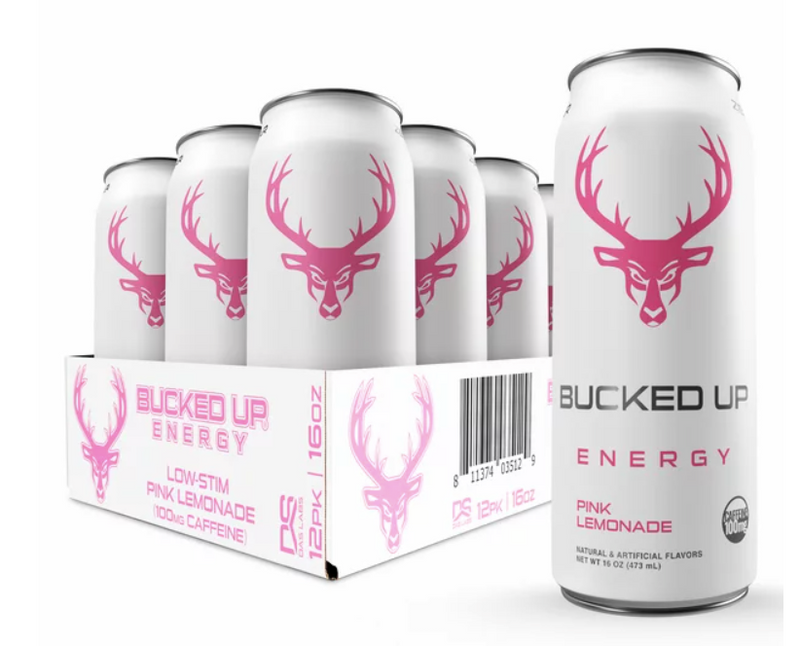
Bucked Up
100mg caffeine for smoother energy without the high-stim overload
$2.95
Get Notified When Back in Stock
We'll email you once when this product is restocked. No spam.
SuppVault Summary
A low-stim ready-to-drink energy can built around 100mg caffeine. It delivers smoother alertness, focus, and workout readiness than typical high-stim energy drinks. Best for users who want a noticeable lift without overdoing stimulants.
Bucked Up publishes test results from independent third-party labs. Svpplements links to the manufacturer’s data — we don’t test products ourselves.
Discount applied automatically in cart.


This is one of the best pairings because Bucked Up Low Stim gives you acute nervous system energy from 100mg caffeine, while creatine supports phosphocreatine replenishment for repeated high-intensity output. The combination covers both mental readiness and muscular energy availability without needing more stimulants.
Take the energy drink 20-30 minutes pre-workout; take creatine daily any time, ideally with a meal or post-workout for consistency.
Caffeine can increase perceived drive and training intensity, but hydration status still determines how good the session actually feels. Pairing this can with electrolytes supports fluid balance, muscle function, and better workout quality, especially during conditioning, summer training, or long sessions.
Drink the can pre-workout and use electrolytes before, during, or after training depending on sweat loss.
The energy drink helps you show up mentally, while EAAs support the amino acid pool during training, particularly if you train fasted or have long sessions. This creates a practical stack: caffeine improves readiness and focus, and amino support helps cover the nutritional side of training stress.
Use the can 20-30 minutes before training and sip EAAs during the workout.
This product handles acute energy, but it does not address recovery nutrition. Pairing it with a high-quality protein gives you a complete pre-to-post workflow: better readiness going in, then the amino acids needed to support repair and adaptation afterward.
Use the can before training and protein within 1-2 hours post-workout or whenever it helps you hit daily intake.
If 100mg caffeine gives you enough energy but you want more training-specific support, a stim-free pump product is the ideal add-on. That lets you keep stimulant load controlled while layering in ingredients such as citrulline, nitrates, or glycerol for blood flow, cell hydration, and better session quality.
Take both 20-30 minutes pre-workout, ensuring the pump formula is stimulant-free so total caffeine stays manageable.
The standard version likely suits users wanting a stronger all-around energy hit.
Both target lower-caffeine users, with format preference deciding the better fit.
This is better if you want instant caffeine-based alertness in a can.
This product is simpler and easier for low-stim users who just want moderate caffeine.
Side-by-side against the closest competitors. Score reflects clinical dosing, transparency, and testing.
Bucked Up | Low StimBucked Up
 Bucked Up | EnergyBucked Up
The standard version likely suits users wanting a stronger all-around energy hit.
Compare side-by-side → Bucked Up | 100 Series | 30 ServingsBucked Up
Both target lower-caffeine users, with format preference deciding the better fit.
Compare side-by-side →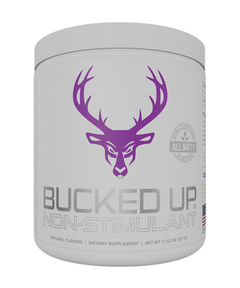 Bucked Up | Non-Stim | 30 ServingsBucked Up
This is better if you want instant caffeine-based alertness in a can.
Compare side-by-side →Comparison data combines live storefront pricing with our SuppVault analysis. Competitor scores reflect public-label data; manufacturer-side changes may not be reflected in real time.
Bucked Up Energy Drink - Low Stim is best understood as a low-stimulant ready-to-drink energy formula built around a clearly verified 100mg dose of caffeine. That matters because most canned energy products in the performance space push much harder on stimulant load, often landing in ranges that are unnecessary for users who want better focus and energy without excessive intensity. The philosophy here is moderation: enough caffeine to create a noticeable improvement in alertness and training readiness, but not so much that every session feels like a high-stim pre-workout.
Caffeine is one of the most validated ergogenic ingredients in all of sports nutrition. Its primary mechanism is adenosine receptor antagonism in the brain. In practical terms, adenosine is one of the signaling molecules that contributes to feelings of fatigue and reduced alertness. When caffeine blocks those receptors, perceived tiredness drops and neurotransmitter activity involving dopamine and norepinephrine increases, which is why users typically feel more awake, mentally sharper, and more willing to engage physically. Research support here is extremely strong, with dozens of clinical trials and multiple meta-analyses supporting benefits for alertness, cognitive performance, and exercise output.
The nuance is dose. The classic sports performance literature often centers around 200-400mg total caffeine or about 3-6 mg/kg bodyweight, especially for maximal ergogenic effects in trained populations. At 100mg, this product sits below that traditional clinical performance range. That is not a flaw if the goal is a low-stim experience. It simply means this formula is positioned for smoother energy rather than maximal stimulation. For many users, especially smaller individuals, caffeine-sensitive users, or anyone trying to avoid sleep disruption, 100mg is enough to create a meaningful difference in mood, concentration, and training momentum without the harsher edge that can come with larger doses.
What should you expect to feel? Usually a gradual rise in alertness, less mental drag, better willingness to train, and improved concentration during work, driving, studying, or gym sessions. You are less likely to get the overwhelming “amped” sensation associated with heavier stimulant formulas. That makes this especially useful for cardio, general fitness, lighter resistance training, long workdays, or as an entry-level energy product for people who do not want to jump straight into 200mg-plus territory.
From a synergy standpoint, the challenge with this product is transparency. Web-sourced retail context suggests the formula may include additional nootropic or energy-support ingredients, but exact label-confirmed doses were not available in the verified formula provided here. For that reason, the only ingredient that can be analyzed with full confidence is caffeine at 100mg. There is no proprietary blend disclosed in the provided data, but there is also no complete active panel available to properly assess the rest of the formula. Compared with best-in-class transparent sports nutrition labels, that limits precise clinical evaluation.
Day 1, expect a modest but noticeable lift in energy and focus within roughly 15-40 minutes. Over 2-4 weeks, caffeine itself does not produce a loading effect, but consistent use can help establish a predictable pre-training or productivity ritual. The main watchout is tolerance: daily caffeine use can reduce perceived intensity over time, which is why some users prefer reserving lower-stim products like this for strategic use rather than constant escalation.
Caffeine primarily works by antagonizing adenosine receptors, especially A1 and A2A, within the central nervous system. Adenosine normally accumulates during waking hours and promotes sensations of fatigue and reduced arousal. By blocking that signaling, caffeine reduces perceived tiredness and indirectly enhances dopaminergic and noradrenergic activity. The practical effect is improved wakefulness, mental drive, and readiness to perform.
Caffeine has one of the strongest evidence bases in sports nutrition for improving performance across multiple exercise types. Benefits often include better vigilance, improved training intent, and reduced ratings of perceived exertion. Even when the dose is below classic ergogenic ranges, many users still notice meaningful improvements in session readiness and mental sharpness. That is especially relevant for low-stim products designed around usability rather than maximal intensity.
A 100mg caffeine dose sits below the common 200-300mg range seen in many performance drinks, so the subjective effect is usually gentler. This lower load can still elevate alertness while reducing the chance of overstimulation in sensitive users. It also creates a more flexible use case for work, study, or evening training. Mechanistically, the same pathways are engaged, but with a smaller stimulatory burden.
Verified athletes can view NCAA, WADA, and high-school compliance status for this product.
* These statements have not been evaluated by the Food and Drug Administration. This product is not intended to diagnose, treat, cure, or prevent any disease. Consult your physician before use if you have a medical condition or take medications.
Drop your number and our team will instantly text you.
Our team is on it. Check your texts — real advice, real fast.
Higher-scoring formulas the brain ranks above this product.
Secure sign in
Svpplements uses Shopify Customer Accounts for protected login, order history, and account data.