This product
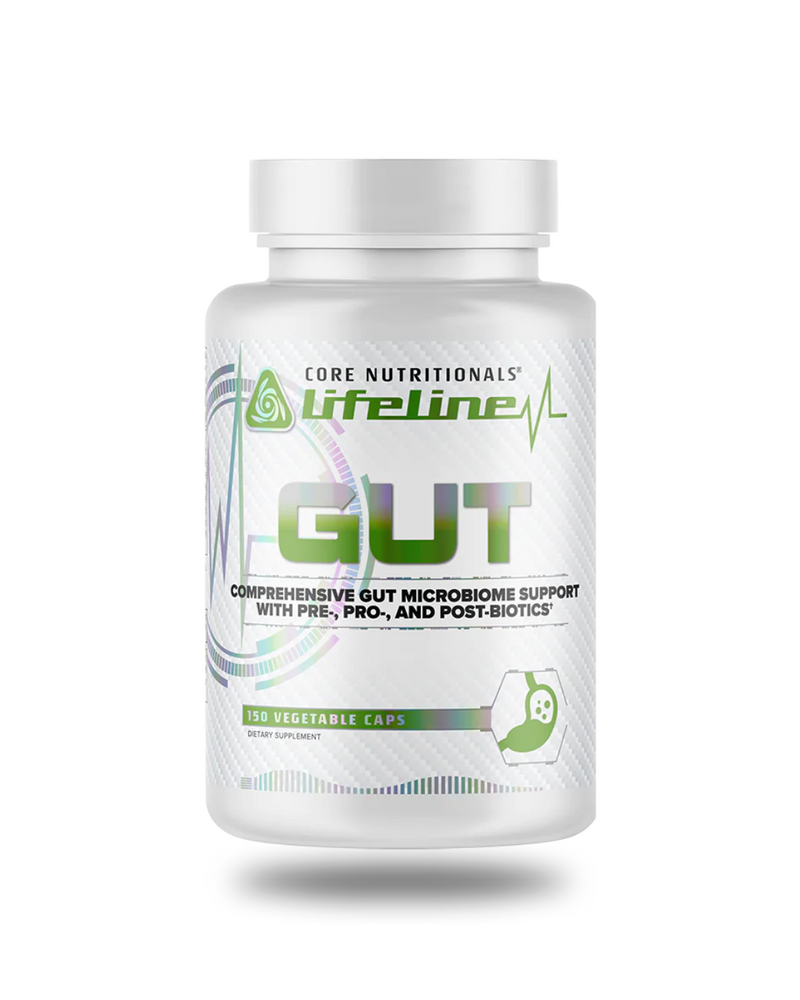
 Core Nutritionals | Gut | 150 CapsulesCore Nutritionals
- SuppVault Score
- 71/100
- Per serving
- $1.83
Key actives
Tested
Core Nutritionals
Broad-spectrum probiotics plus enzymes for serious daily gut support
$54.99 $1.83/serving
Get Notified When Back in Stock
We'll email you once when this product is restocked. No spam.
Shop Similar Products
 60Apollon Nutrition
Apollon Nutrition | Gut Glory | 60 Capsules
$49.99
60Apollon Nutrition
Apollon Nutrition | Gut Glory | 60 Capsules
$49.99
 88Core Nutritionals
Core Nutritionals | Greens | 21 Servings
$49.99
88Core Nutritionals
Core Nutritionals | Greens | 21 Servings
$49.99
 80Enhanced
Enhanced | Slin 120ct | 120 Capsules
$39.99
80Enhanced
Enhanced | Slin 120ct | 120 Capsules
$39.99
 53Hi-Tech Pharmaceuti...
Hi-Tech Pharmaceuticals | Liver-RX
$19.95
53Hi-Tech Pharmaceuti...
Hi-Tech Pharmaceuticals | Liver-RX
$19.95
 70RYSE
RYSE | Loaded Protein | 27 Servings
$44.50
70RYSE
RYSE | Loaded Protein | 27 Servings
$44.50
 78Alpha Lion
Alpha Lion | Protein ISO | 28 Servings
$59.95
SuppVault Summary
78Alpha Lion
Alpha Lion | Protein ISO | 28 Servings
$59.95
SuppVault Summary
Core Nutritionals Gut is a daily digestive support formula built around multi-strain probiotics, Saccharomyces boulardii, and enzymes. It targets microbiome balance, gut comfort, and meal tolerance rather than acute effects. Key label point: a 150mg digestive enzyme blend supports protein, lactose, and starch digestion.
Core Nutritionals publishes test results from independent third-party labs. Svpplements links to the manufacturer’s data — we don’t test products ourselves.
Discount applied automatically in cart.


This is a highly logical stack because the enzyme blend in Core Nutritionals Gut includes protease and lactase, both directly relevant to protein shakes and dairy-containing formulas. If whey sits heavy or repeated shakes start to wear on digestion, gut support plus protein is one of the cleanest practical pairings you can make.
Use Gut with a meal or alongside your main protein-containing meals; use protein whenever it fits your daily intake targets.
Creatine supports phosphocreatine replenishment and training output, while Gut supports the digestive side of staying consistent with food and supplements. This pairing is especially useful in growth phases where training, food volume, and supplement load all increase at the same time.
Take Gut with a meal daily; take creatine daily at any convenient time, ideally with food or post-workout.

A greens product can complement Gut by broadening dietary micronutrient and phytonutrient coverage, while Gut focuses more directly on microbiome and digestive support. This creates a more complete daily wellness stack without overlapping stimulant or performance ingredients.
Take Gut with a meal; use greens whenever convenient, often with breakfast or between meals.
A multivitamin covers nutrient insurance, while Gut helps support the digestive system that has to process your overall nutrition plan. They address different levels of the same goal: making daily nutrition easier to execute and easier to benefit from.
Take both with meals; if the multivitamin is best split, keep Gut anchored to one consistent meal each day.
Gut Glory likely has a more modern multi-angle gut support approach with broader category positioning.
Gut is the more targeted choice when digestion and probiotic support are the main goal.
Glutamine fits recovery and gut-support stacks, while Gut covers broader microbiome and enzyme support.
Core Nutritionals Gut offers broader support through probiotics, yeast support, and digestive enzymes.
Side-by-side against the closest competitors. Score reflects clinical dosing, transparency, and testing.
Core Nutritionals | Gut | 150 CapsulesCore Nutritionals
 Apollon Nutrition | Gut Glory | 60 CapsulesApollon Nutrition
Gut Glory likely has a more modern multi-angle gut support approach with broader category positioning.
Compare side-by-side → Core Nutritionals | Greens | 21 ServingsCore Nutritionals
Gut is the more targeted choice when digestion and probiotic support are the main goal.
Compare side-by-side →Glutamine fits recovery and gut-support stacks, while Gut covers broader microbiome and enzyme support.
Compare side-by-side →Comparison data combines live storefront pricing with our SuppVault analysis. Competitor scores reflect public-label data; manufacturer-side changes may not be reflected in real time.
Core Nutritionals Gut is designed as a comprehensive daily gut-health formula, not a one-note probiotic. The formulation strategy is clear: combine broad-spectrum microbiome support from multiple Bifidobacterium and Lactobacillus species, add Saccharomyces boulardii for complementary yeast-based support, and round the formula out with digestive enzymes to improve the front-end breakdown of food. The result is a capsule-based product aimed at the three core drivers of better digestive function: microbial balance, intestinal environment, and meal tolerance.
The Core Probiotic Blend is the centerpiece, but it is also the area where transparency is limited. The label discloses the genera and species included, but not the per-strain amounts in the verified label data provided here. That matters, because probiotics are strain- and dose-sensitive. Still, the ingredient selection is intelligent. Bifidobacterium species are among the dominant beneficial organisms in the lower GI tract. Mechanistically, they ferment indigestible carbohydrates into lactic and acetic acids, lowering luminal pH and making the environment less favorable for pathogenic overgrowth. They also interact with the mucosal immune system and help reinforce barrier integrity, which is one reason they are often used in formulas targeting bloating, irregularity, and general dysbiosis support. Evidence is moderate overall, with especially useful relevance for common digestive complaints and microbiome resilience.
Lactobacillus species bring a different but highly complementary profile. They are among the best-studied probiotic genera, with strong evidence in the broader literature for digestive and immune support. Their mechanisms include carbohydrate fermentation into lactic acid, secretion of antimicrobial compounds such as bacteriocins, support for epithelial tight junction integrity, and immune signaling through dendritic cells and Toll-like receptors. In practical terms, Lactobacillus strains are often associated with improved digestive comfort, better tolerance during periods of stress or antibiotic disruption, and a more stable gut environment. The literature commonly uses doses in the 1 to 10 billion CFU range depending on the strain and application, which makes hidden dosing a meaningful limitation here even though the species selection itself is strong.
Saccharomyces boulardii is a particularly smart inclusion because it is not a bacterium but a beneficial yeast, giving the formula broader ecological coverage. S. boulardii is well known in digestive support because it can help crowd out undesirable organisms, support secretory immune defenses, and remain useful during situations where bacterial probiotics may be less resilient. In a multi-strain gut formula, it acts as a complementary stabilizer rather than a redundant add-on.
The Digestive Enzyme Blend provides 150 mg of protease, lactase, and amylase. This is not a massive enzyme panel, but it is practical. Protease helps break down protein, lactase helps with lactose digestion, and amylase supports carbohydrate breakdown. For users eating high-protein meals, dairy-containing foods, or larger mixed meals, this can translate into less heaviness and better post-meal comfort.
The synergy is the real story. The probiotic matrix works on the microbial ecosystem and gut barrier, while the enzyme blend reduces the amount of poorly digested food reaching the lower gut and feeding the wrong fermentation patterns. That is a sensible system-level design.
On transparency, this product lands in the middle. The formula concept is strong, but the probiotic blend is proprietary in the verified data, which prevents a fully dose-specific clinical audit. What you should expect: day 1 is usually subtle, with most people noticing meal tolerance first. Over 2 to 4 weeks of daily use, the more meaningful benefits tend to emerge: more consistent digestion, improved regularity, less bloating from large meals, and a more resilient baseline when diet, travel, or life stress would normally throw your gut off.
Multi-strain probiotic formulas are designed to broaden ecological coverage across different gut niches rather than relying on one organism for every effect. Bifidobacterium species are more associated with lower-intestinal carbohydrate fermentation and short-chain fatty acid production, while Lactobacillus species often contribute to upper-GI resilience, acid tolerance, and antimicrobial signaling. In combination, they may support barrier integrity, immune cross-talk, and day-to-day digestive stability. The practical value is less about an acute sensation and more about gradually improving the gut environment over repeated use.
Saccharomyces boulardii is a probiotic yeast that functions differently from bacterial probiotics and is often used as a complementary support organism. Mechanistically, it can influence pathogen adhesion, modulate local immune signaling, and support epithelial barrier function. Because it is a yeast, it may add diversity to formulas otherwise composed only of bacterial strains. This complementary biology is one reason it is frequently included in more comprehensive gut-health products.
Protease, lactase, and amylase work at the front end of digestion by helping break down protein, lactose, and starch respectively. This does not change the microbiome directly, but it can reduce the amount of incompletely digested substrate reaching the lower GI tract. In practical terms, that may improve tolerance to larger meals, dairy-containing foods, and higher-carbohydrate feedings. Enzyme support is especially relevant for athletes whose food volume is high enough that digestion becomes a performance bottleneck.
Many probiotic organisms support digestive health indirectly by shaping luminal pH, metabolite production, and competitive interactions with less favorable microbes. Bifidobacteria are known for fermentative metabolism that can generate acids helpful for maintaining a healthier colonic environment. Lactobacilli also contribute lactic acid and antimicrobial compounds that may influence microbial balance. Together, these actions can support gut barrier integrity and a more stable intestinal ecosystem over time.
Verified athletes can view NCAA, WADA, and high-school compliance status for this product.
* These statements have not been evaluated by the Food and Drug Administration. This product is not intended to diagnose, treat, cure, or prevent any disease. Consult your physician before use if you have a medical condition or take medications.
Drop your number and our team will instantly text you.
Our team is on it. Check your texts — real advice, real fast.
Brain-curated complementary picks for synergy and full-spectrum coverage.
Secure sign in
Svpplements uses Shopify Customer Accounts for protected login, order history, and account data.