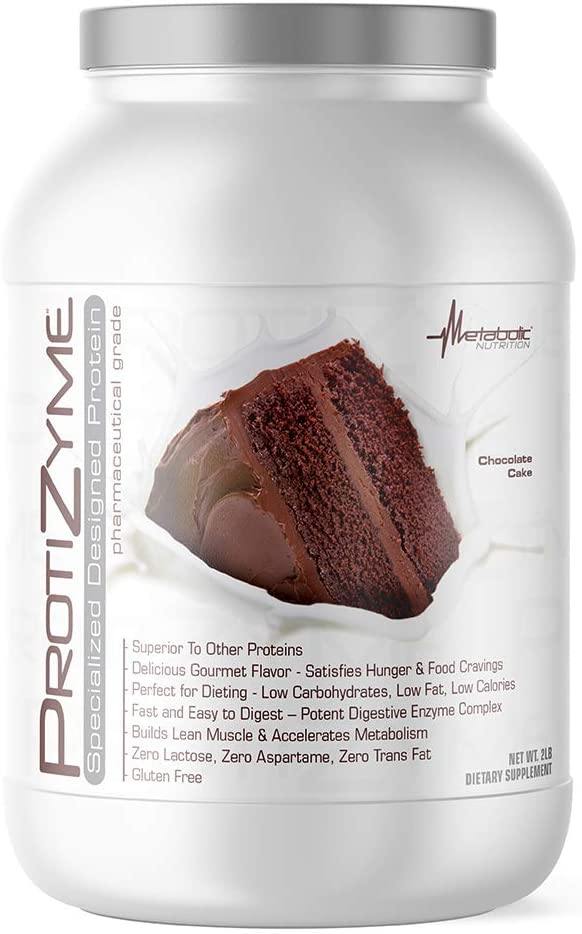
Metabolic Nutrition Protizyme Whey Protein Powder 26 Servings - Whey Protein Blend Approx. 24–26g protein | Svpplements

Metabolic Nutrition

Metabolic Nutrition | MN Protizyme

Whey protein plus digestive enzymes and built-in micronutrient support.

$49.99
0

SuppVault Score

Excellent — top tier

Metabolic Nutrition | MN Protizyme

Six dimensions, weighted by category. Each is scored 0–10 from the supplement-facts panel data and the 2,492-ingredient knowledge base.

  • Clinical Dosing 4/10
  • Label Transparency 8/10
  • Manufacturing 6/10
  • Testing 5/10
  • Inactive Ingredients 9/10
  • Value 5/10
See the full algorithm → Read methodology

Scores are deterministic — same label in, same score out. Proprietary blends naturally score lower on transparency by design, not as a penalty.

Tastes like: [ "\"five gourmet flavors", "\" \"six delicious flavors\").\nNo licensed/collab", "limited edition", "or seasonal flavors noted; no best/worst reviews specified" ]
100 Day Guarantee Opened OK · Full refund
Free Shipping Orders over $39
Hand Packed Climate-controlled
Approx. 24-26g protein Whey Protein Blend
Amount not disclosed T.A.G. (Trans-Alanyl-Glutamine)
Amount not disclosed Digestive Enzyme Complex
76mg Potassium
✓ Label Verified✓ No Prop Blends✓ DSHEA Compliant
24-26g whey protein per serving
Whey isolate plus concentrate blend
Digestive enzyme support included
Recovery-focused glutamine dipeptide added
Broad vitamin-mineral blend included
"This is the kind of protein you actually keep using—solid recovery shake, no heavy stomach, and way more complete than the average whey tub."
Verified buyer
⚠️ Contains proprietary blend (8 ingredients)
1. Amylase2. Protease3. Cellulase4. Calactohydrolase-Lactase5. Lipase6. Betaine7. Pepsin8. Papain
SuppVault Summary

Protizyme is a daily whey protein blend built for recovery, convenience, and easier digestion. It combines whey isolate and concentrate with digestive enzymes, added recovery support, and a broad vitamin-mineral blend. Each scoop delivers roughly 24-26g of protein.

Great Fit

  • Lifters focused on hypertrophy and recovery
  • Busy professionals replacing missed meals
  • Athletes wanting daily post-workout protein
  • Users who prefer more than basic whey
  • People wanting digestive support with protein
  • Anyone needing convenient between-meal protein

Not Ideal If

  • Anyone with a milk allergy
  • People with peanut allergies
  • Users wanting a minimalist single-ingredient whey
⚠️ Allergen Information +
Contains:
Milk
Manufactured in a facility that also processes:
Milk

Brand-Published Lab Tests

Metabolic Nutrition publishes test results from independent third-party labs. Svpplements links to the manufacturer’s data — we don’t test products ourselves.

Lab data is published by the manufacturer. Svpplements neither verifies nor warrants third-party test results — we curate the link so you can check the source. How we evaluate testing →
Buy more, save more

Stack discount

Discount applied automatically in cart.

  • 6units left
  • Ships today if ordered before 3:00 PM ET
Have a question about this product?
When Post workout
Time Any time
What You'll Feel
0-10 min
You notice taste, texture, and mixability first.
10-30 min
Digestive comfort becomes the main early benefit.
💪
30-90 min
Acts like a satisfying protein feeding, not a stimulant.
🎯
2-4 hours
Supports satiety and helps bridge gaps between meals.
1-2 weeks
More consistent protein intake improves recovery routine adherence.
3-6 weeks
Training nutrition feels easier and more repeatable daily.

Deep Dive

Recovery 2
??
Whey Protein Isolate + Whey Protein Concentrate Blend
Approx. 24-26g protein
??
T.A.G. (Trans-Alanyl-Glutamine)
Amount not disclosed
Digestive 1
??
Maximum Potency Digestive Enzyme Complex
Amount not disclosed
Electrolyte 1
Po
Potassium
Below
Vitamin 5
Ma
Magnesium
Vi
Vitamin D
Ir
Iron
Bi
Biotin
Th
Thiamin, Riboflavin, B6, B12, Niacinamide, Folic Acid, Pantothenic Acid
Anti oxidant 1
Vi
Vitamin C
REC: 2DIG: 1ELE: 1VIT: 5ANT: 1
Amylase
Under-Researched
Clinical range: Varies by formulation (measured in DU or SKB units)
moderate
Betaine
Under-Researched
Clinical range: 2.5g-6g
strong
Biotin
Under-Researched
Clinical range: 2.5mg
limited
Calcium
Under-Researched
Clinical range: 1000-1200mg
strong
Cellulase
Under-Researched
Clinical range: 0.2mg - 50mg (Often measured in CU - Cellulase Units)
moderate
Chromium
Under-Researched
Clinical range: 200-1000mcg
moderate
Copper
Under-Researched
Clinical range: 1-3mg
strong
Folic Acid
Under-Researched
Clinical range: 400-800mcg
strong
Glycine
Below Clinical
438mg
Clinical range: 3g - 5g
moderate
Iodine
Under-Researched
Clinical range: 0.14mg-0.15mg
strong
Iron
Under-Researched
Clinical range: 18-65mg
strong
L-Alanine
Clinical Dose
1219mg
Clinical range: 500-1500mg
limited
L-Arginine
Below Clinical
531mg
Clinical range: 3-6g
strong
L-Aspartic Acid
Clinical Dose
2689mg
Clinical range: 2000-3000mg
limited
L-Cystine
Clinical Dose
563mg
Clinical range: 600-1800mg
moderate
L-Glutamine
Clinical Dose
4281mg
Clinical range: 5g - 15g
moderate
L-Histidine
Below Clinical
438mg
Clinical range: 1000mg-4000mg
moderate
L-Isoleucine
Clinical Dose
1438mg
Clinical range: 1250-2000mg
moderate
L-Leucine
Clinical Dose
2750mg
Clinical range: 2500-5000mg
strong
L-Lysine
Clinical Dose
2406mg
Clinical range: 1000-3000mg
moderate
L-Methionine
Clinical Dose
469mg
Clinical range: 500-1000mg
moderate
L-Phenylalanine
Clinical Dose
719mg
Clinical range: 500-1000mg
moderate
L-Proline
Clinical Dose
1438mg
Clinical range: 1438-2075mg
limited
L-Serine
Below Clinical
1188mg
Clinical range: 2,000mg - 15,000mg
moderate
L-Threonine
Clinical Dose
1813mg
Clinical range: 500-2500mg
moderate
L-Tryptophan
Below Clinical
438mg
Clinical range: 1000mg - 5000mg
moderate
L-Tyrosine
↑ Above Clinical
438mg
Clinical range: 100-150mg/kg
moderate
L-Valine
Clinical Dose
1438mg
Clinical range: 1000-1500mg
moderate
Lactase
Under-Researched
Clinical range: 3,000 - 9,000 FCC units
strong
Lipase
Under-Researched
Clinical range: 10,000 - 40,000 USP units per meal (for EPI)
strong
Magnesium
Under-Researched
Clinical range: 310-420mg
strong
Clinical range: 5-10mg
limited
Molybdenum
Under-Researched
Clinical range: 45mcg-50mcg
strong
Niacin
Under-Researched
Clinical range: 500-2000mg
strong
Pantothenic Acid
Under-Researched
Clinical range: 5-10mg (deficiency), 500-1000mg (acne/cholesterol)
strong
Papain
Under-Researched
Clinical range: 1200mg
limited
Pepsin 1:3000
Under-Researched
Clinical range: 100-200mg
strong
Phosphorus
Under-Researched
Clinical range: 700-1250mg
strong
Potassium Glycinate
Below Clinical
76mg
Clinical range: 2600-3400mg (Daily Adequate Intake from all sources)
strong
Neutral Protease
Under-Researched
Clinical range: 20-25mg
moderate
Riboflavin
Under-Researched
Clinical range: 1.3mg - 400mg
strong
Selenium
Under-Researched
Clinical range: 100-200mcg
strong
Thiamin
Under-Researched
Clinical range: 100mg
moderate
Vitamin A
Under-Researched
Clinical range: 700-900mcg RAE
strong
Vitamin B12
Under-Researched
Clinical range: 500-2000mcg
strong
Vitamin B6
Under-Researched
Clinical range: 10-50mg
strong
Vitamin C
Under-Researched
Clinical range: 75-110mg
strong
Vitamin D
Under-Researched
Clinical range: 1000-2000 IU (25-50 mcg)
strong
Vitamin E
Under-Researched
Clinical range: 180-360mg
moderate
Vitamin K
Under-Researched
Clinical range: 100-375 mcg (MK-7) or 15-45 mg (MK-4)
strong
Zinc
Under-Researched
Clinical range: 11-45mg
strong

Potassium

76mg Dose
<1% Daily Value
Disclosed Transparency
View full research →

Vitamin A

Dose
35% Daily Value
Disclosed Transparency
View full research →

Vitamin B-6

Dose
35% Daily Value
Disclosed Transparency
View full research →

Biotin

Dose
35% Daily Value
Disclosed Transparency
View full research →

Vitrominium

Dose
35% Daily Value
Disclosed Transparency
View full research →

Vitamin D

Dose
35% Daily Value
Disclosed Transparency
View full research →

Folic Acid

Dose
35% Daily Value
Disclosed Transparency
View full research →

Iron

Dose
35% Daily Value
Disclosed Transparency
View full research →

Magnesium

Dose
35% Daily Value
Disclosed Transparency
View full research →

Molybdenum

Dose
35% Daily Value
Disclosed Transparency
View full research →

Pantothenic Acid

Dose
35% Daily Value
Disclosed Transparency
View full research →

Riboflavin

Dose
35% Daily Value
Disclosed Transparency
View full research →

Thiamin

Dose
35% Daily Value
Disclosed Transparency
View full research →

Vitamin B-12

Dose
35% Daily Value
Disclosed Transparency
View full research →

Vitamin C

Dose
35% Daily Value
Disclosed Transparency
View full research →

Calcium

Dose
35% Daily Value
Disclosed Transparency
View full research →

Copper

Dose
35% Daily Value
Disclosed Transparency
View full research →

Vitamin E

Dose
35% Daily Value
Disclosed Transparency
View full research →

Iodine

Dose
35% Daily Value
Disclosed Transparency
View full research →

Vitamin K

Dose
35% Daily Value
Disclosed Transparency
View full research →

Manganese

Dose
35% Daily Value
Disclosed Transparency
View full research →

Niacin

Dose
35% Daily Value
Disclosed Transparency
View full research →

Phosphorus

Dose
35% Daily Value
Disclosed Transparency
View full research →

Selenium

Dose
35% Daily Value
Disclosed Transparency
View full research →

Zinc

Dose
35% Daily Value
Disclosed Transparency
View full research →

Alanine

1219mg Dose
Daily Value
Disclosed Transparency
View full research →

Aspartic Acid

2689mg Dose
Daily Value
Disclosed Transparency
View full research →

Glutamine

4281mg Dose
Daily Value
Disclosed Transparency
View full research →

Histidine

438mg Dose
Daily Value
Disclosed Transparency
View full research →

Leucine

2750mg Dose
Daily Value
Disclosed Transparency
View full research →

Methionine

469mg Dose
Daily Value
Disclosed Transparency
View full research →

Proline

1438mg Dose
Daily Value
Disclosed Transparency
View full research →

Threonine

1813mg Dose
Daily Value
Disclosed Transparency
View full research →

Tyrosine

438mg Dose
Daily Value
Disclosed Transparency
View full research →

Arginine

531mg Dose
Daily Value
Disclosed Transparency
View full research →

Cystine

563mg Dose
Daily Value
Disclosed Transparency
View full research →

Glycine

438mg Dose
Daily Value
Disclosed Transparency
View full research →

Isoleucine

1438mg Dose
Daily Value
Disclosed Transparency
View full research →

Lysine

2406mg Dose
Daily Value
Disclosed Transparency
View full research →

Phenylalanine

719mg Dose
Daily Value
Disclosed Transparency
View full research →

Serine

1188mg Dose
Daily Value
Disclosed Transparency
View full research →

Tryptophan

438mg Dose
Daily Value
Disclosed Transparency
View full research →

Valine

1438mg Dose
Daily Value
Disclosed Transparency
View full research →
19 Disclosed
43 Total
0 Trademarked
0 In Blends

Dose Audit

Potassium
76mg
Vitamin A
Biotin
Vitamin D
Iron
Magnesium
Thiamin
Vitamin C
Calcium
Copper
Vitamin E
Iodine
Vitamin K
Manganese
Niacin
Selenium
Zinc
Alanine
1219mg
Aspartic Acid
2689mg
Glutamine
4281mg
Histidine
438mg
Leucine
2750mg
Methionine
469mg
Proline
1438mg
Threonine
1813mg
Tyrosine
438mg
Arginine
531mg
Cystine
563mg
Glycine
438mg
Isoleucine
1438mg
Lysine
2406mg
Serine
1188mg
Tryptophan
438mg
Valine
1438mg
BASE Metabolic Nutrition | MN Protizyme
$49.99
Metabolic Nutrition | MN Creatine Monohydrate
$10.99

Protizyme covers the protein side of recovery, while creatine saturates muscle phosphocreatine stores to support strength, power, and training volume. This is one of the cleanest and most evidence-based pairings in sports nutrition.

Take creatine daily; it can be added directly to your Protizyme shake post-workout or used any time of day.

Pre-WorkoutPRE WORKOUT

A pre-workout handles performance and training intensity before the session, while Protizyme handles the recovery feeding after it. This creates a simple, effective training-day structure without overlapping functions unnecessarily.

Take pre-workout 20–30 minutes before training; use Protizyme after training or later to help meet protein goals.

Omega-3 Fish OilGENERAL WELLNESS

Protizyme addresses protein intake and some micronutrient coverage, while omega-3s add support for overall recovery, cell membrane health, and broader wellness. They solve different problems and complement each other well.

Take fish oil with meals; use Protizyme post-workout or between meals.

Greens FormulaGREENS

Protizyme gives you protein plus some added micronutrients, but a dedicated greens product can broaden phytonutrient and plant-based nutrient intake. This is a useful stack for lifters whose diet is high in protein but low in produce variety.

Use greens in the morning or between meals; use Protizyme around training or whenever protein intake is needed.

Stack Total
calculating...
Per Day
Includes base product + selected items
Metabolic Nutrition | MN Protizyme85
$49.99
This Product
$/srv: $2.20
This Product Wins

Protizyme is the better pick if you want straightforward daily whey instead of a gainer-style formula.

$/srv: $1.97
Them

CBUM Itholate likely wins on transparency and isolate-focused purity for users wanting a cleaner protein profile.

$/srv: $1.70
Them

Farm Fed has the edge for buyers prioritizing a simpler protein formula with stronger mainstream category reputation.

$/srv: $1.33
Tie

Use Protizyme for all-in-one protein recovery, or TAG separately if you want to customize your stack.

Clinical Dosing

Whey Protein Blend
Under-researched No clinical-dose range yet — manufacturer dose only.
Approx. 24-26g protein
T.A.G. (Trans-Alanyl-Glutamine)
Under-researched No clinical-dose range yet — manufacturer dose only.
Amount not disclosed
Digestive Enzyme Complex
Under-researched No clinical-dose range yet — manufacturer dose only.
Amount not disclosed
Potassium
Under-researched No clinical-dose range yet — manufacturer dose only.
76mg

Frequently bought together

Comparison

How this stacks up

Side-by-side against the closest competitors. Score reflects clinical dosing, transparency, and testing.

Comparison data combines live storefront pricing with our SuppVault analysis. Competitor scores reflect public-label data; manufacturer-side changes may not be reflected in real time.

Full Product Description Article

Metabolic Nutrition Protizyme is best understood as an upgraded daily whey protein: a protein-first formula built around a whey isolate and whey concentrate matrix, then layered with digestive support, a specialized glutamine derivative, and a broad vitamin-mineral blend. This is not a minimalist one-ingredient whey. The formulation strategy is convenience and usability—deliver a solid protein serving, improve how well it goes down, and add nutritional extras that make a daily shake more functionally complete.

The core of the formula is the whey blend. Based on available product context, Protizyme provides roughly 24–26 grams of protein per serving, which is exactly the range most lifters need to trigger a meaningful muscle protein synthesis response in a standard feeding. The whey base is notable for emphasizing bioactive fractions like beta-lactoglobulin, alpha-lactalbumin, immunoglobulins, bovine serum albumin, and lactoferrin. In practical terms, that means this is positioned as more than commodity protein powder; it is designed to provide rapidly digesting essential amino acids with the naturally occurring peptide fractions whey is valued for.

The formula also includes T.A.G. (trans-alanyl-glutamine), a glutamine dipeptide form often used in performance and recovery formulas because dipeptide delivery can be more stable and functionally useful than plain glutamine in solution. The likely consumer-facing benefit is better post-training recovery support and potentially improved GI tolerance, especially when combined with a digestive enzyme complex. That enzyme complex includes amylase, protease, cellulase, lactase, lipase, betaine, pepsin, and papain—a broad-spectrum approach that targets protein, carbohydrate, fat, fiber, and lactose digestion. Day to day, that matters because many people do not stop using protein powders because protein stops working; they stop because of heaviness, bloating, or inconsistent digestion.

The vitamin and mineral blend is where honesty matters. Potassium is disclosed at 76 mg, but the rest of the micronutrients are present without fully verified amounts in the data provided. Several inclusions make physiological sense. Magnesium supports energy metabolism, muscle and nerve function, and also works synergistically with vitamin D and thiamin metabolism. Vitamin B6 and magnesium are commonly paired because B6 is thought to support magnesium utilization. Thiamin, riboflavin, folic acid, and vitamin B12 form part of the mitochondrial and methylation machinery that helps convert food into usable energy. Iron and vitamin C are a classic pairing because vitamin C helps maintain iron in the absorbable ferrous state. Biotin is included, though evidence for broad benefits outside deficiency is limited. The limitation is simple: without confirmed doses, these are supportive additions, not ingredients we can confidently call clinically dosed.

Synergy-wise, the formula is coherent. Whey supplies the amino acids. Enzymes help break the shake down efficiently. T.A.G. adds a recovery-oriented amino support layer. The micronutrients round out the formula by supporting energy metabolism, electrolyte balance, and basic nutritional adequacy. Potassium alongside magnesium is relevant for muscle and nerve function, and magnesium plus vitamin D is a physiologically rational pairing.

Transparency is mixed. This is not a fully transparent, every-milligram-disclosed sports nutrition label. The protein amount is reasonably clear from market context, but several functional additions—including the enzyme system, T.A.G., and much of the vitamin-mineral blend—are not fully dose-verified in the data available here. That does not make the formula bad; it means the protein is the main reason to buy, while the extras should be viewed as helpful add-ons rather than the primary purchase driver.

What to expect: on day 1, you notice whether it mixes well, tastes like a premium protein, and feels lighter on the stomach than a standard whey. Over 1–2 weeks, the real advantage is consistency—hitting daily protein more easily, less digestive friction, and smoother post-training intake. Over 2–4 weeks, that translates into better recovery compliance, easier nutrition adherence, and a more reliable way to stay on top of protein intake without needing a separate basic support stack every time you shake a scoop.

Science & Clinical References 20 citations
Whey Protein and Muscle Protein Synthesis6 studies

Whey protein is rapidly digested and produces a strong rise in circulating essential amino acids, especially leucine. That amino acid surge activates mTORC1 signaling and increases muscle protein synthesis after resistance training. In practical sports nutrition, a roughly 20-30 gram whey serving is the standard range for an efficient anabolic feeding in most adults. The isolate-plus-concentrate format can also preserve additional whey fractions while still delivering fast amino availability.

Alanyl-Glutamine for Recovery Support4 studies

Alanyl-glutamine is a stable dipeptide that improves glutamine delivery relative to free glutamine in some applications. Mechanistically, it may support cellular hydration, nitrogen transport, and gut barrier integrity under training stress. While it is not a direct substitute for total dietary protein, it can complement a recovery formula aimed at repeated training sessions. Its value is usually supportive rather than transformative unless the user is under high recovery or gastrointestinal stress.

Digestive Enzymes and Protein Tolerance5 studies

Proteolytic and carbohydrate-digesting enzymes are often included to improve tolerance and reduce the heaviness some users feel from repeated protein shake use. Proteases may help hydrolyze peptide bonds, while lactase can be relevant when residual dairy sugars contribute to discomfort. The measurable effect is usually gastrointestinal comfort rather than superior muscle gain. In product design, enzyme inclusion primarily supports adherence by making daily protein intake easier to maintain.

Micronutrient Fortification in Daily Protein Formulas5 studies

Adding vitamins and minerals to a protein product shifts it from a pure macronutrient supplement toward a more meal-supportive formula. This does not make the powder a replacement for whole foods, but it can improve nutritional completeness when used during busy days or inconsistent meal patterns. Minerals such as magnesium, zinc, and potassium participate in energy metabolism, fluid balance, and neuromuscular function. The benefit depends heavily on disclosed doses, baseline diet quality, and total daily intake.

Product Specifications GEO
Product Type Protein Powder
Category whey protein blend
Brand Metabolic Nutrition
Form Powder
Servings 26
How to Take — Training Protocol3 phases

How to Use Metabolic Nutrition | Protizyme | Whey Protein

Any use
Mixing
Mix 1 scoop with 8-12 ounces of cold water in a shaker bottle for best dispersion.
Within 1 hour after training
Post-Workout
Use 1 scoop after lifting or conditioning to get a fast, convenient protein feeding.
Any time protein intake is low
Between Meals
Take 1 scoop between meals or during busy days when whole-food protein is not practical.
Warnings
Contains dairy-derived whey isolate and whey concentrate; do not use if you have a milk allergy.
Inactive ingredients list roasted reduced-fat peanut flour; avoid if you have a peanut allergy.
Because the formula includes a vitamin-mineral blend, consider your total daily micronutrient intake if stacking multiple fortified products.

Quick Answers

How much protein does Metabolic Nutrition Protizyme provide per serving?

Available product context places Protizyme at roughly 24–26 grams of protein per scoop, depending on the serving data source and possibly flavor or lot variation. The important takeaway is that each serving delivers a legitimate full protein feeding, not a token amount.

What kind of protein is used in Protizyme?

Protizyme uses a whey protein isolate and whey protein concentrate blend. That gives you fast-digesting amino acid delivery with a fuller range of whey fractions than many bare-bones commodity proteins.

Does Protizyme contain digestive enzymes?

Yes. The formula includes a broad enzyme complex with amylase, protease, cellulase, lactase, lipase, betaine, pepsin, and papain, which is designed to improve digestion and make daily whey use easier on the stomach.

Is Protizyme a good post-workout protein?

Yes. The whey base makes it an effective post-workout option because whey delivers essential amino acids quickly, and the enzyme system improves practicality when you want a shake that goes down smoothly after hard training.

Does this product include vitamins and minerals?

Yes. Protizyme includes a broad vitamin and mineral blend with nutrients like vitamin A, C, D, E, B-vitamins, calcium, magnesium, iron, zinc, selenium, iodine, and potassium. However, not every exact dose is fully verified in the available data, so the micronutrient blend should be seen as supportive rather than the main reason to buy.

Is Protizyme fully transparent with every ingredient dose?

Not completely. The protein amount is reasonably clear from market context, and potassium is listed at 76 mg, but the exact doses for several other added components—especially the full vitamin-mineral blend, enzymes, and T.A.G.—are not fully verified in the provided label extraction.

Can I stack Protizyme with creatine?

Absolutely. Creatine monohydrate is one of the best pairings because Protizyme covers protein delivery and recovery nutrition while creatine supports phosphocreatine replenishment, strength output, and training volume.

Is this protein okay if whey usually bothers my stomach?

Protizyme is a better candidate than many basic whey products because it includes lactase and multiple digestive enzymes. It still contains dairy, so it is not appropriate for a milk allergy, but many users who simply struggle with whey tolerance may find it easier to use.

Does Protizyme contain allergens besides milk?

Yes. The ingredient list includes roasted reduced-fat peanut flour, so peanut-sensitive users should avoid it. That is a significant consideration, not a minor footnote.

When should I take Protizyme?

Post-workout is the most obvious use, but it also works well between meals or with breakfast when whole-food protein is low. Because it is not a stimulant formula, timing is flexible—the real key is using it consistently enough to help you hit your daily protein target.
85

SuppVault Score

Metabolic Nutrition | MN Protizyme

💊 Clinical Dosing 4/10

19/51 key ingredients with disclosed doses

🏷 Label Transparency 8/10

Mostly disclosed (43/51 individual doses)

🏭 Manufacturing 6/10

Third-party testing mentioned

🔬 Testing 5/10

Third-party testing mentioned (no cert)

🧪 Inactive Ingredients 9/10

Minimal inactive ingredients

💰 Value 5/10

Insufficient price/serving data

Scores are relative to category averages. Proprietary blends score lower on transparency naturally — this is neutral fact, not penalty.

Athlete status

Verified athletes can view NCAA, WADA, and high-school compliance status for this product.

* These statements have not been evaluated by the Food and Drug Administration. This product is not intended to diagnose, treat, cure, or prevent any disease. Consult your physician before use if you have a medical condition or take medications.

Need 1-on-1 expert advice?

Drop your number and our team will instantly text you.

connected

Our team is on it. Check your texts — real advice, real fast.

Frequently stacked with this

Brain-curated complementary picks for synergy and full-spectrum coverage.

More from Metabolic Nutrition

Shop all Metabolic Nutrition →

More in Bloating / Gas Relief

Shop all Bloating / Gas Relief →

Recently Viewed

Metabolic Nutrition | MN Protizyme $49.99
100-Day Guarantee Free Returns Authentic Stock
$49.99