

This product
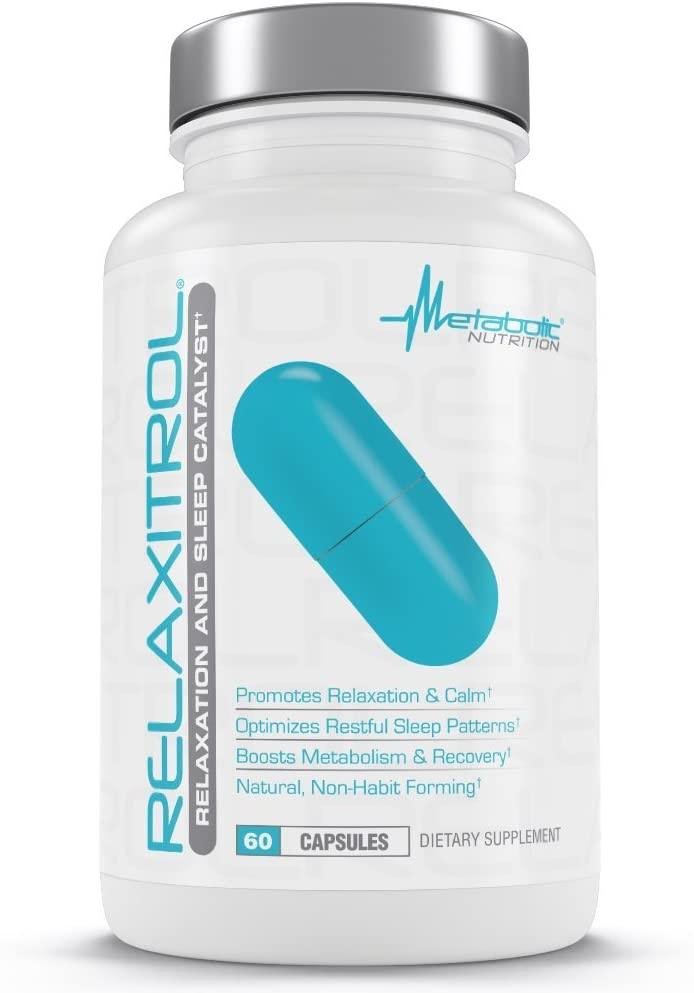
 Metabolic Nutrition | MN Relaxitrol | 60 CapsulesMetabolic Nutrition
- SuppVault Score
- 95/100
- Per serving
- $0.5
Key actives
Tested
Metabolic Nutrition
Multi-pathway nighttime support beyond melatonin alone
$29.99 $39.99$0.49/serving SuppVault Summary
Relaxitrol is a multi-pathway sleep aid built to calm the nervous system and support sleep onset. It combines relaxation support, serotonin-pathway support, and circadian signaling instead of relying on melatonin alone. Best fit: wired-but-tired evenings.
Metabolic Nutrition publishes test results from independent third-party labs. Svpplements links to the manufacturer’s data — we don’t test products ourselves.
Discount applied automatically in cart.


Creatine does not directly induce sleep, but it pairs well with a nighttime recovery mindset by supporting high-energy phosphate recycling and long-term training output. Better sleep plus consistent creatine intake is a practical recovery stack for lifters trying to perform hard and recover harder.
Take creatine daily at any convenient time; use Relaxitrol 30 minutes before bed.
A slow-digesting protein before bed complements the recovery side of a sleep formula by supplying amino acids overnight while Relaxitrol helps the body transition into sleep. This is especially relevant for athletes training late or trying to improve overnight recovery support.
Take protein 30-60 minutes before bed; take Relaxitrol about 30 minutes before sleep.
If you want more precision than this proprietary blend offers, magnesium glycinate is a useful add-on because it is one of the more sleep-friendly magnesium forms. It can complement the formula’s general nighttime mineral support while giving you transparent dosing on the magnesium side.
Use magnesium glycinate in the evening; take Relaxitrol separately within the same pre-bed window.
Sleep quality and recovery are often undermined by poor hydration status, especially in athletes and high-sweat individuals. Daytime electrolyte support pairs indirectly but effectively with nighttime sleep support by improving the broader recovery environment.
Use electrolytes earlier in the day or around training; take Relaxitrol only in the evening.
Relaxitrol has broader calming support beyond basic circadian signaling alone.
Chemix Sleep likely wins on label transparency and more modern category positioning.
Relaxitrol covers more sleep pathways than a single-ingredient GABA product.
Gorilla Dream is a stronger category leader with better disclosure and market reputation.
Side-by-side against the closest competitors. Score reflects clinical dosing, transparency, and testing.
Metabolic Nutrition | MN Relaxitrol | 60 CapsulesMetabolic Nutrition
 HI TECH PHARMACEUTICALS, INC. | Hi-Tech Melatonin | 60 TabletsHI TECH PHARMACEUTICALS, INC.
Relaxitrol has broader calming support beyond basic circadian signaling alone.
Compare side-by-side → Chemix | Sleep | 90 CapsulesChemix
Chemix Sleep likely wins on label transparency and more modern category positioning.
Compare side-by-side → NutraBio | GABA | 45 ServingsNutraBio
Relaxitrol covers more sleep pathways than a single-ingredient GABA product.
Compare side-by-side →Comparison data combines live storefront pricing with our SuppVault analysis. Competitor scores reflect public-label data; manufacturer-side changes may not be reflected in real time.
Metabolic Nutrition Relaxitrol is built as a multi-pathway relaxation and sleep formula rather than a single-ingredient melatonin product. The strategy is clear from the ingredient list: calm the nervous system, support the serotonin-to-melatonin pathway, reinforce circadian sleep signaling, and add mineral cofactors that are common in evening recovery formulas. In practice, that means this product is designed to help you feel mentally quieter, less wound up, and more ready to transition into sleep rather than simply forcing drowsiness from one ingredient alone.
The strongest evidence-backed anchors here are L-theanine, melatonin, L-tryptophan, and GABA. L-theanine has one of the better evidence profiles in this category, with over 26 clinical trials and strong support for reducing stress and improving sleep quality. Mechanistically, it acts as a mild antagonist at glutamate receptors and also promotes alpha-wave activity while increasing GABA, serotonin, and dopamine activity in the brain. In plain terms, that often feels like reduced mental noise without the heavy, drug-like sedation some users dislike.
Melatonin is the most direct sleep-onset ingredient in the formula. It works through MT1 and MT2 receptors in the brain’s circadian control center, helping signal that it is time to sleep. The research base here is large and robust, with strong consensus that melatonin reduces sleep latency. Importantly, the literature shows that more is not always better; sleep-onset effects are not strictly dose-dependent across the common 300 mcg to 5 mg range. Because Relaxitrol does not disclose its melatonin dose, we cannot verify whether it sits in the more measured evidence-based range or uses a heavier “hammer” approach.
L-tryptophan adds another rational layer. As an essential amino acid, it is the biochemical precursor to serotonin and, downstream, melatonin. Clinical research typically uses roughly 1,000 to 5,000 mg for sleep-latency effects, though the observed benefit is usually modest rather than dramatic. This means the ingredient choice makes sense, but the lack of a disclosed dose matters. If the amount is meaningfully below the studied range, its contribution is likely supportive rather than foundational.
GABA is included to promote a calmer state by supporting the body’s primary inhibitory neurotransmitter system. The science on oral GABA is mixed because of long-standing debate about blood-brain barrier permeability, but human and preclinical research still suggest useful effects on stress and sleep onset, potentially through the gut-brain axis and neuroinflammatory signaling. Typical supplemental ranges are around 100 to 300 mg. Again, the ingredient is logical; the missing dose limits precision.
The rest of the formula rounds out that framework. Magnesium aspartate and zinc aspartate are classic evening-support inclusions, though magnesium aspartate is not the gentlest or most sleep-specialized magnesium form compared with glycinate. Gotu kola is traditionally used for calming and mental ease, while black pepper extract is likely included to enhance absorption. The most unusual inclusion is Mucuna pruriens standardized to 99% L-Dopa. Mucuna can increase dopaminergic activity, which is not a conventional choice in a bedtime formula for every user. Some will experience improved mood and decompression; others may find dopaminergic support too stimulating depending on sensitivity and timing.
As a system, Relaxitrol stacks calming neurochemistry (GABA, theanine), precursor support (tryptophan), direct circadian signaling (melatonin), and minerals into a capsule-based protocol that can be titrated from lighter relaxation to stronger sleep support. The limitation is major: this is a proprietary blend with undisclosed active amounts. In a category where dose determines whether an ingredient is clinically meaningful or just label decoration, that matters. Day 1, expect the formula to feel calming first and sleep-promoting second, with stronger effects as you move from 1 capsule toward the upper end of the suggested use. Over 2 to 4 weeks, the biggest benefit is usually routine consistency: a more repeatable wind-down ritual and less friction between feeling tired and actually falling asleep.
L-theanine is a non-protein amino acid that modulates excitatory neurotransmission, particularly glutamatergic tone, while supporting a relaxed alpha-wave dominant state. In practice, this can reduce cognitive hyperarousal without producing the same next-day heaviness often associated with stronger sedatives. Its sleep utility is most apparent when stress and racing thoughts are delaying sleep onset. That makes it especially relevant for users who are mentally activated rather than physically restless.
Melatonin does not simply sedate; it acts as the body’s endocrine darkness signal that helps coordinate sleep timing. Supplemental melatonin is most useful when the issue is delayed sleep onset, inconsistent schedule, or circadian disruption rather than a pure anxiety problem. Its efficacy depends heavily on timing, dose, and baseline rhythm disruption. In blended formulas, it often works best when paired with ingredients that lower psychological arousal.
L-tryptophan is an essential amino acid precursor upstream of serotonin and ultimately melatonin synthesis. Its main relevance in sleep formulas is not instant sedation but biochemical support for the neurochemical pathway involved in evening relaxation and sleep initiation. Clinically, it has shown utility for sleep latency, though effects depend on dose and context. It is best viewed as pathway support rather than a standalone knockout agent.
GABA is the principal inhibitory neurotransmitter in the central nervous system and is conceptually attractive in bedtime formulas because it counterbalances neural excitation. Oral GABA research is mixed, but some human data suggest benefits for relaxation and stress-related sleep endpoints, especially at practical sleep-oriented doses. Even when blood-brain penetration is debated, peripheral and subjective calming effects may still matter. In multi-ingredient formulas, GABA is often used as a complementary calming layer rather than the sole active driver.
Verified athletes can view NCAA, WADA, and high-school compliance status for this product.
* These statements have not been evaluated by the Food and Drug Administration. This product is not intended to diagnose, treat, cure, or prevent any disease. Consult your physician before use if you have a medical condition or take medications.
Drop your number and our team will instantly text you.
Our team is on it. Check your texts — real advice, real fast.
Brain-curated complementary picks for synergy and full-spectrum coverage.
 70
70
 64
64
 97
97
 69
69
 64
64
 87
87
Secure sign in
Svpplements uses Shopify Customer Accounts for protected login, order history, and account data.

