This product
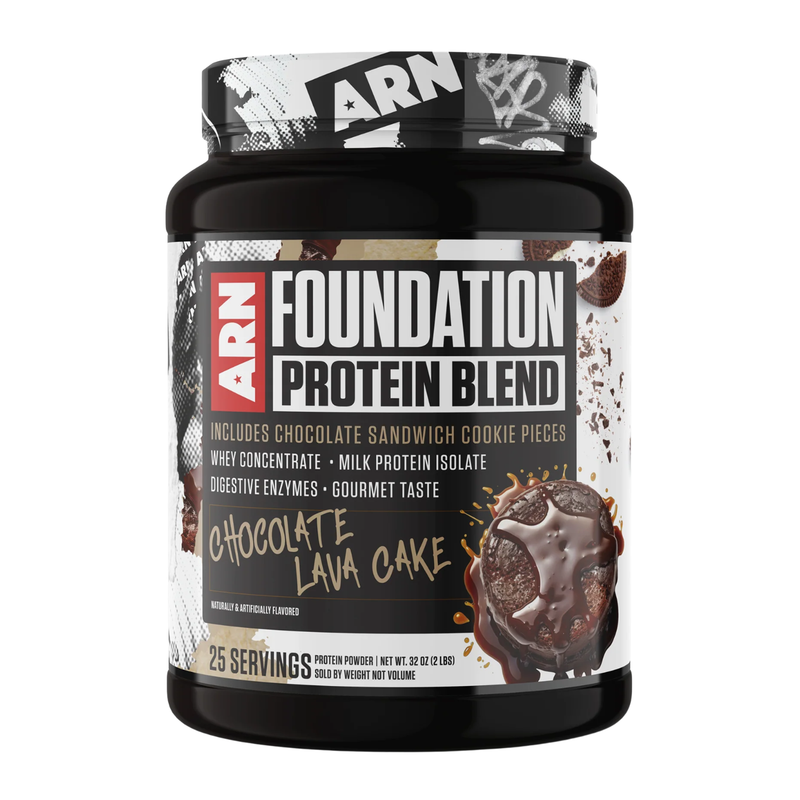
 ARN | Foundation Blend | 25 ServingsARN
- SuppVault Score
- 70/100
- Per serving
- $2.0
Key actives
Tested
ARN
24g blended protein with digestive enzymes and dairy-derived minerals.
$49.99 $1.99/serving
Scored on what's in the tub, not the marketing.
The label is the formula. We score it either way.
SuppVault Summary
ARN Foundation is a daily blended protein built for practical recovery, digestibility, and steadier amino acid delivery than straight isolate-only formulas. Each 37 g scoop provides 24 g protein from whey concentrate plus milk protein isolate for fast and sustained support.
| Ingredient | Amount Per Serving | % Daily Value |
|---|---|---|
| Calcium | 210mg | † |
| Iron | 1mg | † |
| Magnesium | 30mg | † |
| Phosphorus | 160mg | † |
| Potassium Glycinate | 200mg | † |
† Daily Value (DV) not established for this ingredient.
ARN publishes test results from independent third-party labs. Svpplements links to the manufacturer’s data — we don’t test products ourselves.
Discount applied automatically in cart.

This is the cleanest stack with a blended protein because the mechanisms do not overlap. Foundation covers amino acid delivery and recovery nutrition, while creatine increases phosphocreatine availability for repeated high-intensity effort, strength expression, and long-term lean mass support.
Take daily; can be mixed into the same post-workout shake or taken any other time that improves adherence.
If you train fasted or have long sessions, an intra-workout amino product can bridge the gap until your post-workout Foundation shake. The amino product supports training-time intake, while Foundation provides the more complete protein feeding afterward.
Use amino acids during training and take Foundation immediately after or within the next meal window.
Post-workout carbs pair well with Foundation when glycogen restoration is a priority, especially for high-volume training or multiple sessions per day. The protein supplies amino acids for recovery, and carbohydrate supports glycogen replenishment and insulin-mediated nutrient handling.
Combine post-workout, especially after demanding training blocks or endurance-heavy sessions.
Foundation handles protein intake well, but it is not a broad micronutrient or phytonutrient product. A quality greens formula complements it by expanding diet support on days when food quality is less than perfect.
Take separately earlier in the day or with a meal; no special timing requirement relative to Foundation.
A premium isolate may edge it for lactose sensitivity and leaner macro preferences.
Both fit users wanting a multi-source protein instead of a fast isolate-only shake.
An isolate-based product can be better for lighter digestion and lower lactose exposure.
Foundation covers daily protein needs directly, while creatine is better as a stack partner.
Side-by-side against the closest competitors. Score reflects clinical dosing, transparency, and testing.
ARN | Foundation Blend | 25 ServingsARN
 Raw Nutrition | CBUM Itholate ProteinRaw Nutrition
A premium isolate may edge it for lactose sensitivity and leaner macro preferences.
Compare side-by-side → Apollon Nutrition | 50/50 Protein | 28 ServingsApollon Nutrition
Both fit users wanting a multi-source protein instead of a fast isolate-only shake.
Compare side-by-side → Axe & Sledge | A&S Farm Fed Protein | 28 ServingsAxe & Sledge
An isolate-based product can be better for lighter digestion and lower lactose exposure.
Compare side-by-side →Comparison data combines live storefront pricing with our SuppVault analysis. Competitor scores reflect public-label data; manufacturer-side changes may not be reflected in real time.
ARN Foundation Protein Blend is a daily-use blended protein formula designed around practicality, digestibility, and a more sustained amino acid delivery curve than a straight whey isolate product. Each 37 g scoop provides 24 g of protein from two core sources: cold-processed undenatured whey protein concentrate and milk protein isolate. That matters because whey is valued for its rapid digestion and strong leucine density, while milk protein isolate contributes both whey and casein fractions, creating a more staggered release of amino acids. In real-world use, that translates to a shake that works well post-workout, between meals, or as a protein anchor in a busy schedule.
The label also delivers a meaningful mineral contribution: 210 mg calcium, 160 mg phosphorus, 200 mg potassium, 30 mg magnesium, and 1 mg iron. These are not “performance actives” in the pre-workout sense, but they are physiologically relevant. Calcium and phosphorus are the primary mineral components of bone as hydroxyapatite, and both also matter for muscle contraction and cellular energy handling. Calcium research is strongest in bone-related applications, especially alongside vitamin D, but in a protein formula its inclusion is also a natural reflection of dairy-derived protein raw materials. Potassium at 200 mg supports electrolyte balance, nerve signaling, and muscle function; potassium intake is strongly associated with healthy blood pressure regulation in the literature, and it works in concert with sodium and magnesium to maintain the electrochemical gradients muscles depend on. Magnesium at 30 mg is not a stand-alone clinical magnesium dose, but it is still directionally useful because magnesium is required for ATP metabolism, neuromuscular function, and proper vitamin D handling. Iron at 1 mg is modest and not positioned as an iron repletion product, but it contributes to the formula’s overall nutritional completeness.
A real differentiator here is the inclusion of DigeSEB digestive enzymes. While the label does not disclose the individual enzyme amounts, the blend includes amylases, lactase, proteases, lipase, and cellulase. That is a smart support system for a dairy-based protein powder. Lactase is especially relevant for users who tolerate whey and milk proteins better when lactose digestion is assisted, while proteases help break dietary protein into smaller peptides and amino acids. In practice, that means a better chance of this shake feeling light, mixable, and repeatable instead of sitting heavy.
Synergy is where this formula makes the most sense. The whey fraction supports rapid post-training amino acid availability; the milk protein isolate extends the delivery window; the digestive enzymes improve tolerance and usability; and the naturally occurring dairy minerals support muscle, hydration, and bone physiology. This is not an overloaded “kitchen sink” protein with random pixie-dusted extras. It is also not fully transparent on protein source ratios or enzyme dosing, so that is the main limitation: you know the total protein and ingredient system, but not the exact split between whey concentrate and milk protein isolate.
What should you expect? Day 1, you should notice a smooth, filling shake with better satiety than a thin isolate-only protein and potentially easier digestion because of the enzyme blend. Over 2-4 weeks of consistent use, the real benefit is cumulative: easier adherence to daily protein intake, better recovery support from reliably hitting total protein goals, and a protein source you can use across training days and rest days without feeling like you are forcing it.
Combining whey-rich and casein-containing dairy proteins changes the temporal pattern of aminoacidemia after ingestion. Whey tends to digest rapidly and produces a faster rise in circulating essential amino acids, especially leucine, whereas casein-containing fractions slow gastric emptying and prolong amino acid appearance. That makes blended proteins useful when the goal is both immediate post-exercise support and a longer satiety tail. In practice, this can improve adherence to total daily protein targets while smoothing the feeding curve.
Whey protein is valued for its high essential amino acid density and leucine content, which are central triggers for mTORC1-mediated muscle protein synthesis. After resistance training, a protein dose in the ~20 to 40 gram range is commonly used to maximize the anabolic response in many athletes. The whey fraction in a blended protein contributes the rapid front-end amino acid signal that supports this process. Total daily protein intake remains the dominant variable, but per-feeding quality still matters.
Milk protein isolate contributes both whey and casein fractions, with the casein component forming a slower-digesting protein matrix in the stomach. This helps extend satiety and sustains amino acid availability over a longer post-feeding period compared with whey alone. For users taking protein between meals or before long work blocks, that can be a practical advantage. The effect is less about a dramatic acute sensation and more about steadier coverage and less hunger rebound.
Digestive enzyme systems included in protein formulas are intended to assist hydrolysis of macronutrients and improve gastrointestinal tolerance in real-world users. In dairy-containing products, lactase is especially relevant because it can help break down lactose that may otherwise contribute to bloating or discomfort in sensitive individuals. Enzymes do not convert a dairy protein into a dairy-free product, but they may improve usability for some consumers with mild tolerance issues. The benefit is experiential rather than ergogenic.
Each 37 g scoop provides 24 g of protein. That puts it squarely in the effective range for a meaningful protein feeding after training or between meals.
The formula uses cold-processed undenatured whey protein concentrate and milk protein isolate. That gives you a blend of faster-digesting whey with a slower, more sustained amino acid release from the casein-rich milk protein fraction.
No. ARN Foundation is a protein blend, not a pure whey isolate. That is a deliberate formulation choice because blended proteins often provide better satiety and more versatile use throughout the day than a fast-only isolate.
Yes. It includes DigeSEB, a digestive enzyme blend containing amylases, lactase, proteases, lipase, and cellulase. The most relevant enzymes here are lactase for lactose digestion and proteases for protein breakdown.
Yes. The 24 g protein serving supports muscle recovery, and the whey component provides relatively rapid amino acid availability after training. The milk protein isolate then helps extend that support beyond the immediate post-workout window.
Yes. Because this is a blend with milk protein isolate rather than a fast-only protein, it works well between meals and can also fit later in the day when you want more satiety from a shake.
It depends on your level of sensitivity. The formula contains multiple dairy proteins, but it also includes lactase in the DigeSEB blend, which can improve tolerance for some users. If you have a true milk allergy, this is not appropriate.
Per serving, the label lists 210 mg calcium, 160 mg phosphorus, 200 mg potassium, 30 mg magnesium, and 1 mg iron. These minerals are part of what makes the formula feel more nutritionally complete than a protein-only powder.
The label clearly discloses total protein at 24 g per serving and lists the two protein sources. However, it does not disclose the exact ratio of whey protein concentrate to milk protein isolate, so transparency is good but not absolute.
No. Protein powders do not require cycling. The goal is consistent daily use to help you hit total protein intake targets over time.
Verified athletes can view NCAA, WADA, and high-school compliance status for this product.
* These statements have not been evaluated by the Food and Drug Administration. This product is not intended to diagnose, treat, cure, or prevent any disease. Consult your physician before use if you have a medical condition or take medications.
Drop your number and our team will instantly text you.
Our team is on it. Check your texts — real advice, real fast.
Secure sign in
Svpplements uses Shopify Customer Accounts for protected login, order history, and account data.