This product
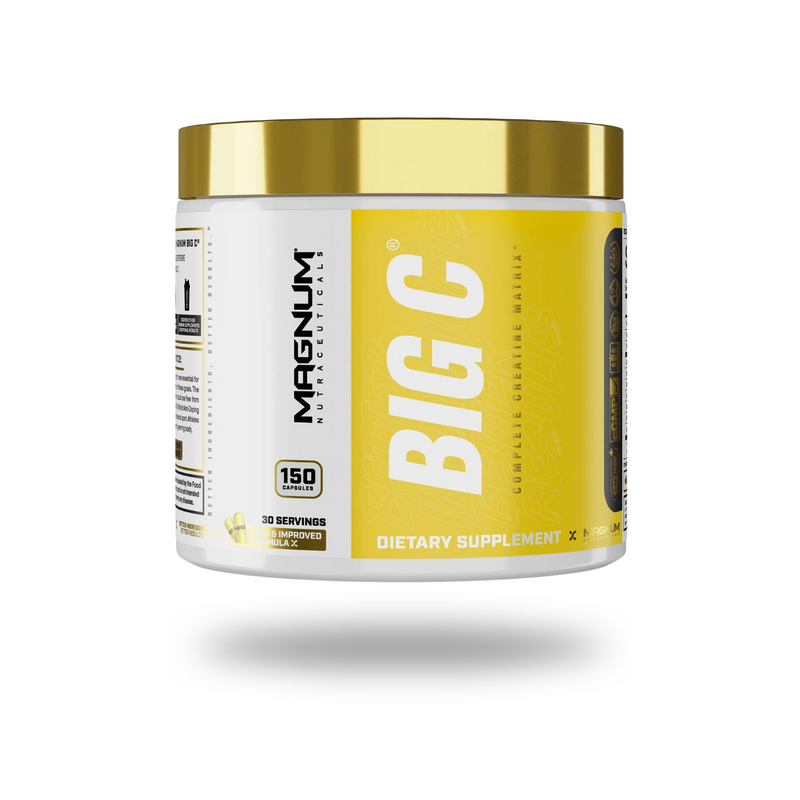
 Magnum Nutraceuticals | Big C | 150 CapsulesMagnum Nutraceuticals
- SuppVault Score
- 71/100
- Per serving
- $1.0
Key actives
Tested
Magnum Nutraceuticals
Leucine-driven recovery support with KIC and multi-form BCAAs
$29.99 $0.99/serving SuppVault Summary
Magnum Big C is a capsule amino recovery formula centered on leucine-driven muscle preservation and repair support. It pairs multi-form BCAAs with 1,000mg leucine alpha-ketoisocaproate calcium to give it a more anti-catabolic identity than basic BCAA capsules.
Magnum Nutraceuticals publishes test results from independent third-party labs. Svpplements links to the manufacturer’s data — we don’t test products ourselves.
Discount applied automatically in cart.


Big C focuses on amino recovery signaling, while creatine monohydrate increases phosphocreatine availability for faster ATP regeneration during repeated high-intensity efforts. Together, they cover both the energy side of hard training and the recovery side between sessions.
Take creatine daily anytime; use Big C around training
Big C is leucine-centered, but maximal muscle protein synthesis still depends on access to the full essential amino acid spectrum. Pairing it with a fast-digesting protein source gives the leucine signal the complete amino raw material it needs to translate into actual repair and growth.
Use Big C pre- or post-workout; take whey post-workout or to fill protein gaps
If you want a more complete intra- or peri-workout amino strategy, EAAs complement Big C by supplying the essential amino acids that BCAA-only systems do not cover. This is especially useful during cutting phases or fasted training when total amino availability is lower.
Use Big C pre-workout and EAAs during training
Because Big C is stim-free and recovery-focused, it stacks cleanly with a separate pre-workout for energy, focus, nitric oxide support, or endurance. This lets you build a more customized system instead of relying on one overloaded formula to do everything.
Take both 20-30 minutes pre-workout
Nektr likely offers a broader modern amino profile, while Big C is more niche and capsule-based.
H.M.B. is more specialized for anti-catabolic support, while Big C adds multi-form BCAA coverage.
Big C stands out with added KIC and a more differentiated leucine-centered recovery angle.
Xtend has stronger category leadership and easier hydration-based intra-workout usability.
Side-by-side against the closest competitors. Score reflects clinical dosing, transparency, and testing.
Magnum Nutraceuticals | Big C | 150 CapsulesMagnum Nutraceuticals
 Magnum Nutraceuticals | Nektr | Daily Greens + SuperfoodsMagnum Nutraceuticals
Nektr likely offers a broader modern amino profile, while Big C is more niche and capsule-based.
Compare side-by-side → Magnum Nutraceuticals | H.M.B. | 90 CapsulesMagnum Nutraceuticals
H.M.B. is more specialized for anti-catabolic support, while Big C adds multi-form BCAA coverage.
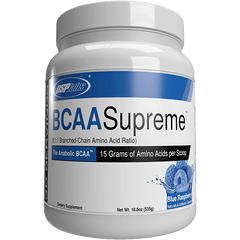
Compare side-by-side → USP Labs | BCAA Supreme | 150 TabletsUSP Labs
Big C stands out with added KIC and a more differentiated leucine-centered recovery angle.
Compare side-by-side →Comparison data combines live storefront pricing with our SuppVault analysis. Competitor scores reflect public-label data; manufacturer-side changes may not be reflected in real time.
Magnum Big C is a capsule-based amino recovery formula built around one central idea: preserve muscle, accelerate repair signaling, and improve training continuity by saturating the formula with leucine-centered BCAA support from multiple delivery forms. This is not a typical flashy pre-workout or a generic low-dose BCAA drink. It is a more old-school but still physiologically relevant anti-catabolic design that emphasizes the branched-chain amino acids most directly involved in muscle protein signaling, exercise recovery, and fatigue management.
The anchor here is leucine and leucine-related compounds. Free-form L-leucine is the primary amino acid trigger for mTOR activation, the pathway that initiates muscle protein synthesis. Clinical literature consistently places effective leucine dosing around 2.5-5g, but Magnum does not disclose the individual amounts of free leucine or the leucine ethyl ester HCl. That matters. The mechanism is strong and the evidence base is excellent, but without exact milligrams, the clinical assessment is necessarily limited. The same transparency issue applies to L-isoleucine, L-valine, and their ethyl ester HCl forms. Isoleucine contributes to glucose uptake in muscle and energy handling during training, while valine helps support nitrogen balance and can reduce central fatigue by competing with tryptophan transport across the blood-brain barrier. Together, the three BCAAs work better as a system than in isolation, and this formula clearly leans into that synergy.
The ethyl ester forms are a notable formulation choice. In theory, esterification increases lipophilicity and improves membrane passage before esterases cleave the compound back into the free amino acid. That rationale is plausible and widely used in formulation design, especially for improving transport characteristics, but the direct human performance data on leucine, isoleucine, and valine ethyl esters is still emerging rather than definitive. In practical terms, this means Big C is designed to provide both immediate free-form amino availability and a modified delivery component, but the exact advantage over free-form-only systems remains more theoretical than conclusively proven.
The most transparent high-value inclusion is L-leucine alpha-ketoisocaproate calcium at 1,000mg. KIC is a leucine metabolite often used in anti-catabolic formulas because it sits downstream of leucine metabolism and has been studied for reducing muscle breakdown and supporting recovery under intense training stress. At 1,000mg, it is meaningfully dosed and gives Big C a distinct identity beyond a basic BCAA capsule. Glycine-L-arginine at 1,000mg adds an arginine donor role, supporting nitric oxide production and blood flow physiology, though it sits below the more common standalone arginine research range of 2-4g taken multiple times daily. It is best understood here as a supporting ingredient rather than the primary reason to buy the formula.
The B-vitamin panel is modest: niacin 3mg, vitamin B6 0.3mg, vitamin B12 0.7mcg, and folic acid 50mcg. These are not performance-driving doses, but they do contribute basic cofactor support for amino acid metabolism and energy pathways.
From a transparency perspective, Big C is mixed. It is not a proprietary blend in the classic sense, but several of the most important amino ingredients do not have individual disclosed amounts. That prevents a full milligram-by-milligram clinical audit. Still, the formula strategy is clear: use multiple leucine-centered BCAA forms plus KIC to create a recovery-focused, anti-catabolic capsule product.
What should you expect? On day 1, not much in the way of a dramatic sensation. This is not a stimulant product. What you notice is more likely downstream: slightly less muscle breakdown, better session-to-session resilience, and smoother recovery when used consistently around training and paired with adequate total daily protein. Over 2-4 weeks, the value becomes clearer for lifters training with enough intensity and volume to actually need amino support between sessions.
Leucine is the primary branched-chain amino acid trigger for mTORC1 activation in skeletal muscle, making it the most important amino acid for initiating post-exercise muscle protein synthesis. Its signaling role is distinct from simply serving as substrate, because leucine functions as a nutrient-sensing cue that shifts muscle toward repair and rebuilding. This is why leucine thresholds matter in peri-workout and meal-based recovery design. In practice, formulas centered on leucine are most relevant when training stress is high or protein feeding is imperfect.
Alpha-ketoisocaproate, or KIC, is a direct metabolite of leucine formed during branched-chain amino acid transamination. Mechanistically, KIC has been studied for its ability to support nitrogen economy and reduce aspects of exercise-related protein breakdown, giving it a more anti-catabolic identity than standard BCAA-only products. It does not replace leucine's signaling role, but may complement it by influencing breakdown-side physiology. That makes it especially interesting in calorie deficits or repeated high-volume training blocks.
Big C combines free-form branched-chain amino acids with ethyl ester derivatives, reflecting an older but still conceptually relevant delivery strategy. Free-form amino acids have clearer evidence for direct availability, while esterified forms were designed to potentially alter membrane passage and transport behavior. The evidence base for these modified forms is less established than for standard amino acids, but the formulation logic is to broaden delivery characteristics rather than rely on a single form. From a design perspective, this makes the product more specialized than a basic BCAA capsule.
Arginine-containing compounds are often included for circulation, nitrogen handling, and recovery-related support, though outcomes depend heavily on form and dose. Glycine-L-Arginine may contribute to a more supportive amino environment around training rather than creating a strong acute performance sensation. At 1,000mg, it is better viewed as a complementary recovery component than the primary driver of the formula. Its main value is in rounding out the product's anti-breakdown and repair-support positioning.
Verified athletes can view NCAA, WADA, and high-school compliance status for this product.
* These statements have not been evaluated by the Food and Drug Administration. This product is not intended to diagnose, treat, cure, or prevent any disease. Consult your physician before use if you have a medical condition or take medications.
Drop your number and our team will instantly text you.
Our team is on it. Check your texts — real advice, real fast.
Secure sign in
Svpplements uses Shopify Customer Accounts for protected login, order history, and account data.