This product
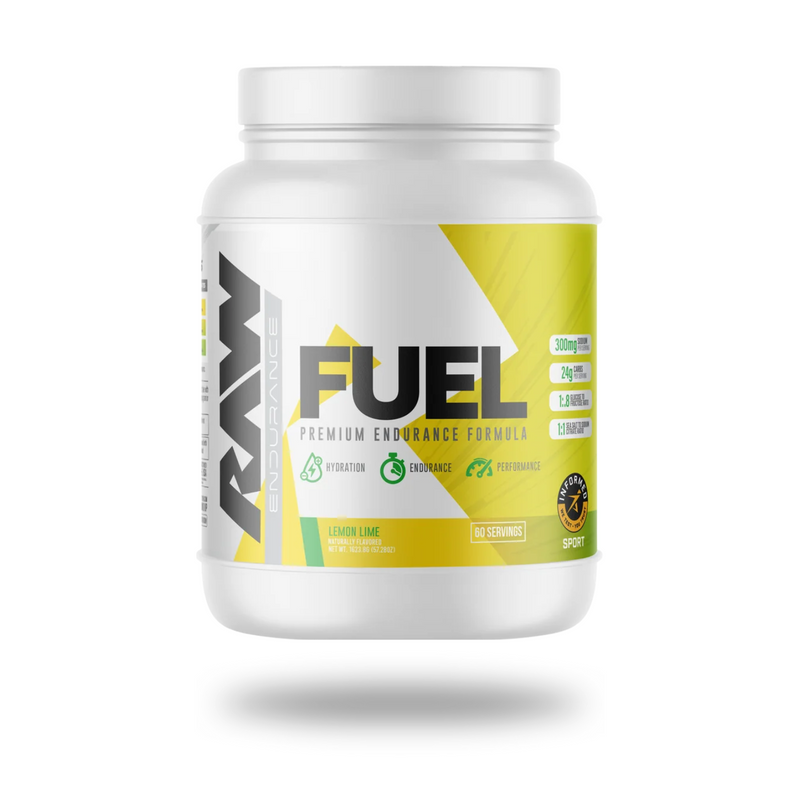
 Raw Nutrition | Fuel Endurance | 60 ServingsRaw Nutrition
- SuppVault Score
- 67/100
- Per serving
- $0.67
Key actives
Tested
Raw Nutrition
Dual-carb endurance fuel with practical electrolytes and zero stimulants.
$39.99 $0.66/serving SuppVault Summary
Raw Nutrition Fuel is a stim-free intra-workout endurance formula built for long sessions. It combines roughly 24-25g carbs with electrolyte support to help maintain pace, power, and hydration as training duration and sweat loss increase.
Raw Nutrition publishes test results from independent third-party labs. Svpplements links to the manufacturer’s data — we don’t test products ourselves.
Discount applied automatically in cart.


Fuel handles carbohydrate delivery and hydration during the session, while creatine supports phosphocreatine replenishment for repeated high-output efforts and sprint finishes. This is especially useful for hybrid athletes, team-sport players, and CrossFit competitors whose endurance work still includes hard anaerobic bursts.
Take creatine daily any time; use Fuel during training.
For hot-weather sessions or very salty sweaters, Fuel’s 300mg sodium may need reinforcement. Adding a higher-sodium electrolyte product can improve total hourly electrolyte replacement while preserving Fuel’s dual-carbohydrate energy system.
Use alongside Fuel during long or high-sweat sessions.
Because Fuel is stim-free, it pairs cleanly with a separate pre-workout when you want both nervous system drive and structured intra-workout carbohydrate delivery. This gives you acute focus and motivation pre-session without sacrificing race-style fueling support once training begins.
Take the pre-workout 20-30 minutes before training; sip Fuel during training.
If your sessions are long and you train with limited pre-workout protein intake, EAAs can complement Fuel by supporting amino acid availability while Fuel covers carbohydrates and electrolytes. This is more relevant for fasted training, two-a-days, or long conditioning sessions where total nutrition is stretched out.
Can be mixed with or taken alongside Fuel during training.
Fuel is not a recovery formula; it does not provide meaningful protein. Pairing it with a post-workout protein powder closes the loop by supporting muscle protein synthesis after the session while Fuel handles energy and hydration during the work itself.
Use Fuel during training and protein after training.
Fuel has a clearer endurance-first identity with practical carbohydrate delivery for long sessions.
Fuel adds meaningful carbohydrate support, not just hydration, making it stronger for endurance performance.
Carb-focused endurance users may prefer either depending on whether electrolyte support is a priority.
It likely offers a more fully built-out carb-hydration performance profile for aggressive endurance fueling.
Side-by-side against the closest competitors. Score reflects clinical dosing, transparency, and testing.
Raw Nutrition | Fuel Endurance | 60 ServingsRaw Nutrition
Fuel has a clearer endurance-first identity with practical carbohydrate delivery for long sessions.
Compare side-by-side → Raw Nutrition | BUM Hydration | 20 PacksRaw Nutrition
Fuel adds meaningful carbohydrate support, not just hydration, making it stronger for endurance performance.
Compare side-by-side → Enhanced | Carb-TechEnhanced
Carb-focused endurance users may prefer either depending on whether electrolyte support is a priority.
Compare side-by-side →Comparison data combines live storefront pricing with our SuppVault analysis. Competitor scores reflect public-label data; manufacturer-side changes may not be reflected in real time.
Raw Nutrition Fuel is a straightforward endurance formula built around the two variables that matter most during prolonged training: carbohydrate delivery and fluid-electrolyte support. This is not a stim-heavy pre-workout pretending to be an endurance product. It is a purpose-built intra-workout fuel designed to help maintain output when sessions run long, sweat loss climbs, and glycogen availability starts to dictate pace, power, and perceived effort.
The core of the formula is its carbohydrate system. Per serving, Fuel provides roughly 24-25g of carbohydrate using a 1:0.8 glucose-to-fructose ratio from maltodextrin, cane sugar, and fructose. That ratio matters. Glucose-based carbohydrates primarily use the SGLT1 transporter, while fructose uses GLUT5. By using both pathways, dual-carbohydrate formulas can increase total carbohydrate absorption and oxidation beyond what a single-source glucose drink can typically achieve on its own. In practice, that means this formula is designed to be consumed repeatedly across longer sessions so you can push hourly carbohydrate intake higher with better odds of maintaining energy and reducing the late-session fade that comes when muscle glycogen and blood glucose are no longer being adequately supported.
The electrolyte profile is practical, not overloaded. Sodium sits at about 300mg per serving, with chloride around 230-240mg. Chloride is often ignored in marketing, but physiologically it matters: it is a major extracellular electrolyte, works with sodium and potassium to regulate fluid balance and osmotic pressure, and supports acid-base balance and normal nerve-muscle signaling. For athletes sweating through longer sessions, sodium plus chloride is the foundational hydration pair. Fuel also includes small amounts of magnesium, calcium, and potassium. From a clinical-dose perspective, these minerals are far below standalone repletion ranges: magnesium at 4-5mg is nowhere near the 310-420mg daily supplemental range, calcium at 2mg is far below its 1000-1200mg daily intake target, and potassium at 1mg is nutritionally negligible relative to daily needs. That is important to say clearly. These are not meaningfully dosed mineral supplements here. Their performance role in this formula is essentially incidental compared with the formula’s carbohydrate and sodium-chloride backbone.
Vitamin C, vitamin D, and iron are listed but their amounts are not disclosed in the provided panel data, which limits a full clinical assessment. Iron is highly relevant to endurance performance when deficiency is present because it supports hemoglobin and myoglobin formation and therefore oxygen transport, and vitamin C can enhance iron absorption. But without disclosed amounts, these cannot be treated as major selling points.
Where Fuel earns credit is formulation philosophy. It is fully disclosed in its main performance drivers, uses a research-aligned multi-transportable carbohydrate strategy, contains no proprietary blend, and remains stimulant-free. That makes it easy to integrate into training without conflicting with pre-workouts, caffeine intake, or race-day pacing strategy. Day 1, most users will notice more stable energy and easier sipping during longer work. Over 2-4 weeks, the benefit is not a loading effect like creatine or beta-alanine; it is better execution of your fueling plan, more consistent output across long sessions, and fewer workouts ruined by underfueling.
Endurance carbohydrate formulas work best when they exploit separate intestinal transport pathways. Glucose-dependent substrates primarily use SGLT1, while fructose uses GLUT5, allowing greater total carbohydrate absorption and oxidation when combined appropriately. This reduces the bottleneck seen with single-source carbohydrate feeding during longer exercise bouts. The practical outcome is more usable exogenous fuel per hour with better maintenance of pace and perceived effort.
Sodium and chloride are the dominant extracellular electrolytes lost in sweat and are central to maintaining plasma volume during prolonged exercise. Replacing them helps preserve fluid balance, supports intestinal water absorption, and reduces the performance cost of progressive dehydration. Sodium also improves beverage retention relative to plain water alone. In endurance settings, this matters more as duration, heat exposure, and sweat rate increase.
As glycogen availability declines, endurance performance often deteriorates before absolute fitness becomes the limiting factor. Exogenous carbohydrate intake helps sustain blood glucose, spare liver glycogen, and maintain oxidation rates during prolonged work. This can lower perceived exertion and delay the hollow drop athletes often feel late in sessions. The effect is especially relevant once exercise extends beyond roughly one hour.
Magnesium and potassium play supporting roles in neuromuscular function, membrane excitability, and fluid-electrolyte balance, though meaningful ergogenic effects depend on dose and baseline status. In sports hydration products, smaller amounts are usually complementary rather than primary performance drivers. Their presence can help round out the electrolyte profile, but sodium and carbohydrate delivery remain the dominant acute levers. Athletes with higher sweat losses may still benefit most from broader total electrolyte planning across the day.
Verified athletes can view NCAA, WADA, and high-school compliance status for this product.
* These statements have not been evaluated by the Food and Drug Administration. This product is not intended to diagnose, treat, cure, or prevent any disease. Consult your physician before use if you have a medical condition or take medications.
Drop your number and our team will instantly text you.
Our team is on it. Check your texts — real advice, real fast.
Higher-scoring formulas the brain ranks above this product.
Secure sign in
Svpplements uses Shopify Customer Accounts for protected login, order history, and account data.