This product
 VMI Sports | Protolyte PlantVMI Sports
- SuppVault Score
- 95/100
Key actives
Tested
VMI Sports
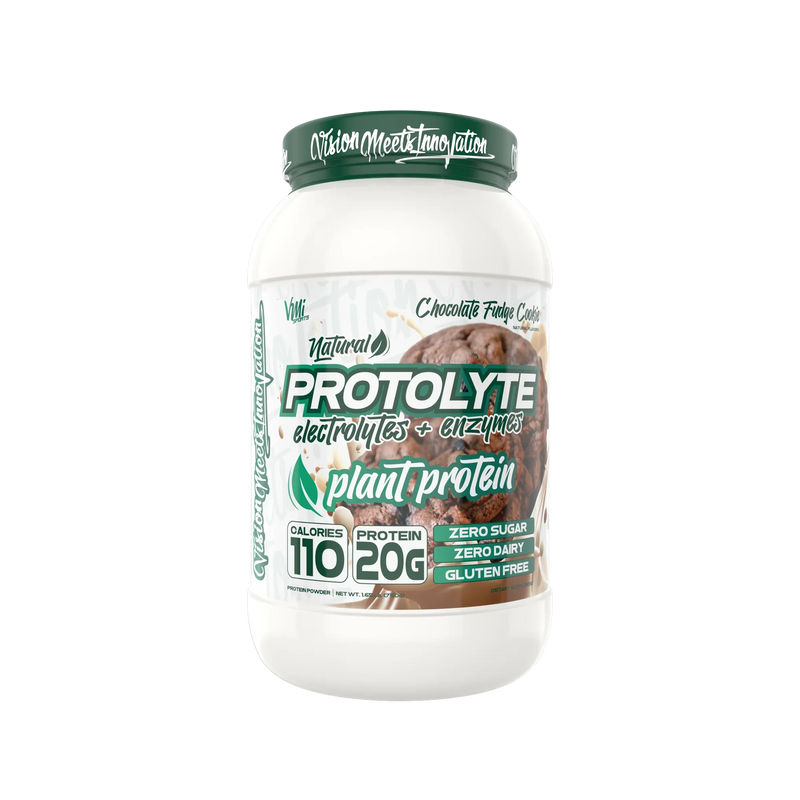
20g Plant Protein with Electrolytes and Digestive Enzymes
$52.99 SuppVault Summary
Protolyte Plant Protein is a plant-based recovery protein built to be easier on digestion than typical vegan powders. It pairs 20g protein with digestive enzymes and chelated electrolytes for smoother daily use, hydration support, and post-workout recovery.
VMI Sports publishes test results from independent third-party labs. Svpplements links to the manufacturer’s data — we don’t test products ourselves.
Discount applied automatically in cart.


Protolyte covers protein intake, digestive support, and hydration-oriented minerals, but it is not a creatine product. Adding creatine monohydrate gives you the most established ergogenic for phosphocreatine replenishment, power output, strength progression, and lean mass support alongside your daily protein routine.
Take daily; can be mixed directly into your Protolyte shake post-workout or used anytime consistently.
If you train fasted or perform long conditioning sessions, an amino formula can support intra-workout amino availability while Protolyte handles the larger post-workout recovery feeding. This works especially well for athletes who need more hydration support during training and more complete protein afterward.
Use during training; take Protolyte after training or between meals.
Protolyte is a recovery protein, not a pre-workout. Pairing it with a stim-free pump or endurance formula creates a clean training-to-recovery setup: performance ingredients before the session, then plant protein plus enzymes and electrolytes after.
Take the stim-free pre-workout 20-30 minutes before training; use Protolyte post-workout.
For users leaning into a plant-forward routine, a quality greens product complements Protolyte by broadening micronutrient and phytonutrient intake. That pairing supports overall nutritional coverage while Protolyte remains focused on protein, digestion, and recovery support.
Use greens in the morning or between meals; use Protolyte post-workout or as needed for protein intake.
Protolyte is the better fit for cleaner plant-based recovery and easier digestion.
Choose based on protein preference: dairy-free plant recovery versus the standard Protolyte profile.
Protolyte Plant Protein stands out with added chelated electrolytes and digestive support.
RYSE may appeal more to shoppers prioritizing broader market reputation and flavor recognition.
Side-by-side against the closest competitors. Score reflects clinical dosing, transparency, and testing.
VMI Sports | Protolyte PlantVMI Sports
 VMI Sports | Major MassVMI Sports
Protolyte is the better fit for cleaner plant-based recovery and easier digestion.
Compare side-by-side → VMI Sports | ProtolyteVMI Sports
Choose based on protein preference: dairy-free plant recovery versus the standard Protolyte profile.
Compare side-by-side → Raw Nutrition | Vegan Protein | 25 ServingsRaw Nutrition
Protolyte Plant Protein stands out with added chelated electrolytes and digestive support.
Compare side-by-side →Comparison data combines live storefront pricing with our SuppVault analysis. Competitor scores reflect public-label data; manufacturer-side changes may not be reflected in real time.
VMI Sports Protolyte Plant Protein is not trying to be just another plant protein tub with a trendy label and a generic pea blend. The formula strategy is clear: deliver a practical 20g serving of plant protein, then solve the two biggest reasons athletes abandon plant proteins in the first place—digestion and texture-related GI fatigue, and the lack of recovery-oriented extras that make a post-workout shake feel complete. VMI addresses that by adding pharmaceutical-grade electrolytes and a multi-enzyme digestive system, using premium Albion mineral forms for calcium, magnesium, and potassium support.
From the verified product research, Protolyte provides 20g of plant protein per serving, with web-sourced context indicating a blend of pea, pumpkin seed, and watermelon seed proteins and roughly 10.5g essential amino acids. That matters because plant proteins work best when they are blended to broaden amino acid coverage rather than relying on a single source. While we do not have the exact protein source ratios or leucine grams from the official label extraction here, the concept is directionally strong: a multi-source plant protein built for training recovery rather than a single-ingredient vegan powder.
The electrolyte side of the formula uses calcium bisglycinate chelate and magnesium bisglycinate chelate as TRAACS® forms from Albion Minerals, plus potassium glycinate complex from Albion. That is a quality signal. Chelated glycinate minerals are prized because the mineral is bound to amino acids, which generally improves tolerability and absorption compared with harsher, lower-grade inorganic salts. In a protein formula, that matters less for headline marketing and more for real-world usability: fewer people want a mineral-fortified shake if it upsets their stomach. Calcium, magnesium, and potassium all contribute to hydration balance, neuromuscular function, and post-training recovery, but the exact amounts are not disclosed, so this cannot be assessed as a clinically dosed electrolyte product in the way a fully transparent hydration formula can.
The digestive enzyme system is where this product becomes more purposeful. Protease 1 and Protease 11 are included to hydrolyze peptide bonds in protein, helping break larger dietary proteins into smaller peptides and amino acids. Neutral proteases are most active around neutral pH in the small intestine, which makes them relevant to the part of digestion where absorption actually happens. Research support for proteases as digestive aids is moderate, and while sports-performance trials isolating these enzymes are limited, their biochemical role is not in dispute. Amylase supports starch and carbohydrate breakdown, lipase helps hydrolyze fats into absorbable fatty acids, and lactase breaks lactose into glucose and galactose. Lactase is especially interesting here: the product is positioned as lactose-free, so lactase is not included because the plant protein itself contains lactose. It is a smart usability addition for people who may mix this with milk, blend it with yogurt, or consume it alongside dairy-containing meals.
The synergy is straightforward and intelligent. The plant protein provides the recovery substrate. The enzymes help you break down protein, carbs, and fats more efficiently and reduce the heavy, bloated feeling that makes some protein powders hard to use consistently. The chelated electrolytes support hydration status and muscle function, making the formula feel more athletic than a standard vegan protein. On transparency, this is partially disclosed rather than fully auditable: the major support ingredients are named, but their amounts are not disclosed, which limits a dose-by-dose clinical verdict. Day 1, expect a plant protein designed to sit lighter than many vegan powders and feel easier on digestion. Over 2-4 weeks of consistent use, the value is cumulative through easier daily protein adherence, more reliable post-workout recovery habits, and fewer digestive barriers to actually using your protein every day.
Calcium, magnesium, and potassium are central to excitation-contraction coupling, nerve transmission, and fluid balance during recovery. In chelated forms, these minerals are bound to amino acid ligands, which can improve gastrointestinal tolerability versus some inorganic salts. That matters in protein products because the goal is not just delivery, but repeatable daily compliance. For active users, combining protein with hydration-supportive minerals can make the post-training feeding feel more complete.
Proteases hydrolyze peptide bonds, helping break larger proteins into smaller peptides and amino acids that are easier to process. In a mixed formula, complementary enzymes like amylase and lipase broaden digestive support to carbohydrate and fat fractions that may accompany shakes or blended meals. This does not make protein anabolic on its own, but it can improve the practical user experience by reducing heaviness. Better tolerance often translates into more consistent protein intake over time.
Lactase specifically hydrolyzes lactose into glucose and galactose, reducing the digestive burden of lactose-containing foods. In a plant protein, its inclusion is less about the powder itself and more about flexibility when the shake is mixed with dairy milk or consumed alongside lactose-containing foods. Clinical activity is measured in FCC units rather than simple milligrams, because enzyme function depends on catalytic activity. This makes label transparency especially important when evaluating practical enzyme potency.
Blending plant protein sources is a common strategy to improve amino acid complementarity compared with relying on a single source alone. Different raw materials vary in lysine, methionine, and leucine density, so multi-source formulas can produce a more balanced recovery profile. The key outcome is not that plant proteins become identical to whey, but that they better support total daily protein targets. For athletes, that makes blend design more important than trendy labeling.
Verified athletes can view NCAA, WADA, and high-school compliance status for this product.
* These statements have not been evaluated by the Food and Drug Administration. This product is not intended to diagnose, treat, cure, or prevent any disease. Consult your physician before use if you have a medical condition or take medications.
Drop your number and our team will instantly text you.
Our team is on it. Check your texts — real advice, real fast.
Brain-curated complementary picks for synergy and full-spectrum coverage.
Secure sign in
Svpplements uses Shopify Customer Accounts for protected login, order history, and account data.