This product
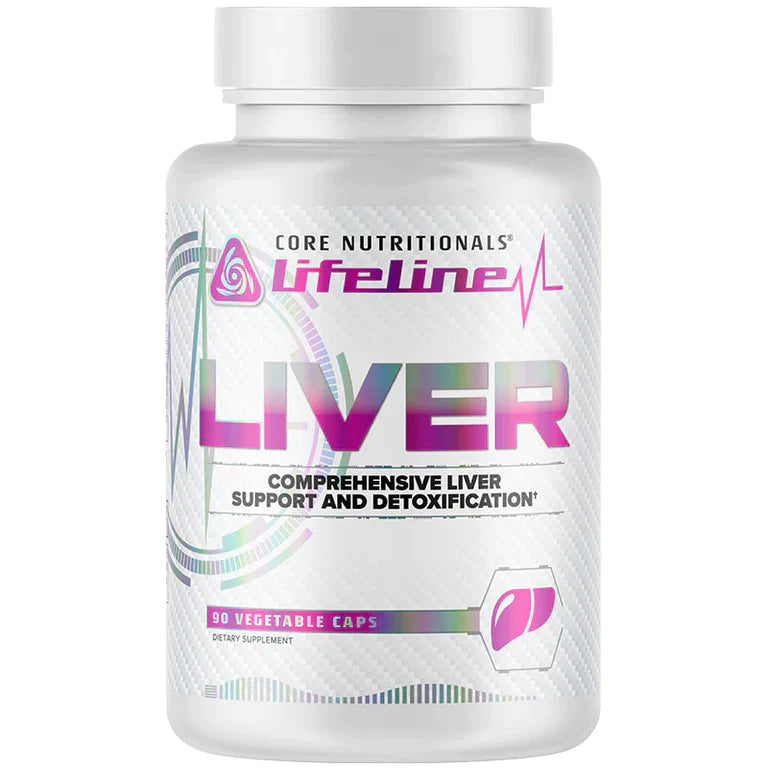
 Core Nutritionals | Lifeline Liver | 90 CapsulesCore Nutritionals
- SuppVault Score
- 76/100
Core Nutritionals
Transparent liver support with silymarin, Setria® glutathione, and TUDCA
$54.99 SuppVault Summary
Fully disclosed liver support with 1,260mg 80% silymarin milk thistle, 250mg Setria® glutathione, and 250mg TUDCA. Built for serious daily hepatic, bile, and antioxidant support.
Core Nutritionals publishes test results from independent third-party labs. Svpplements links to the manufacturer’s data — we don’t test products ourselves.
Discount applied automatically in cart.


A multivitamin complements liver support by covering micronutrient cofactors involved in antioxidant systems, energy metabolism, and general recovery. It pairs well with Lifeline Liver because organ support works best in the context of an overall health foundation.
Take daily with a different meal or alongside Lifeline Liver if tolerated

Omega-3 support is a smart add-on for users focused on inflammatory balance and cardiometabolic health. Lifeline Liver handles hepatic and bile-side support while omega-3s round out the broader recovery picture.
Take daily with meals containing fat

If your interest in liver support is tied to heavier meals, digestive stress, or general GI maintenance, pairing a gut-focused product makes sense. Gut and liver support often overlap practically, especially in high-calorie training phases.
Take as directed with meals; Lifeline Liver can be taken with a separate meal or the same one

For advanced users building a more comprehensive organ-support stack, adding kidney support alongside liver support creates a more complete internal maintenance approach. This is especially relevant during harder training phases with high food, fluid, and supplement turnover.
Take daily with meals, separate or together based on tolerance
If your only goal is maximizing standalone TUDCA intake, a dedicated TUDCA product likely has the dose advantage.
That product may compete well for TUDCA-centric support, while Lifeline Liver wins on broader multi-ingredient coverage.
Lifeline Liver stands out with Setria®, Katuki, strong milk thistle standardization, and a transparent focused formula.
If the customer specifically needs kidney support rather than liver support, Kidney is the more targeted choice.
Side-by-side against the closest competitors. Score reflects clinical dosing, transparency, and testing.
Core Nutritionals | Lifeline Liver | 90 CapsulesCore Nutritionals
 ABL Pharma | TUDCA | 30 ServingsABL Pharma
If your only goal is maximizing standalone TUDCA intake, a dedicated TUDCA product likely has the dose advantage.
Compare side-by-side → Afterdark | AD TUDCA Support | 60 CapsulesAfterdark
That product may compete well for TUDCA-centric support, while Lifeline Liver wins on broader multi-ingredient coverage.
Compare side-by-side → Axe & Sledge | A&S Liver + | 30 CapsulesAxe & Sledge
Lifeline Liver stands out with Setria®, Katuki, strong milk thistle standardization, and a transparent focused formula.
Compare side-by-side →Comparison data combines live storefront pricing with our SuppVault analysis. Competitor scores reflect public-label data; manufacturer-side changes may not be reflected in real time.
Core Nutritionals Lifeline Liver is a focused, fully disclosed liver support formula designed around three major priorities: hepatocellular protection, bile flow support, and antioxidant defense. Instead of hiding behind a proprietary blend stuffed with low-cost botanicals, Core uses five targeted actives and tells you exactly how much of each you are getting. That matches the brand’s philosophy well: transparent formulas for serious users who want measurable formulation logic, not label decoration.
The anchor is Milk Thistle at 1,260mg, standardized to 80% silymarin. That is a serious dose. Silymarin is the active flavonolignan complex in milk thistle, and its value comes from membrane-stabilizing, antioxidant, and hepatoprotective effects. In practical terms, it helps protect liver cells from oxidative damage and toxic insult while supporting normal liver enzyme status. The standardization matters just as much as the raw milligrams because 80% silymarin gives this formula a high-purity hepatoprotective backbone. In the liver support category, many products rely on token milk thistle doses with no meaningful standardization. This one does not.
Katuki Extract follows at 400mg, standardized to 5% kutkin. Katuki is a classic Ayurvedic liver-support botanical with a long history of use for bile support and hepatic resilience. Modern data are not as extensive as milk thistle or TUDCA, but the ingredient is respected for supporting liver enzymes, digestive function, and bile movement. Its inclusion makes sense because liver support is not just about neutralizing oxidative stress; it is also about supporting the flow pathways that help the liver process and eliminate waste efficiently.
Setria® L-Glutathione is included at 250mg, which sits right at the bottom of the commonly used 250-500mg clinical range. Glutathione is the body’s master intracellular antioxidant, a tripeptide central to redox control, detoxification, and immune regulation. It donates electrons to neutralize reactive compounds and helps protect cellular proteins, lipids, and DNA from oxidative stress. Oral glutathione is an ingredient where form matters, and Setria® is one of the most established branded versions on the market. Evidence for standard oral glutathione in healthy people is mixed because absorption can be challenging, but using a branded ingredient at a clinically relevant entry dose is still a major step above generic, unstandardized material.
TUDCA at 250mg is one of the most compelling inclusions here mechanistically, though the dose is below the 500-1500mg range most often used in human studies. TUDCA is a hydrophilic bile acid that supports bile composition and flow while acting as a chemical chaperone that reduces endoplasmic reticulum stress and helps preserve mitochondrial integrity. That matters because liver stress is not only about toxins; it is also about cellular stress signaling, apoptosis risk, and bile acid balance. The honesty point: 250mg is useful and directionally smart, but it is not a full clinical TUDCA dose by the standards of most published human data.
BioPerine® at 10mg rounds out the formula as an absorption support ingredient. Piperine is widely used to improve uptake of certain compounds and strengthen overall formula efficiency. It is not the star here, but it is a practical addition in a capsule formula where maximizing ingredient utility matters.
The synergy is clean and intentional: milk thistle protects hepatocytes, Katuki supports bile and traditional hepatic function, TUDCA strengthens bile acid physiology and cellular stress handling, glutathione reinforces intracellular antioxidant capacity, and BioPerine® helps the system work harder per serving. The transparency assessment is excellent: no proprietary blends, all doses disclosed, branded raw materials where they matter. What to expect: day one is subtle, not stimulant-like. Most users notice nothing dramatic acutely beyond easy capsule use. Over 2-4 weeks, this is designed to support better day-to-day digestive comfort with richer meals, improved tolerance during heavy supplement periods, and a stronger baseline of liver-focused antioxidant and bile support.
Milk thistle’s liver-support value comes primarily from its silymarin content, not the plant name alone. Silymarin is a complex of flavonolignans that helps stabilize hepatocyte membranes, limit oxidative injury, and support cellular recovery under toxic or metabolic stress. That is why standardization to 80% silymarin is important: it tells you far more about functional potency than milligrams of unstandardized herb. In practice, a well-standardized extract is one of the clearest quality markers in this category.
TUDCA is not just a digestion ingredient; it also acts as a chemical chaperone. That means it helps reduce endoplasmic reticulum stress and support proper protein-folding dynamics, which can influence apoptosis signaling and mitochondrial stability. In liver tissue, this makes TUDCA especially interesting because hepatocellular stress is driven by more than simple oxidation alone. Its bile-acid role and cell-stress role are what make it so valuable mechanistically.
Glutathione is a tripeptide composed of cysteine, glutamic acid, and glycine, and it serves as one of the body’s most important intracellular antioxidant systems. It protects proteins, lipids, and DNA by donating electrons to neutralize reactive compounds, then relies on cellular recycling systems to be restored. In the liver, where detoxification burden is high, glutathione status is especially relevant. Oral supplementation remains a nuanced topic, which is why ingredient quality and form selection matter.
Many liver supplements focus only on antioxidant herbs, but bile physiology is central to actual liver function. Bile helps process dietary fats and acts as an excretion route for various metabolic byproducts. Ingredients like TUDCA and Katuki add value because they address that flow side of hepatic support instead of treating the liver as just an antioxidant target. That broader design is one reason more advanced liver formulas outperform basic one-herb products.
Verified athletes can view NCAA, WADA, and high-school compliance status for this product.
* These statements have not been evaluated by the Food and Drug Administration. This product is not intended to diagnose, treat, cure, or prevent any disease. Consult your physician before use if you have a medical condition or take medications.
Drop your number and our team will instantly text you.
Our team is on it. Check your texts — real advice, real fast.
Brain-curated complementary picks for synergy and full-spectrum coverage.
Secure sign in
Svpplements uses Shopify Customer Accounts for protected login, order history, and account data.