

This product
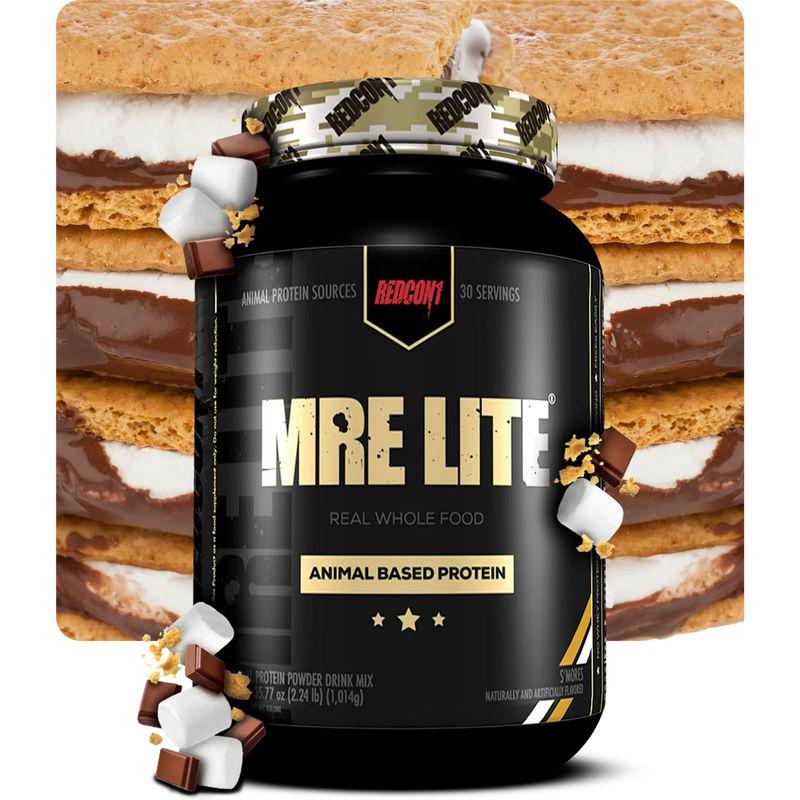
 Redcon1 | MRE LITE | 30 ServingsRedcon1
- SuppVault Score
- 75/100
- Per serving
- $1.5
Redcon1
Whole food-style whey-free protein with a leaner macro profile
$44.99 $1.49/serving
Score reflects incomplete data — label not yet scanned. Not a quality judgment.
SuppVault Summary
Redcon1 MRE LITE is a whey-free whole food-style protein with about 24-26g protein per serving. It shines as a leaner, more filling recovery shake for cutting, recomping, and between-meal protein support.
Redcon1 publishes test results from independent third-party labs. Svpplements links to the manufacturer’s data — we don’t test products ourselves.
Discount applied automatically in cart.

Protein and creatine are one of the most evidence-based pairings in sports nutrition. MRE LITE covers the amino acids needed for muscle protein synthesis, while creatine supports phosphocreatine regeneration, strength output, and long-term lean mass performance.
Take creatine daily; use MRE LITE post-workout or between meals
MRE LITE handles your protein feeding, while Total War covers pre-training energy and performance. This gives you a clean division of labor: performance support before training, recovery nutrition after training.
Take Total War pre-workout; MRE LITE after training

Protein and carbohydrates are a classic recovery synergy. MRE LITE supplies amino acids for muscle protein synthesis, while Cluster Bomb can help replenish glycogen when training volume is high or post-workout carbs are needed.
Use Cluster Bomb around training; use MRE LITE post-workout

Because MRE LITE uses a unique blend of beef, salmon, chicken, egg, rice, and pea proteins, some users may prefer extra digestive support. A digestive aid can make a multi-source whole food-style protein easier to tolerate consistently.
Take Digest Aid with MRE LITE servings as needed
Full MRE is stronger if you want a true heavier meal-replacement style formula rather than a lean protein-focused option.
Farm Fed likely wins on classic whey simplicity, while MRE LITE wins on whey-free whole food-style differentiation.
Raw Whey Blend is the better pick if you want a standard whey-based protein and likely stronger transparency on source expectations.
MRE LITE is the better choice for users specifically wanting lower carbs and a more cut-friendly whole food-style protein.
Side-by-side against the closest competitors. Score reflects clinical dosing, transparency, and testing.
Redcon1 | MRE LITE | 30 ServingsRedcon1
 Redcon1 | MRE | 24 ServingsRedcon1
Full MRE is stronger if you want a true heavier meal-replacement style formula rather than a lean protein-focused option.
Compare side-by-side → Axe & Sledge | A&S Farm Fed Protein | 28 ServingsAxe & Sledge
Farm Fed likely wins on classic whey simplicity, while MRE LITE wins on whey-free whole food-style differentiation.
Compare side-by-side → Raw Nutrition | Whey Blend | 20 ServingsRaw Nutrition
Raw Whey Blend is the better pick if you want a standard whey-based protein and likely stronger transparency on source expectations.
Compare side-by-side →Comparison data combines live storefront pricing with our SuppVault analysis. Competitor scores reflect public-label data; manufacturer-side changes may not be reflected in real time.
Redcon1 MRE LITE is a whey-free, whole food-style protein formula designed for one job: deliver meaningful protein support for muscle retention and recovery without the heavier calorie and carbohydrate load that comes with a full meal replacement. The defining strategy here is clear. Instead of relying on whey concentrate or isolate, MRE LITE uses a multi-source protein system built from beef protein isolate, salmon protein, chicken protein, egg albumin, brown rice protein, and pea protein. Official product research context indicates this formula provides roughly 24-26g protein per serving, which puts it directly inside the clinically relevant range for stimulating muscle protein synthesis. Research on protein intake consistently shows that roughly 20-30g per serving is the sweet spot for driving MPS through the mTOR pathway, especially when the amino acid profile contains sufficient essential amino acids.
That dose range matters because protein is not just “for muscles.” Dietary protein provides essential amino acids that act as the raw material for muscle repair, connective tissue turnover, enzymes, immune proteins, and hormone production. In training contexts, the primary acute target is muscle protein synthesis. When you take in a solid protein serving, leucine and the broader essential amino acid pool help switch on mTOR signaling, which is one of the central molecular triggers for muscle repair and adaptation after training. That is why this formula makes sense post-workout, between meals, or during calorie-restricted phases where preserving lean mass is a priority.
The most interesting part of MRE LITE is not one hero ingredient. It is the architecture of the blend. Beef protein isolate likely serves as the anchor source, with salmon, chicken, and egg albumin adding additional animal-derived amino acids, while pea and brown rice provide complementary plant proteins. Egg albumin is particularly valuable from a protein quality standpoint because egg protein has long been considered one of the highest-quality reference proteins in nutrition science. Pea and rice together help broaden the amino acid spectrum on the plant side, since their amino acid limitations partially complement one another. The result is a blended amino acid delivery profile that is more diversified than a single-source protein powder.
The synergy here is practical rather than flashy. Multiple protein sources can produce a more balanced digestion curve and amino acid appearance profile than a single-source formula, especially when animal and plant proteins are combined. That can translate into a shake that feels more satisfying and more meal-like than ultra-fast, ultra-light whey products. For the user, that means better satiety, better compliance in a diet phase, and a protein feeding that can stand in for a snack or small meal when life gets busy.
On transparency, this is mixed. We know the protein sources, and we know the total protein output is about 24-26g per serving, which is enough to assess the product's core function. What we do not get is the exact gram contribution of each source. That limits precise evaluation of the amino acid weighting of beef versus egg versus plant proteins. It is not a proprietary blend in the classic stimulant-pre-workout sense, but it is still not fully granular label transparency at the individual protein level.
What should you expect? Day 1, this feels like a more filling protein shake than standard whey. It is designed to help blunt hunger, support recovery, and make it easier to hit daily protein targets. Over 2-4 weeks of consistent use, the real benefit is not a dramatic acute feeling. It is better protein compliance, easier recovery nutrition, improved lean mass retention during dieting, and more reliable support for muscle repair across the week.
Protein stimulates muscle protein synthesis primarily through essential amino acid delivery, especially leucine-driven activation of the mTOR signaling pathway. Once activated, mTOR increases translation initiation and promotes the cellular machinery involved in muscle repair and remodeling. The clinically relevant intake range for a single feeding is generally about 20-30g, which is why MRE LITE's roughly 24-26g protein yield is significant. This is not speculative sports lore; it is one of the most established principles in applied sports nutrition.
A multi-source protein blend can improve the practical nutrition profile of a protein product by broadening amino acid input and altering digestion kinetics. Animal proteins like beef, chicken, fish, and egg tend to provide strong essential amino acid density, while complementary plant proteins like pea and rice can widen the spectrum further. In practice, this often creates a more meal-like, satiating experience than a very light single-source protein. For dieting athletes, satiety can be as important as the raw protein number on the label.
Egg albumin has historically been used as a reference-standard protein because of its strong amino acid quality and digestibility profile. In mixed protein formulas, egg helps strengthen overall biological value and improves confidence that the total protein serving is not just numerically adequate, but also qualitatively useful. Its inclusion in MRE LITE adds genuine formulation credibility beyond label appeal. This matters most when exact per-source dosing is undisclosed, because source quality becomes even more important.
One of the most underestimated advantages of a good protein powder is not biochemical novelty but compliance. A formula that is easy to use, satisfying, and fits a user's daily routine increases the likelihood of repeatedly hitting effective protein thresholds across the week. That consistency supports lean mass retention during calorie restriction and improves recovery support during higher training loads. MRE LITE's whole food-style blend is best understood through that lens: it is a compliance tool built around solid protein science.
Verified athletes can view NCAA, WADA, and high-school compliance status for this product.
* These statements have not been evaluated by the Food and Drug Administration. This product is not intended to diagnose, treat, cure, or prevent any disease. Consult your physician before use if you have a medical condition or take medications.
Drop your number and our team will instantly text you.
Our team is on it. Check your texts — real advice, real fast.
Brain-curated complementary picks for synergy and full-spectrum coverage.
Secure sign in
Svpplements uses Shopify Customer Accounts for protected login, order history, and account data.


