This product
 Redcon1 | MRE | 24 ServingsRedcon1
- SuppVault Score
- 62/100
- Per serving
- $3.33
Key actives
Tested
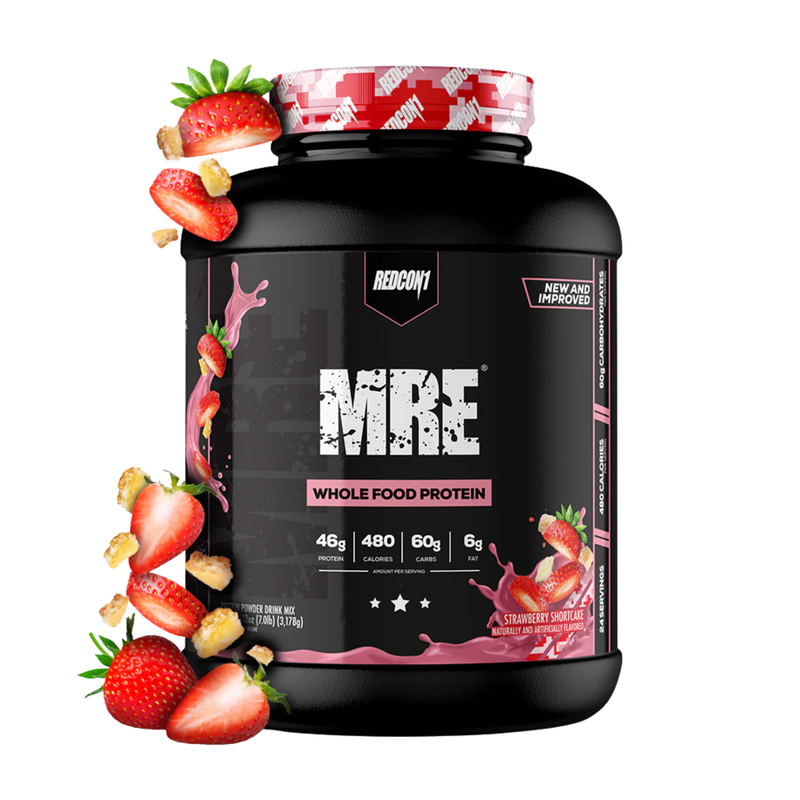
Redcon1
47g protein, 75g carbs, real meal-size shake convenience
$79.99 $3.33/serving SuppVault Summary
Redcon1 MRE is a high-calorie protein-and-carb meal shake built for growth, recovery, and missed meals. It works best as a mass-support feeding rather than a fully fortified meal replacement. A full serving delivers 47g protein, 75g carbs, and 525 calories.
Redcon1 publishes test results from independent third-party labs. Svpplements links to the manufacturer’s data — we don’t test products ourselves.
Discount applied automatically in cart.

MRE covers calories, protein, and carbs well, but creatine adds a separate performance mechanism by increasing phosphocreatine availability for repeated high-intensity effort. That makes it an excellent companion for lifters using MRE in a growth or recovery phase.
Take daily; can be added directly to MRE post-workout or taken any time with a meal.
MRE is macro-strong but not fully micronutrient-complete. A quality multivitamin helps cover the nutritional gaps left by the modest calcium, iron, potassium, and undisclosed vitamin D profile.
Take with a whole-food meal earlier in the day or with MRE if tolerated.
This formula is designed around convenience calories and protein, not essential fatty acid optimization. Adding omega-3s improves overall nutrition quality and supports a more complete recovery and wellness stack.
Take with meals containing fat; separate from training timing if preferred.
A 4-scoop serving is dense and can be heavy for some users. Digestive enzymes can improve tolerance for large protein-and-carb feedings, especially if you plan to use full servings regularly.
Take immediately before or with the shake.
MRE itself is not a stimulant or pump formula. If you use it as a post-workout recovery shake or a pre-training meal taken well in advance, a dedicated pre-workout can handle acute energy, focus, and performance support separately.
Use the pre-workout 20-30 minutes before training; use MRE post-workout or 60-120 minutes pre-training as a meal.
Choose MRE when you want a more substantial calorie and carb load per serving.
Same core product family appeal, so flavor preference may be the deciding factor.
Ideal Meal may suit buyers who want a more conventional meal-replacement positioning.
A dedicated mass gainer can offer a stronger calorie-surplus angle for aggressive bulking.
Side-by-side against the closest competitors. Score reflects clinical dosing, transparency, and testing.
Redcon1 | MRE | 24 ServingsRedcon1
 Redcon1 | MRE LITE | 30 ServingsRedcon1
Choose MRE when you want a more substantial calorie and carb load per serving.
Compare side-by-side → Redcon1 | MRE BrookieRedcon1
Same core product family appeal, so flavor preference may be the deciding factor.
Compare side-by-side → HI TECH PHARMACEUTICALS, INC. | Hi-Tech Ideal Meal | 20 ServingsHI TECH PHARMACEUTICALS, INC.
Ideal Meal may suit buyers who want a more conventional meal-replacement positioning.
Compare side-by-side →Comparison data combines live storefront pricing with our SuppVault analysis. Competitor scores reflect public-label data; manufacturer-side changes may not be reflected in real time.
Redcon1 MRE Meal Replacement is best understood as a high-calorie protein-and-carbohydrate meal shake, not a fully fortified micronutrient meal replacement in the strict clinical sense. The formulation strategy is clear: prioritize substantial macronutrient delivery and convenient digestible calories over exhaustive vitamin-and-mineral coverage. At a full 4-scoop serving, you’re getting 47g of protein, 75g of carbohydrates, and 525 calories, which makes this formula useful for mass gain phases, post-training recovery, busy days when meals get missed, and athletes who struggle to eat enough from whole food alone.
The core of the formula is its Whole Food Protein Blend: bovine collagen peptide, pea protein, milk protein isolate, brown rice protein, chicken collagen, salmon protein hydrolysate, and egg white protein. Because individual ingredient weights are not disclosed, we cannot verify exactly how much of the 47g protein comes from complete proteins like milk and egg versus lower-quality contributors like collagen. That matters, because collagen is not a complete muscle-building protein in the same way milk, egg, or mixed animal-plus-plant systems are. Still, from a practical standpoint, 47g total protein is a substantial dose for stimulating recovery and supporting daily protein intake, especially when the blend includes multiple complete and complementary sources.
The carbohydrate system is similarly designed for caloric density and convenience. The blend includes whole oat flour, maltodextrin, pea starch, dextrose monohydrate, sweet potato powder, wild yam powder, coconut water powder, blueberry powder, and goji powder. Functionally, that means a mix of faster and slower carbohydrate sources rather than a single-speed energy curve. You can expect reasonably quick replenishment from maltodextrin and dextrose, with more sustained satiety and texture support from oat flour and starches. That makes sense for post-workout glycogen restoration and for replacing a meal when you need energy that actually lasts longer than a standard isolate shake.
The disclosed micronutrients are modest, not comprehensive. Calcium is listed at 120mg, which contributes to bone mineral support and also plays a fundamental role in muscle contraction and nerve signaling. Clinically, total daily intake targets are far higher—typically 1000-1200mg—so this is a supplemental contribution, not a meaningful standalone calcium strategy. Iron is present at 5.9mg, relevant for hemoglobin and myoglobin formation and therefore oxygen transport, but still below common supplemental ranges used to address deficiency. Potassium is listed at 280mg; potassium is critical for nerve transmission, muscle contraction, and fluid balance, yet this amount remains a supportive addition rather than a fully robust electrolyte dose. Vitamin D is included, but the amount is not disclosed, which limits any evidence-based evaluation of its practical impact.
The formula works as a system by pairing a large protein feeding with a large carbohydrate load, giving the body both building material and energy substrate in one serving. Protein supports muscle repair and retention; carbohydrates support training output, glycogen restoration, and easier calorie accumulation; the small mineral content adds some support for contraction, hydration, and oxygen transport. Transparency is mixed. There is no proprietary blend in the strict sense, but there is incomplete transparency because the individual protein and carbohydrate components are not quantitatively disclosed, and one vitamin amount is missing. That puts MRE ahead of fully hidden proprietary formulas, but behind truly full-disclosure products.
Day 1, expect a dense, filling shake that behaves more like a meal than a standard protein scoop. The main benefit is practical: easier calorie intake, better recovery nutrition, and less chance of falling behind on protein. Over 2-4 weeks of consistent use, the real payoff is cumulative—more reliable calorie surplus, steadier protein intake, better recovery support, and, for the right athlete, easier bodyweight and performance progression.
A 47g protein feeding provides a robust amino acid supply for stimulating muscle protein synthesis and supporting net protein balance across the recovery window. In resistance-trained athletes, large mixed-protein doses are especially useful when total daily intake is difficult to achieve with whole food alone. Multi-source protein systems may also alter digestion kinetics versus a single fast isolate, contributing to a more meal-like satiety profile. The practical effect is improved compliance with recovery-oriented protein targets during hypertrophy phases.
A 75g carbohydrate feeding can materially support glycogen restoration after demanding training, particularly when sessions are frequent or volume is high. Carbohydrate co-ingestion with protein also improves the usefulness of a shake as a true recovery meal rather than a protein-only supplement. For athletes in a calorie surplus, this amount helps solve the operational problem of under-eating while still supporting recovery biochemistry. The result is better fueling continuity between sessions and meals.
The effectiveness of mass-support nutrition is often determined less by theory and more by adherence. A 525-calorie liquid meal can reduce the eating burden for athletes with low appetite, busy schedules, or high energy expenditure. Compared with lighter shakes, a denser protein-and-carbohydrate formula can increase short-term fullness while still being easier to consume than another full solid meal. This improves the probability of consistently reaching surplus calories over weeks.
From a clinical meal-replacement perspective, broad micronutrient fortification matters because meal substitutions can displace nutrient-dense foods. Here, the disclosed minerals are limited to calcium, iron, and potassium, with vitamin D listed but not quantified. That does not reduce the macro utility of the product, but it changes how it should be classified and used. It is best interpreted as a meal-support or mass-support shake rather than a fully comprehensive nutrition replacement.
Verified athletes can view NCAA, WADA, and high-school compliance status for this product.
* These statements have not been evaluated by the Food and Drug Administration. This product is not intended to diagnose, treat, cure, or prevent any disease. Consult your physician before use if you have a medical condition or take medications.
Drop your number and our team will instantly text you.
Our team is on it. Check your texts — real advice, real fast.
Secure sign in
Svpplements uses Shopify Customer Accounts for protected login, order history, and account data.